
PM Shehbaz Convenes KP Apex Committee to Address Escalating Security Crises
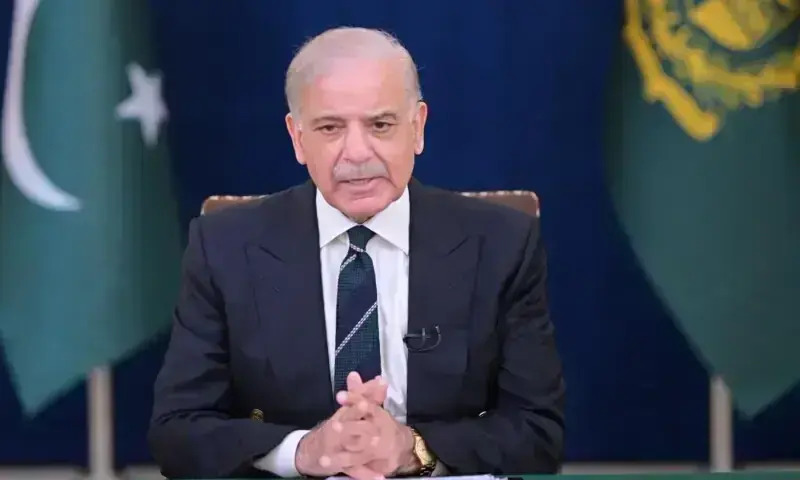
Prime Minister Shehbaz Sharif chaired a crucial apex committee session in Peshawar on Thursday, evaluating counter-terrorism operations following the federal takeover and imposition of governor's rule in Khyber Pakhtunkhwa.
The Core Development
Prime Minister Shehbaz Sharif arrived in Peshawar on Thursday to preside over a high-stakes meeting of the provincial apex committee, marking his first official visit to Khyber Pakhtunkhwa since the federal government enforced governor’s rule and a state of emergency on October 11.
The high-level assembly brought together senior military leadership, intelligence chiefs, federal ministers, and provincial administrative heads to evaluate the volatile security environment in the province. The intervention on October 11 was ratified following federal cabinet approval and an endorsement by a joint sitting of parliament, with the Centre citing the Pakistan Tehreek-e-Insaf (PTI)-led provincial administration's alleged disengagement from active counter-terrorism operations. The apex committee focused on harmonizing civil-military counter-insurgency doctrines, reinforcing provincial policing infrastructure, and expediting intelligence-led operations throughout vulnerable frontier districts.
Commercial & Economic Implications
For Pakistan's commercial landscape, particularly in northern wholesale and distribution hubs, security instability in Khyber Pakhtunkhwa presents severe logistical and financial headwinds. Sustained operational disruption directly imperils transit trade routes connecting Punjab's industrial heartland to the Torkham border crossing, a vital artery for cross-border commerce with Afghanistan and Central Asian republics.
Freight transport corridors have seen increased risk premiums, leading to elevated trucking tariffs and extended turnaround times for fast-moving consumer goods (FMCG), agricultural produce, and construction inputs. Wholesale markets in Peshawar, Rawalpindi, and Lahore face localized supply bottlenecks, driving up landed costs for commodities. For commercial traders and institutional supply chains, heightened security checkpoints and unpredictable curfew protocols introduce systemic operational friction, compounding broader inflationary pressures across retail supply networks.
Related Intelligence: West Bank Settler Violence Escalates Regional Geopolitical and Supply Chain Risks
Stakeholder Perspectives & Market Reactions
Business chambers and logistics associations have expressed cautious optimism regarding the federal government's decisive security oversight, yet remain deeply anxious about administrative friction and political volatility. The Sarhad Chamber of Commerce and Industry (SCCI) has repeatedly urged federal authorities to decouple commercial freight corridors from operational security crackdowns, highlighting that prolonged border delays inflict substantial losses on perishable goods traders.
Legal and political commentators maintain divided stances on the constitutional mechanics of the governor's rule, warning that protracted disenfranchisement of the provincial assembly could fuel regional discontent. Conversely, security analysts argue that unified command under the apex committee is an operational necessity to eliminate bureaucratic delays and reverse militant gains that have compromised local economic stability.
Forward Outlook & Key Watchpoints
The coming weeks will serve as a bellwether for the efficacy of the revised security mandate. Stakeholders are closely tracking whether the apex committee will authorize kinetic, targeted sweep operations across southern and tribal districts, or prioritize static defensive deployments along commercial highways.
Key watchpoints include the duration of the emergency regime, potential legal challenges in the superior courts contesting the federal proclamation, and the normalization of trade volume passing through primary transit corridors. Sustainable economic recovery in Khyber Pakhtunkhwa hinges fundamentally on whether federal authorities can swiftly suppress militant incursions while preserving the vital flow of domestic and cross-border commercial trade.
Join Our Official WhatsApp Channel
Receive live commodity alerts, policy changes, and commercial intelligence directly on WhatsApp.