
Peshawar High Court Hears Challenges Against KP Emergency and Governor Rule
The Peshawar High Court has taken up petitions challenging the potential imposition of governor's rule and emergency in Khyber Pakhtunkhwa, heightening fiscal and commercial uncertainty across the province.
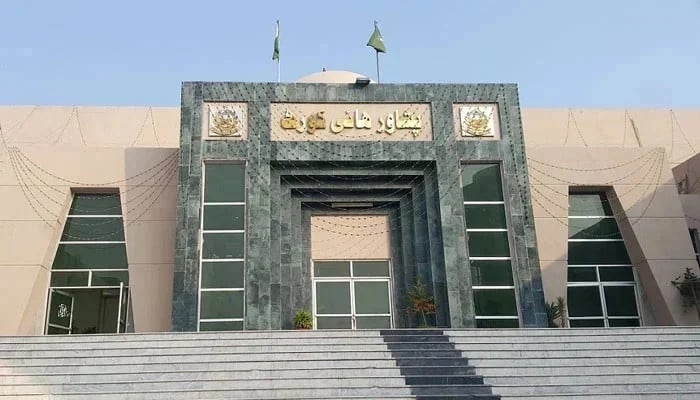
The Core Development
The Peshawar High Court has formally commenced proceedings on legal petitions filed by the Pakistan Tehreek-e-Insaf leadership challenging the potential imposition of governor's rule and emergency powers in Khyber Pakhtunkhwa. A high court bench took up the constitutional petitions following mounting speculation that the federal cabinet in Islamabad was considering emergency measures to curtail political agitation and re-establish direct administrative control over the northwestern province.
Legal counsel representing the provincial administration argued before the bench that any deployment of emergency provisions under Article 232 or the invocation of governor's rule under Article 234 of the Constitution lacks legal foundation. The petitioners contended that the provincial government maintains a decisive legislative majority in the Khyber Pakhtunkhwa Assembly and continues to discharge its constitutional responsibilities effectively. Federal authorities, conversely, have pointed toward ongoing security challenges, street protests, and friction in intergovernmental coordination as justification for heightened administrative oversight. The court issued notices to federal respondents and attorney general representatives, calling for formal replies and establishing an expedited schedule for legal arguments.
Commercial & Economic Implications
The escalation of constitutional disputes between federal and provincial authorities injects acute instability into regional commerce, wholesale trade networks, and capital allocations across Khyber Pakhtunkhwa. The province serves as a vital arterial route for cross-border transit trade with Afghanistan and the wider Central Asian republics. Protracted political confrontation threatens the regular flow of freight through the Torkham and Ghulam Khan border crossings, directly affecting clearing agents, freight forwarders, and logistics operators.
Within domestic markets, wholesale distributors and retail merchants in Peshawar, Mardan, and Swat face heightened inventory holding costs as risk premiums elevate. Extended administrative friction frequently translates into ad-hoc security checkpoints, cargo delays, and sporadic disruptions in municipal clearances. For fast-moving consumer goods and essential commodities, transit delays exacerbate localized supply deficits, contributing to short-term retail price volatility. Furthermore, commercial lending institutions and private investors are adopting a defensive posture, deferring capital expenditures on industrial estate expansions and processing facilities across the province until legal and political jurisdictions stabilize.
Related Intelligence: US Supreme Court Receives High-Stakes Legal Challenge Over Student Deportation Order
Stakeholder Perspectives & Market Reactions
Regional business associations have expressed deep apprehension regarding the growing confrontation between Peshawar and Islamabad. Representatives from the Sarhad Chamber of Commerce and Industry have urged both federal and provincial authorities to decouple trade and economic governance from ongoing political litigation. Commercial traders emphasize that small and medium-sized enterprises in the province are already grappling with inflated utility tariffs and elevated borrowing costs, leaving little resilience to withstand governance deadlocks.
Constitutional scholars and legal analysts note that the high court's intervention is critical in establishing clear boundaries regarding executive overreach. Legal experts maintain that the threshold for suspending provincial autonomy through governor's rule requires demonstrably severe constitutional breakdown, a standard that faces intense judicial scrutiny. Meanwhile, financial analysts tracking intergovernmental revenue sharing warn that institutional deadlock threatens the regular execution of Public Sector Development Programme allocations, stalling provincial infrastructure projects and construction vendor payments.
Forward Outlook & Key Watchpoints
The coming weeks will center on the Peshawar High Court's directives regarding preliminary relief and interim restraining orders against arbitrary federal executive intervention. Stakeholders are closely monitoring whether the court will issue an injunction barring the federal executive from proceeding with emergency proclamations pending a final verdict on the constitutional petitions.
Key watchpoints include the response from the Attorney General for Pakistan, the operational stability of interprovincial transit corridors, and the continuity of revenue collections across provincial tax authorities. A prolonged judicial standoff risks freezing administrative decision-making, while a decisive ruling reinforcing constitutional norms could provide much-needed policy clarity for wholesale distributors, cross-border transporters, and the broader retail economy in Khyber Pakhtunkhwa.
Join Our Official WhatsApp Channel
Receive live commodity alerts, policy changes, and commercial intelligence directly on WhatsApp.