
US Supreme Court Receives High-Stakes Legal Challenge Over Student Deportation Order
Lawyers for activist Mahmoud Khalil have appealed to the US Supreme Court to overturn an appellate ruling permitting his deportation, raising constitutional questions regarding foreign residents' civil liberties.
Geopolitical & Core Developments
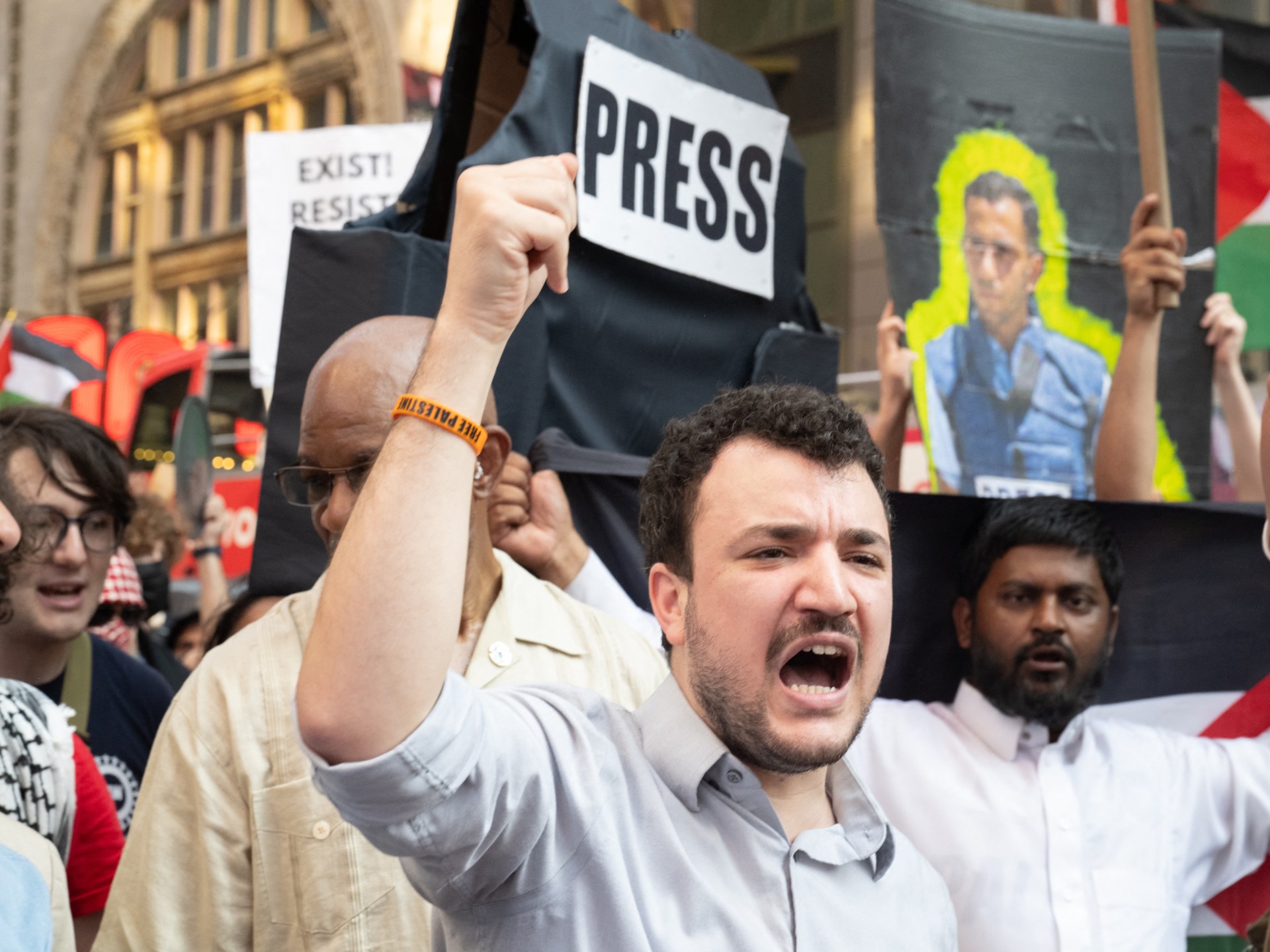
The legal confrontation surrounding foreign-born student activism in the United States has escalated to the highest judicial forum in Washington. Legal representatives for Mahmoud Khalil, a prominent former student organizer, have lodged an emergency petition before the US Supreme Court seeking to reverse a federal appellate court ruling that authorized his deportation. Khalil, who has been an outspoken advocate on university campuses regarding Middle Eastern geopolitical disputes and foreign policy stances, faces imminent removal under statutes invoked by federal immigration authorities.
The case centers on the interpretation of discretionary executive powers regarding non-citizen residency revocations versus constitutional guarantees of free speech and assembly. Immigration enforcement bodies maintain that Khalil’s actions breached specific visa provisions and international compliance statutes, while defense attorneys counter that the deportation proceedings represent punitive political retaliations designed to suppress campus dissent. The dispute has rapidly evolved from a standard immigration hearing into a landmark constitutional confrontation over whether foreign nationals residing legally within Western democracies can be subject to summary removal on the basis of political speech.
Global Trade & Economic Ripples
While ostensibly an immigration case, the dispute carries notable economic implications for the higher education sector and high-skill labor markets. Higher education represents one of the United States' top service exports, generating tens of billions of dollars annually and attracting hundreds of thousands of international students, many from the Middle East, South Asia, and East Asia. Institutional analysts observe that expanding the legal grounds for deporting foreign students based on campus activism creates regulatory uncertainty for international academic exchanges.
Corporations reliant on foreign talent pipelines in engineering, technology, and financial analysis are monitoring the case for broader structural changes to visa stability. Heightened legal risks for foreign scholars could divert high-value human capital toward alternative academic and research hubs in the European Union, Canada, and the United Kingdom. Furthermore, bilateral trade corridors linked to educational partnerships and intellectual property transfers risk exposure to retaliatory bureaucratic friction if diplomatic partners view visa revocations as discriminatory or arbitrary.
Related Intelligence: Sindh High Court Dismisses State Appeal Against Mahrang Baloch Acquittal
International Reactions & Diplomatic Stances
The escalation to the Supreme Court has drawn scrutiny from human rights monitors, international legal bodies, and foreign ministries. Advocacy groups, including Amnesty International and the American Civil Liberties Union, have submitted briefs arguing that an adverse ruling against Khalil would establish a dangerous precedent, effectively chilling international academic discourse and eroding long-standing international conventions on the treatment of legal residents.
Conversely, conservative policy think tanks and national security officials have defended the administration's stance, asserting that sovereign governments retain an absolute legal right to manage border admissions and dismiss foreign guests who engage in destabilizing public actions. Diplomatic representatives from Middle Eastern capitals have quietly raised concerns through consular channels, emphasizing the need for equitable due process to ensure that their citizens abroad are not targeted amid polarizing domestic political environments.
Strategic Outlook & Future Scenarios
The Supreme Court must now determine whether to grant a writ of certiorari and issue an interim stay of removal. Should the court decline to hear the appeal, federal authorities will proceed with Khalil's removal, finalizing the case as a reference point for future administrative actions against foreign organizers. Such an outcome would embolden federal enforcement agencies to apply stricter ideological scrutiny during visa renewals and status evaluations.
Conversely, if the justices accept the petition, the court will establish definitive constitutional boundaries governing the First Amendment rights of non-citizens on American soil. Over the medium term, the proceedings are anticipated to trigger legislative debates across North America and Europe regarding visa code reforms, national security vetting protocols, and the statutory limits of executive authority over resident foreign nationals.
Join Our Official WhatsApp Channel
Receive live commodity alerts, policy changes, and commercial intelligence directly on WhatsApp.