
Delhi Court Extends Detention of Opposition Youth Leaders Amid Electoral Integrity Protests
A New Delhi magistrate has extended the detention of prominent youth opposition leaders, intensifying political friction and raising scrutiny over regional institutional governance and commercial stability.
The Core Development
A New Delhi magistrate court on Monday ordered a two-day extension in the police custody of two prominent leaders belonging to the youth-led Cockroach Janta Party (CJP). The judicial decision follows an initial five-day remand executed late last week, prolonging a high-stakes standoff between state law enforcement and grassroots opposition figures in the national capital.
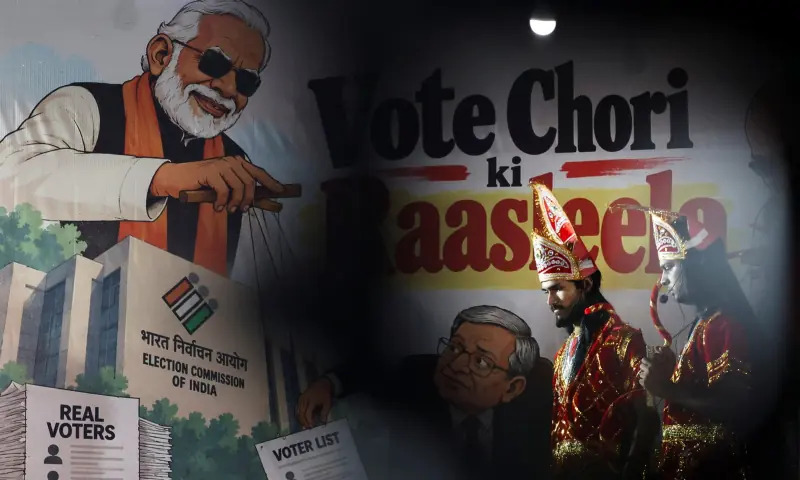
The detentions stem from widening street demonstrations and coordinated political rallies where CJP activists, alongside a coalition of mainstream opposition outfits, have actively defied administrative bans and security crackdowns. Demonstrators are formally demanding the immediate resignation of India's Chief Election Commissioner. The opposition coalition has alleged systemic irregularities in the national electoral process, asserting that independent voter rolls have been manipulated to engineer an institutional advantage for Prime Minister Narendra Modi's ruling Bharatiya Janata Party (BJP). Central authorities have defended the detentions on grounds of unlawful assembly and public order violations, deploying heavy security cordons around key ministerial corridors in central Delhi.
Commercial & Economic Implications
While rooted in domestic Indian politics, mounting governance disputes within South Asia carry measurable economic externalities for broader regional markets, including trade and enterprise in Pakistan. Protracted civil unrest within major northern Indian transit zones periodically hampers regional freight logistics and cross-border commercial connectivity, particularly for third-party shipping conduits operating through intermediate transshipment hubs such as Dubai and Singapore.
For Pakistani wholesale distributors and commercial importers monitored by firms like Kalyar Traders, heightened geopolitical and regulatory volatility across the border frequently translates into wider regional risk premiums. Financial markets, already coping with macroeconomic adjustments, closely monitor political fragmentation in neighboring economies because regional unrest can impact secondary commodity flows, cotton and textile derivatives pricing, and essential raw-material freight charges. When administrative crackdowns trigger sustained transport gridlocks in Delhi's commercial periphery, supply-chain bottlenecks invariably ripple into export-import transit schedules across South Asia.
Related Intelligence: Brazilian Court Escalates Stance Against Meta Over Political Content Algorithms
Stakeholder Perspectives & Market Reactions
Legal counsel representing the detained CJP leaders argued forcefully against the extension of detention, terming the state's remand petition a politically motivated measure aimed at silencing legitimate dissent and preempting peaceful legal challenges against the election authority. Defense attorneys submitted that custody was unnecessary for ongoing inquiries, emphasizing that fundamental rights to assembly and speech were being curtailed under preventive policing statutes.
Conversely, public prosecutors maintained that extended interrogation was essential to uncover organizational funding channels and prevent widespread logistical paralysis across Delhi's administrative avenues. Business chambers and regional wholesale trade associations in adjacent industrial corridors have voiced cautious concern over repeated traffic disruptions and market shutdowns. South Asian trade monitors have noted that protracted institutional confrontation depresses consumer sentiment and creates short-term planning hesitation among international logistics operators operating across regional borders.
Forward Outlook & Key Watchpoints
The immediate focus shifts to the expiration of the 48-hour remand order, when the CJP leaders will be produced before the magistrate for regular bail hearings or potential judicial custody. Observers are closely watching whether opposition groups will escalate agitation into broader civil disobedience campaigns across other metropolitan centers.
For enterprise analysts and regional trade monitors, critical watchpoints include the upcoming judicial rulings on electoral oversight petitions, the enforcement rigor of security forces around regional transit points, and the stability of consumer and business sentiment throughout the current fiscal quarter. Continued institutional friction threatens to elevate the cost of regional commerce while sustaining market uncertainty across South Asian supply networks.
Join Our Official WhatsApp Channel
Receive live commodity alerts, policy changes, and commercial intelligence directly on WhatsApp.