
Pakistan Suspends Key Iran Trade Corridors Citing Security Concerns
Pakistan has abruptly suspended formal bilateral trade with Iran via the Taftan and Gabd-Rimdan corridors, citing critical national security concerns and intensified efforts to combat smuggling networks across the Balochistan frontier.
The Core Development
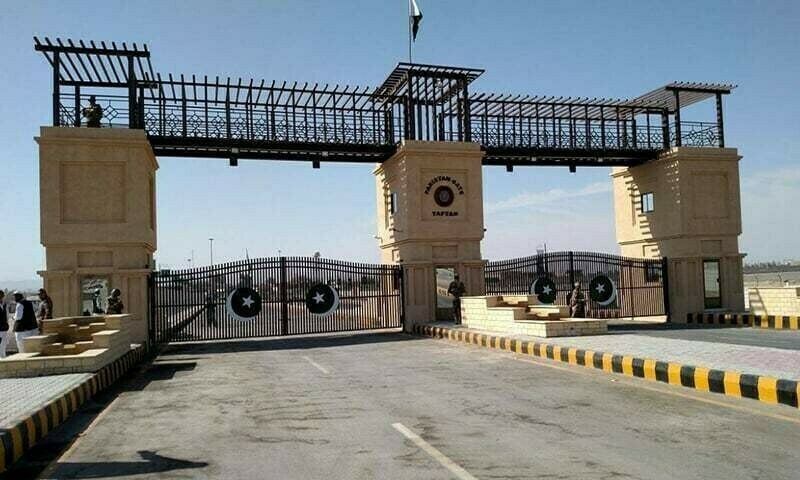
Pakistan has officially halted commercial cargo and bilateral trade operations with the Islamic Republic of Iran through its primary border terminuses, encompassing the prominent Taftan and Gabd-Rimdan (Crossing 250) conduits. The abrupt cessation followed an executive memorandum promulgated by the federal Ministry of Commerce on Friday, which formally withdrew its earlier administrative facilitation directive [No. 9(3)2017-Iran] dated October 3 with immediate effect.
The regulatory freeze halts all cross-border commercial shipments entering and exiting Pakistan's southwestern province of Balochistan. Confirming the measure, Shahid Rind, adviser to the Balochistan chief minister on media and political affairs, articulated that the strategic, temporary closure was designed to fortify regional security frameworks, dismantle pervasive smuggling syndicates, and streamline institutional border management mechanisms. Addressing escalating public discourse, the provincial leadership dismissed speculative commentary circulating on digital networks, emphasizing that structural adjustments along the international frontier were prerequisite to restoring administrative oversight.
Commercial & Economic Implications
The suspension carries immediate downstream repercussions for Pakistan's domestic wholesale markets, consumer supply chains, and retail price stability. Balochistan and broader domestic markets rely substantially on Iranian imports for petroleum products, liquefied petroleum gas (LPG), petrochemical derivatives, construction ceramics, and perishable foodstuffs including fruits and cooking staples. The sudden curtailment of regularized corridors risks choking secondary and tertiary supply lines across southern Pakistan, particularly in Gwadar, Kech, and Quetta.
Logistical bottlenecks are already forming as transport operators and loaded freight carriers face indefinite holding periods along border terminals. Commodity analysts caution that extended disruption could trigger localized inflationary spikes across regional wholesale centers, forcing traders to source higher-cost alternatives via traditional sea freight routes through Karachi. Concurrently, the clampdown is expected to disrupt localized retail economies in border towns that fundamentally depend on continuous cross-border barter mechanisms and transactional clearing systems to maintain liquidity.
Related Intelligence: Premier League Surges Spark Global Sports Media Valuations and Retail Consumption
Stakeholder Perspectives & Market Reactions
Commercial chambers, wholesale trade consortiums, and clearing agents operating within Balochistan have voiced deep apprehension regarding the operational uncertainty created by the abrupt withdrawal of the commerce ministry's circular. Trade associations have urged the federal government to establish emergency mechanisms for perishable consignments stranded at customs dry ports, emphasizing that sustained closures threaten the solvency of registered commercial importers.
Conversely, legal and customs enforcement analysts have endorsed the state's intervention, noting that porous transit points have persistently facilitated duty-evading parallel economies that undermine formal tax revenues and domestic manufacturing. Official representatives from law enforcement reiterate that national security imperatives and integrated customs digitisation must take precedence over temporary transit operations, framing the freeze as a necessary corrective action to establish institutional compliance.
Forward Outlook & Key Watchpoints
The resolution of the current impasse rests heavily on inter-ministerial evaluations involving the Ministry of Commerce, the Federal Board of Revenue, customs intelligence, and provincial security apparatuses. Observers anticipate that bilateral trade mechanisms will not resume until rigorous electronic clearance protocols, integrated vehicle tracking, and revised customs manifests are enacted.
Moving forward, commercial stakeholders are monitoring whether the federal authorities will introduce a revised statutory regulatory order to replace the rescinded notification, or whether trade will remain restricted to select, monitored commodities. The duration of this suspension serves as a critical test of Pakistan's broader economic campaign to formalize cross-border supply chains while balancing acute domestic price pressures in energy and essential food sectors.
Join Our Official WhatsApp Channel
Receive live commodity alerts, policy changes, and commercial intelligence directly on WhatsApp.