
French Nationwide Protests Intensify Amid Soaring Inflation and Retail Disruptions
Violent nationwide demonstrations over mounting inflation have gripped France, resulting in severe retail looting, infrastructure damage, and heightened economic uncertainty ahead of upcoming elections.
The Core Development
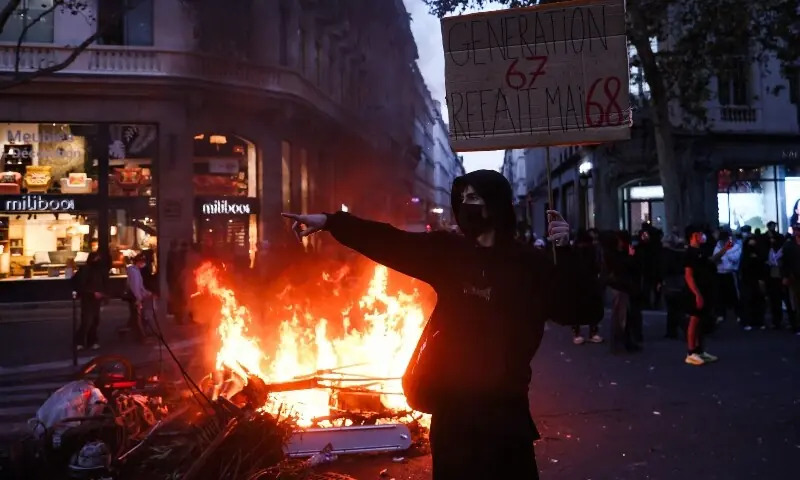
French metropolitan centres, including Paris, Lyon, and Nantes, witnessed extensive civil unrest over the weekend as nationwide demonstrations against surging inflation escalated into violent confrontations. According to estimates by the General Confederation of Labour (CGT), roughly 500,000 individuals mobilized across the country to voice discontent against eroding purchasing power, rising utility tariffs, and escalating living expenses. Official state estimates regarding crowd size were withheld immediately following the altercations.
The demonstrations marked a volatile turn following consecutive weeks of high-school and university student blockades demanding educational reforms and increased public spending. Tensions reached a flashpoint in the capital, where masked demonstrators clashed with law enforcement units. Security forces deployed tear gas, kinetic impact rounds, and water cannons to disperse crowds firing commercial-grade fireworks and launching projectiles. The clashes left several injured, including one demonstrator who sustained a catastrophic hand injury. Concurrently, coordinated acts of vandalism and retail looting emerged along primary commercial avenues, where dozens of retail establishments were breached, stripped of inventory, and set ablaze, alongside the destruction of several private vehicles.
Commercial & Economic Implications
The destabilization of commercial hubs in Europe carries structural ramifications for global retail distribution networks, trade corridors, and developing economies such as Pakistan. For European enterprises, physical stock destruction and localized closures directly impair inventory turnover and drive insurance premiums upward across transit hubs. In Pakistan, where wholesale traders and high-end retail distributors rely on steady supply lines for finished European consumer goods, personal care items, and industrial components, operational delays in transit ports and freight terminals threaten to exacerbate landed costs.
Furthermore, the persistent unrest underlines systemic European inflationary pressures, predominantly driven by energy volatility and currency fluctuations. For Pakistani import houses, sustained European consumer demand contraction reduces export absorption for domestic textiles and leather manufactures destined for continental buyers. Conversely, heightened freight risk and European port delays increase operational expenses for domestic importers, requiring Pakistani wholesale operators to allocate additional working capital buffers to hedge against international logistics bottlenecks.
Related Intelligence: US-Ukraine Geopolitical Rift Strains Energy Markets and Emerging Economy Supply Chains
Stakeholder Perspectives & Market Reactions
French business syndicates and commercial trade federations have issued sharp rebukes regarding property destruction, calling for urgent security deployments to safeguard high-street retail zones. Representatives from retail groups highlighted that widespread looting imposes severe working capital constraints on small and medium-sized merchants already contending with razor-thin margins under current inflationary trends. Political opponents have intensified scrutiny of President Emmanuel Macron’s executive apparatus, attributing public discontent to policy inertia regarding targeted cost-of-living adjustments.
Within Pakistan’s trade associations, commercial leadership is closely monitoring developments across the European Union. Import-export consortiums in Karachi and Lahore expressed apprehension regarding European port efficiency and currency stability. Trade analysts note that persistent social instability in G7 economies often accelerates global risk aversion, driving capital flows toward reserve instruments and tightening liquidity conditions for frontier and emerging import markets.
Forward Outlook & Key Watchpoints
The trajectory of the protests will be critical in the months preceding the scheduled two-round presidential elections. Key watchpoints include whether the French executive branch will introduce supplemental subsidies or cost-of-living allowances to pacify labour unions, or if extended industrial strike actions will paralyze intermodal transit corridors.
For international commerce and Pakistani market participants, immediate attention must centre on European freight clearing timelines, potential logistics strikes at French transshipment points, and secondary foreign exchange movements in the Euro against the Pakistani Rupee. Continued escalations could prompt renewed supply chain revisions, forcing wholesale distributors to source alternative transit routes or recalibrate local retail inventory pipelines against prolonged European supply interruptions.
Join Our Official WhatsApp Channel
Receive live commodity alerts, policy changes, and commercial intelligence directly on WhatsApp.