
Pakistan and Saudi Arabia Advance Defence Cooperation Under Makkah Pact
Pakistan and Saudi Arabia have reaffirmed their commitment to strategic security cooperation, reviewing major milestones under the Makkah defence agreement during high-level diplomatic talks at General Headquarters.
The Core Development
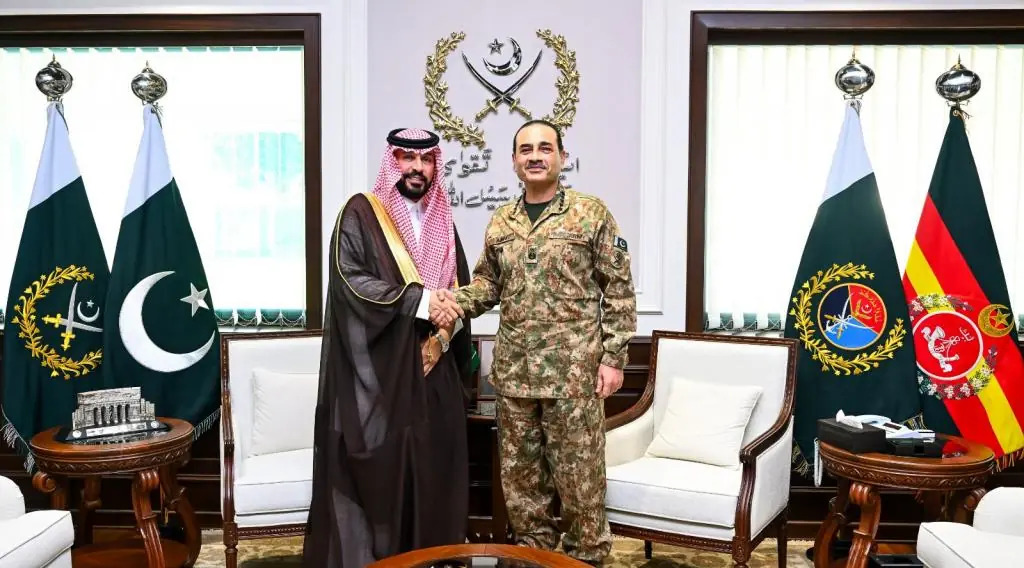
In an important diplomatic engagement highlighting the sustained security partnership between Islamabad and Riyadh, the newly appointed Ambassador of the Kingdom of Saudi Arabia to Pakistan, Dr. Rajeh Tami Albugamy, called on Pakistan's military leadership at General Headquarters (GHQ) in Rawalpindi. The high-level meeting served as an official platform to review regional security architecture and evaluate bilateral milestones achieved under the trilateral Makkah defence agreement.
According to an official statement issued by the Inter-Services Public Relations (ISPR), the deliberations encompassed matters of mutual strategic interest, regional stability, and avenues for enhanced institutional cooperation. Both dignitaries registered their satisfaction with the implementation velocity of security protocols formulated under the Makkah pact. Dr. Albugamy, who officially assumed his diplomatic posting in Islamabad late last week, underscored Riyadh's enduring commitment to broadening fraternal and strategic ties with Pakistan. The dialogue reinforces institutional alignment between the two capitals amid changing geopolitical currents across South Asia and the Middle East.
Commercial & Economic Implications
While predominantly anchored in bilateral defence diplomacy, the structured engagement carries substantial implications for Pakistan's macroeconomic environment, domestic liquidity, and industrial supply lines. Institutional continuity between Islamabad and Riyadh serves as a primary bedrock for sovereign credit assurances, deferred oil payment facilities, and broader foreign exchange reserve management overseen by the State Bank of Pakistan.
For Pakistan's commercial ecosystem, including wholesale trade and large-scale manufacturing, military and diplomatic convergence with Saudi Arabia provides essential sovereign risk mitigation. Stable bilateral relations are critical for maintaining energy security pipelines, directly influencing fuel imports, utility overheads, and downstream freight costs. Commercial importers and retail distribution networks across Punjab and Sindh rely heavily on exchange-rate predictability; sustained Saudi engagement dampens speculative pressures on the Pakistani rupee, curbing imported inflation across industrial raw materials and consumer wholesale commodities.
Furthermore, progress under formalized security agreements safeguards the anticipated deployment of Saudi sovereign wealth into domestic infrastructure and mining projects, notably within the Special Investment Facilitation Council (SIFC) framework. Long-term capital injections into energy refineries and strategic logistical corridors are projected to enhance supply chain efficiencies, reduce cross-border transportation premiums, and stimulate domestic business activity.
Related Intelligence: Pakistan Suspends Iran Border Trade Amid Escalating Regional Security Threats
Stakeholder Perspectives & Market Reactions
Financial analysts and mercantile associations have viewed the continuity in high-level Saudi-Pakistan engagements as a necessary counterweight to balance-of-payments volatility. Institutional market participants emphasize that strategic defence pacts often precede deep-tier commercial partnerships, creating an umbrella of stability that protects bilateral joint ventures.
Corporate chambers and export houses noted that security pacts of this scale establish the institutional confidence needed to accelerate labor mobility, remittance channels, and trade balance normalizations. Legal and policy observers highlighted that the formal institutional review at GHQ signals that administrative transitions within foreign missions will not stall active economic and security agendas, ensuring continuous execution of existing bilateral frameworks.
Forward Outlook & Key Watchpoints
Moving forward, stakeholders will monitor the tangible translation of the Makkah defence framework into institutional deliverables, joint training initiatives, and synchronized regional operations over the coming quarters. A central watchpoint for financial and corporate observers will be the degree to which this strategic goodwill facilitates the finalization of major commercial transactions, including proposed Saudi stakes in energy ventures and sovereign asset monetizations.
Market participants will also track scheduled ministerial-level follow-ups and joint working group assemblies in Islamabad and Riyadh. The continuity demonstrated during this inaugural diplomatic engagement sets an assertive baseline for future bilateral negotiations, directly affecting Pakistan's economic stabilization agenda, capital formation prospects, and macroeconomic stability through the remainder of the fiscal year.
Join Our Official WhatsApp Channel
Receive live commodity alerts, policy changes, and commercial intelligence directly on WhatsApp.