
Pakistan and Saudi Arabia Strengthen Strategic Defense and Economic Alignment
Pakistan's military leadership and Saudi Arabia's diplomatic mission have renewed commitments to deepen strategic defense cooperation, providing critical stability for bilateral commercial corridors and cross-border capital inflows.
The Core Development
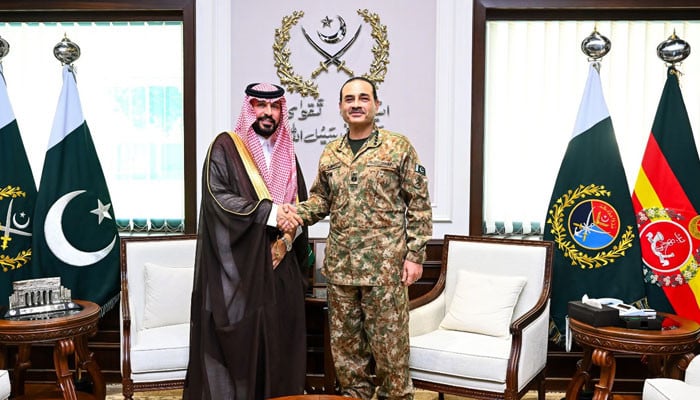
In a high-level diplomatic meeting at General Headquarters in Rawalpindi, Pakistan's Chief of Army Staff General Syed Asim Munir met with the newly appointed Ambassador of the Kingdom of Saudi Arabia, Nawaf bin Said Al-Malki. The bilateral discussion centered on recalibrating security cooperation, enhancing joint defense training frameworks, and reinforcing mutual geopolitical positions across South Asia and the Middle East.
According to official statements, both sides underscored the enduring strategic brotherhood characterizing Islamabad-Riyadh relations. The engagement reflects a concerted push to align regional security architecture with evolving diplomatic dynamics. Beyond conventional military exchanges, discussions touched on shared intelligence initiatives, counter-terrorism coordination, and maritime security protocols designed to secure critical trade sea lanes in the Arabian Sea. The meeting marks an institutional continuum in high-level exchanges, solidifying institutional trust between the military leadership and Riyadh's diplomatic mission.
Commercial & Economic Implications
While predominantly framed around defense diplomacy, strategic ties between Pakistan and Saudi Arabia serve as the bedrock for macroeconomic stability and investor sentiment. Defense guarantees and institutional alignment provide direct reassurance to sovereign wealth funds and private investors. Saudi Arabia remains a central counterparty in Pakistan's economic framework, contributing vital foreign exchange reserves, oil deferred-payment facilities, and direct development assistance.
For Pakistan's commercial landscape, from major industrial conglomerates to domestic retail supply chains, sustained bilateral stability translates into mitigated currency volatility and secured petroleum product supplies. A secure maritime and geopolitical environment ensures undisrupted oil imports, mitigating downstream inflationary spikes that directly impact transportation tariffs, wholesale commodity distribution, and everyday shelf prices in major retail markets across Karachi, Lahore, and Rawalpindi. Furthermore, institutional coordination guarantees the longevity of bilateral labor agreements, which generate billions of dollars in remittances critical to maintaining Pakistan's current account balance and domestic consumer spending power.
Related Intelligence: Russian Foreign Minister Lavrov Visits Tehran Amid Gulf Maritime Security Crisis
Stakeholder Perspectives & Market Reactions
Financial analysts and corporate leadership in Pakistan viewed the military-diplomatic coordination as an essential de-risking factor for cross-border capital deployment. The business community, particularly sectors aligned with the Special Investment Facilitation Council (SIFC), views robust defense ties as the prerequisite for large-scale investments, including the proposed multi-billion-dollar Saudi Aramco refinery project and potential equity purchases in Pakistan's sovereign mining ventures.
Trade bodies such as the Federation of Pakistan Chambers of Commerce and Industry (FPCCI) have consistently highlighted that political and defense predictability with Gulf partners directly influences trade finance facilities and import credit ratings. Market observers noted that equity and sovereign bond yields responded with stability, reflecting broad confidence in continued Gulf backing for Pakistan's external financing requirements under international financial programs.
Forward Outlook & Key Watchpoints
The trajectory of Pakistan-Saudi defense coordination will likely materialize in expanded technical collaboration and synchronized diplomatic stances at multilateral platforms. Over the coming quarters, watchpoints include the formalized rollout of joint military exercises and the translation of strategic commitments into accelerated commercial transactions overseen by the SIFC.
Market participants will closely monitor subsequent bilateral ministerial visits, progress on proposed petrochemical joint ventures, and prospective sovereign-to-sovereign agreements in mining and critical infrastructure. As Pakistan seeks sustained fiscal stabilization, the structural convergence of defense diplomacy and capital investment will remain the principal barometer for medium-term national economic resilience.
Join Our Official WhatsApp Channel
Receive live commodity alerts, policy changes, and commercial intelligence directly on WhatsApp.