
Pakistan and Russia Move to Finalise Extradition and Security Pacts
Pakistan and Russia have agreed to finalise an extradition treaty and sign a bilateral pact countering transnational organised crime following historic ministerial talks in Islamabad.
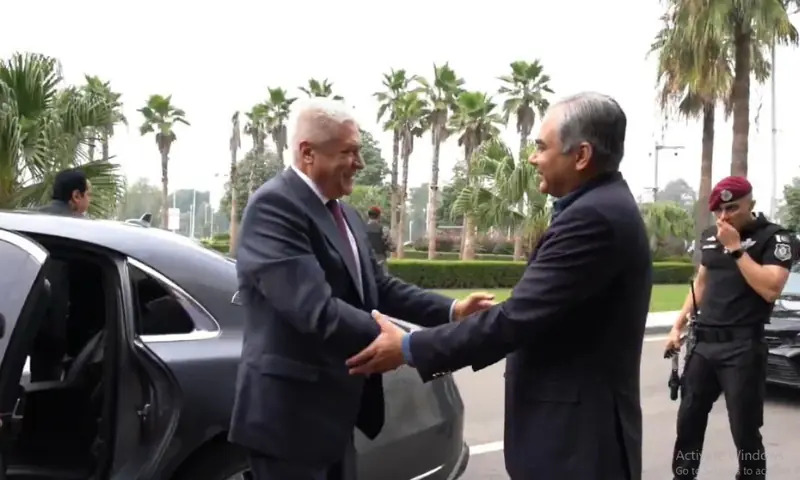
The Core Development
In a landmark diplomatic overture, the governments of Pakistan and the Russian Federation agreed on Wednesday to formalise a reciprocal extradition treaty and establish an overarching Memorandum of Understanding (MoU) focused on combatting transnational organised crime. The consensus emerged from high-level delegation talks in Islamabad led by Pakistan’s Interior Minister Mohsin Naqvi and his Russian counterpart, Vladimir Kolokoltsev. The four-day official trip marks the first time a sitting Russian interior minister has visited Pakistan, underscoring a notable recalibration of strategic and institutional security relations between Islamabad and Moscow.
According to an official readout from the Ministry of Interior, the bilateral talks centered on modernising information-sharing mechanisms, synchronising counter-narcotics strategies, and erecting institutional safeguards against cyber-enabled financial fraud. Minister Naqvi stated that the draft MoU on crime prevention represents an indispensable milestone in solidifying mutual trust, noting that cross-border enforcement will streamline collaborative investigations. Both delegations confirmed that procedural clearances for the extradition framework and operational security protocols would be expedited through respective legislative and ministerial channels.
Commercial & Economic Implications
While predominantly framed around law enforcement and security jurisdiction, the agreement bears immediate implications for commercial logistics and institutional trade corridors. Pakistan and Russia have spent recent fiscal cycles exploring enhanced barter mechanisms, direct energy consignments, and rail-road transit links under the International North-South Transport Corridor (INSTC). Sustained commercial traffic along these conduits hinges heavily upon robust legal jurisdictions that suppress cross-border smuggling, illicit hawala networks, and cargo piracy.
For Pakistan's wholesale sectors and commercial distributors, institutionalising cross-border legal treaties diminishes country-risk premiums and provides formal arbitration confidence for large-scale enterprise settlements. Legitimate importers of Russian crude oil, petrochemical feedstock, and agricultural inputs such as wheat and fertilisers require institutional safeguards against transnational fraud. By bridging the law-enforcement gap, both states establish an environment conducive to regulated trade execution, reducing supply chain volatility across domestic wholesale networks.
Related Intelligence: Pakistan and Oman Advance Bilateral Trade and Regional Maritime Security Framework
Stakeholder Perspectives & Market Reactions
Legal analysts and foreign policy observers in Islamabad have described the institutional consensus as a pragmatic necessity. Former diplomatic envoys highlighted that absence of formal extradition and investigative accords had long complicated the prosecution of cross-border white-collar syndicates and illicit capital flight routed via offshore jurisdictions. The codification of mutual legal assistance directly addresses historical enforcement deficits.
Commercial trade associations, including key representation across Pakistan’s chambers of commerce, have welcomed the stability that clear bilateral frameworks inject into commercial negotiations. Traders engaging in direct cross-border procurement noted that operational transparency between state interior ministries mitigates vulnerabilities to fraudulent intermediary actors. Concurrently, human rights legal scholars have emphasized that the text of the forthcoming extradition treaty must incorporate rigorous procedural safeguards and judicial scrutiny to ensure compliance with international due process norms.
Forward Outlook & Key Watchpoints
In the operational pipeline, technical working groups from Pakistan’s Federal Investigation Agency (FIA) and Russia’s Ministry of Internal Affairs are scheduled to harmonise specific legal clauses of the extradition treaty before formal ratification. A subsequent diplomatic signing ceremony is projected to take place within the upcoming quarter, cementing the operational framework for automated information exchange.
Key watchpoints include the establishment of direct communication channels between national financial intelligence units (FIUs) and maritime security coordination across intermediate Eurasian transit routes. The finalisation of these security protocols will serve as an operational benchmark, signaling whether institutional cooperation can effectively safeguard multi-billion-dollar transit initiatives and bilateral supply chains across Central and South Asia.
Join Our Official WhatsApp Channel
Receive live commodity alerts, policy changes, and commercial intelligence directly on WhatsApp.