
Pakistan and Oman Advance Bilateral Trade and Regional Maritime Security Framework
Pakistan and Oman concluded high-level Joint Ministerial Commission talks in Islamabad, targeting expanded bilateral trade, investment facilitation, and the safeguarding of vital regional maritime logistics corridors.
The Core Development
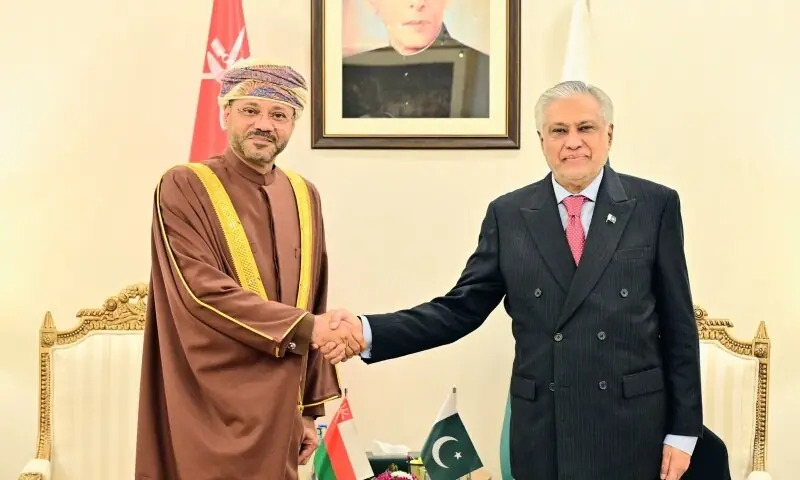
Deputy Prime Minister and Foreign Minister Senator Mohammad Ishaq Dar convened formal bilateral talks with Oman Foreign Minister Sayyid Badr Albusaidi in Islamabad during the eighth session of the Pakistan-Oman Joint Ministerial Commission (JMC). The diplomatic summit, which followed the Omani foreign minister's two-day official visit, concentrated on reinforcing trade architecture, institutional investment, and joint regional stability mechanisms.
During restricted-level consultations, both delegations addressed compounding geopolitical headwinds across the Middle East. Talks scrutinized volatility in strategic maritime routes, focusing specifically on transit stability across the Strait of Hormuz and the Bab el-Mandeb corridor, alongside the protracted humanitarian crisis in Gaza and regional frictions involving Iran and the United States. Dar commended Muscat's sustained neutral diplomacy and conflict de-escalation efforts, while also tabling deliberations on Jammu and Kashmir. The JMC framework prioritized expediting bilateral agreements covering customs coordination, maritime logistics, agricultural trade, and technical workforce integration.
Commercial & Economic Implications
For Pakistan's import-dependent economy and commercial sectors, the stabilization of maritime channels adjacent to the Arabian Peninsula remains an economic imperative. The Strait of Hormuz represents the primary artery for Pakistan's crude oil, liquefied natural gas (LNG), and petroleum product shipments. Any supply disruption across these waterways precipitates immediate freight rate escalation, higher war-risk insurance premiums, and subsequent inflationary spikes in domestic energy tariffs.
Enhanced bilateral trade mechanisms with Oman offer significant structural advantages for wholesale markets and industrial manufacturers. Given Oman's close geographical proximity to Gwadar and Karachi, establishing streamlined shipping linkages reduces turnaround times for perishable agricultural exports, raw textiles, and construction materials. Furthermore, expanding reciprocal trade reduces transaction costs for domestic distributors, while offering access to Omani petrochemical inputs and fertilizer bases critical for Pakistan's agrarian value chains.
Related Intelligence: Russian Strikes on Kyiv Escalate Black Sea and Energy Market Volatility
Stakeholder Perspectives & Market Reactions
Commercial chambers and freight forwarders across Pakistan have welcomed the reactivation of institutional dialogues under the JMC umbrella. Executive leadership within the Federation of Pakistan Chambers of Commerce and Industry (FPCCI) noted that Oman serves as a natural gateway to broader Gulf Cooperation Council (GCC) markets, arguing that bilateral trade remains substantially beneath its latent potential.
Financial market analysts pointed to the strategic alignment between the Pak-Oman Investment Company and domestic industrial projects, emphasizing that institutional capital deployment in logistics, storage infrastructure, and food security could shield local supply chains from broader macroeconomic volatility. Simultaneously, shipping operators highlighted that clear diplomatic assurances regarding maritime transit safety mitigate the operational risks currently borne by sea-freight consolidators.
Forward Outlook & Key Watchpoints
The immediate trajectory of Pakistan-Oman relations depends on formalizing bilateral working group recommendations into enforceable commercial pacts over the next two fiscal quarters. Key watchpoints include the finalization of tariff rationalization protocols, mutual recognition agreements for sanitary and phytosanitary standards on food shipments, and direct maritime logistics routes connecting Omani hubs like Sohar and Salalah directly with Gwadar.
Additionally, market observers will monitor subsequent foreign office engagements aimed at operationalizing joint venture frameworks in mineral extraction, warehousing, and energy distribution. As geopolitical frictions persist across Arabian Sea access points, collaborative defense and maritime surveillance agreements outlined during the 8th JMC will serve as crucial metrics for evaluating supply chain resilience across the region.
Join Our Official WhatsApp Channel
Receive live commodity alerts, policy changes, and commercial intelligence directly on WhatsApp.