
Pakistan and Russia Explore Trade Expansion During Historic Ministerial Visit
Russian Interior Minister Vladimir Kolokoltsev met Prime Minister Shehbaz Sharif in Islamabad, exploring broader trade and economic engagement to diversify commercial corridors and ease bilateral transactional bottlenecks.
The Core Development
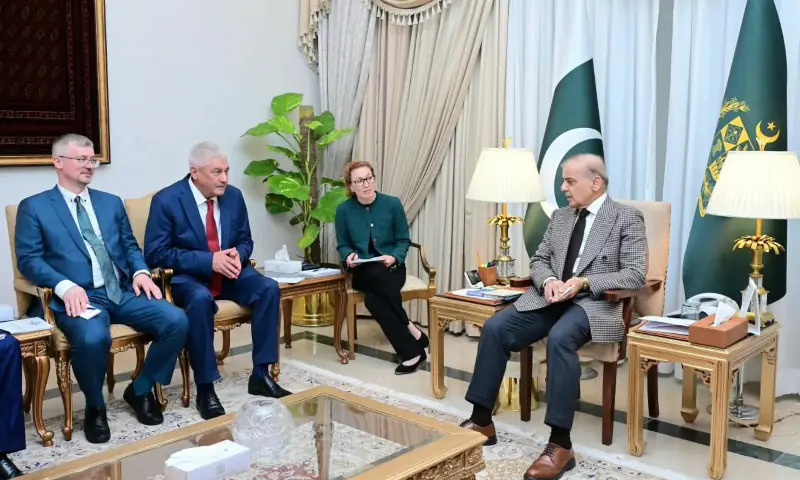
In a landmark diplomatic development, Russian Interior Minister General Vladimir Kolokoltsev concluded high-level talks with Prime Minister Shehbaz Sharif at the Prime Minister's Office in Islamabad. The visit marks the first time a sitting Russian interior minister has visited Pakistan, following an official invitation extended by Federal Minister for Interior Mohsin Naqvi. The four-day official trip underscores a notable realignment in bilateral security and economic diplomacy between Moscow and Islamabad.
According to an official communique from the Prime Minister’s Office, discussions focused on identifying mutual avenues for broadening trade volumes, investment frameworks, and security cooperation. Kolokoltsev emphasized the untapped potential of economic collaboration, highlighting the necessity of formal mechanisms to facilitate cross-border transactions and commercial mobility. Both leaderships reviewed previous bilateral engagements and explored avenues to fast-track ongoing economic dialogues, particularly regarding direct trade logistics and customs cooperation.
Commercial & Economic Implications
For Pakistan's commercial landscape, closer alignment with the Russian Federation carries tangible strategic implications across domestic supply chains. Pakistan has faced severe foreign exchange constraints, elevated structural inflation, and high landing costs for critical commodities. Closer trade integration with Moscow could create alternate import pipelines for vital industrial inputs, wheat, fertilizers, and hydrocarbons.
At the wholesale level, steady fertilizer imports from Russia are critical for stabilizing input costs for Pakistan's domestic agrarian sector. Lower agricultural production costs directly insulate retail commodity prices, dampening food inflation across wholesale mandis and consumer retail markets. Furthermore, expanding energy and petroleum procurement channels from Russia offers Pakistan’s manufacturing sectors cheaper baseload power and fuel supplies, relieving cost pressures on freight corridors and logistics networks that serve domestic retail markets.
Related Intelligence: Yemen War at Crossroads as Escalation Threatens Global Trade Corridors
Stakeholder Perspectives & Market Reactions
Pakistan’s business and trading associations have largely viewed high-level Russian engagement with guarded optimism. Key industrial bodies, including the Federation of Pakistan Chambers of Commerce and Industry (FPCCI), have repeatedly petitioned the government to establish viable, non-dollar transaction mechanisms to bypass existing international payment restrictions. Traders emphasize that without accessible commercial banking channels and local-currency settlement systems, bilateral trade will remain well below its nominal potential.
Legal and financial analysts note that operationalizing broad commercial agreements requires navigating complex Western secondary sanctions. While energy and essential foodstuffs remain broadly exempt from global trade embargoes, domestic commercial banks maintain strict compliance standards, often creating operational friction for importers attempting to settle trade invoices with Russian counterparts.
Forward Outlook & Key Watchpoints
Moving forward, the primary metric of success will be institutional follow-through between relevant ministries. Both administrations are expected to schedule technical working group meetings under the Pakistan-Russia Inter-Governmental Commission on Trade, Economic, Scientific, and Cultural Cooperation. Immediate priorities include harmonizing bilateral customs clearance protocols, formalizing barter and non-dollar trade settlement mechanisms, and securing transit trade arrangements through Central Asian corridors.
Over the medium term, market observers will monitor the implementation of long-delayed bilateral energy projects, transport infrastructure connectivity through the International North-South Transport Corridor (INSTC), and regularized maritime shipping routes. If administrative and banking hurdles are systematically resolved, bilateral trade could witness measurable expansion, providing Pakistani importers and consumers with diversified, cost-effective alternative supply channels.
Join Our Official WhatsApp Channel
Receive live commodity alerts, policy changes, and commercial intelligence directly on WhatsApp.