
Pakistan Reaffirms Strategic and Trade Ties with Russia
Pakistan's civil and military leadership held high-level talks with Russia's Minister of Internal Affairs, reinforcing commitments to expand bilateral trade, security, and strategic economic corridors.
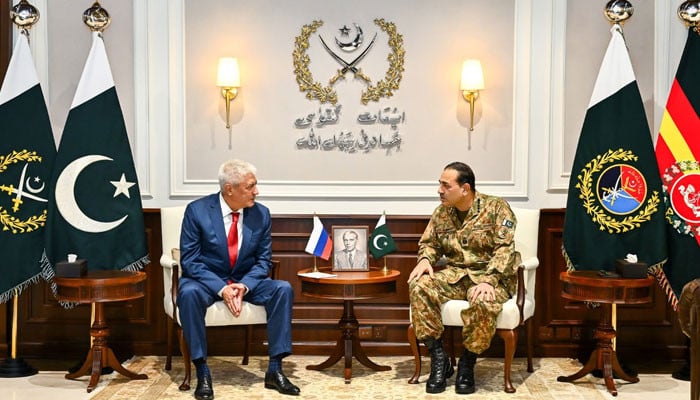
The Core Development
Pakistan reaffirmed its resolve to broaden and deepen bilateral relations with the Russian Federation during a high-profile diplomatic and security delegation visit to Rawalpindi. Chief of Army Staff (COAS) General Asim Munir hosted Russia's Minister of Internal Affairs, Vladimir Kolokoltsev, at General Headquarters (GHQ) to deliberate on mutual security, transnational crime prevention, counter-narcotics, and regional geopolitical stability.
According to the Inter-Services Public Relations (ISPR), both sides reviewed ongoing institutional collaboration across law enforcement, intelligence sharing, and broader regional stability frameworks. General Munir highlighted the historical evolution of Islamabad-Moscow ties, emphasizing that Pakistan views Russia as a vital partner in maintaining regional balance and fostering regional connectivity through Central and South Asia. Minister Kolokoltsev acknowledged Pakistan's sacrifices in combating terrorism and expressed Moscow's commitment to sustaining high-level engagements across multiple strategic and economic fronts.
Commercial & Economic Implications
Beyond military diplomacy, the deepening engagement between Islamabad and Moscow carries critical economic implications for Pakistan's domestic markets, trade flows, and foreign exchange reserves. As Pakistan continues to stabilize its external account, expanding direct commercial engagement with the Russian Federation offers significant diversification opportunities in key import categories, including energy products, industrial raw materials, and agricultural staples.
Pakistan's procurement of discounted Russian crude oil over the past two fiscal cycles demonstrated potential pathways to ease the import bill and cushion domestic refining margins. Enhanced bilateral banking protocols, which have historically presented bottlenecks due to international financial restrictions, remain a priority discussion point among trade delegates. For domestic wholesale and retail markets, stable bilateral corridors promise predictability in the supply chains of wheat, chemical fertilizers, and steel billet. Lower landed costs for essential commodities directly influence wholesale price indexes, mitigating imported inflation pressures that have challenged local consumer spending power over recent quarters.
Related Intelligence: Israeli Plan to Reopen Route 463 Threatens Ramallah Isolation and Regional Stability
Stakeholder Perspectives & Market Reactions
Market participants and corporate leaders in Pakistan have cautiously welcomed expanding ties with Eurasian economies. The Federation of Pakistan Chambers of Commerce and Industry (FPCCI) has routinely underscored the necessity of operationalizing bilateral currency settlement arrangements to bypass secondary transaction hurdles. Exporters within the textile, leather, and surgical sectors view Russia and the broader Commonwealth of Independent States (CIS) as viable alternative export markets to offset demand contractions across traditional Western destinations.
Energy sector analysts emphasize that high-level security dialogues frequently pave the way for foundational government-to-government (G2G) commercial pacts. Independent energy consultants note that consistent dialogue can expedite the long-delayed Pakistan Stream Gas Pipeline (PSGP) and structured long-term liquefied natural gas (LNG) contracts. However, legal experts warn that local commercial banks must ensure compliance with international cross-border frameworks to safeguard foreign correspondent banking relationships while facilitating expanded bilateral trade channels.
Forward Outlook & Key Watchpoints
In the coming months, observers will closely track the outcomes of joint working group sessions between Islamabad and Moscow regarding trade logistics and customs facilitation. The primary operational watchpoint will be whether commercial shipments through the International North-South Transport Corridor (INSTC) and overland transit routes via Central Asian republics gather meaningful commercial momentum.
Furthermore, progress on formalized currency swap agreements or bilateral barter mechanisms will determine the scalability of private-sector trade. If institutional arrangements yield regular shipments of competitive industrial inputs and energy commodities, Pakistan's wholesale sectors stand to gain structural relief, reinforcing fiscal stability and enhancing regional economic integration across the Eurasian landmass.
Join Our Official WhatsApp Channel
Receive live commodity alerts, policy changes, and commercial intelligence directly on WhatsApp.