
Pakistan and Oman Sign Six Bilateral Accords to Deepen Trade and Investment Ties
Pakistan and Oman have finalized six landmark cooperation agreements during the 8th Joint Ministerial Commission session in Islamabad, targeting expanded maritime logistics, bilateral investment, and streamlined trade flows.
The Core Development
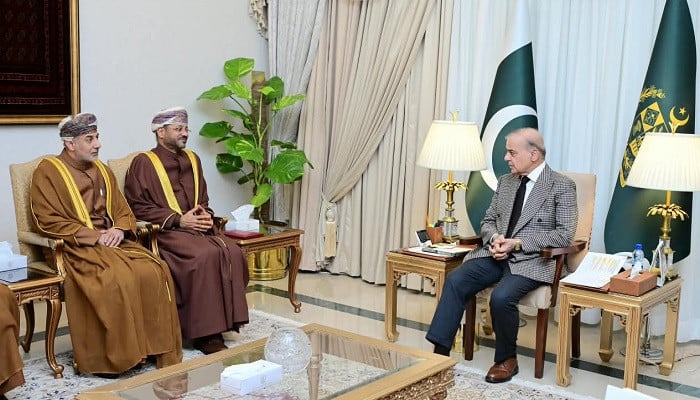
Prime Minister Shehbaz Sharif hosted the Foreign Minister of the Sultanate of Oman, Sayyid Badr bin Hamad bin Hamood Al Busaidi, in Islamabad as both nations finalized six strategic bilateral agreements and Memoranda of Understanding (MoUs). The signing ceremony took place on the sidelines of the 8th Session of the Pakistan-Oman Joint Ministerial Commission (JMC), co-chaired by Pakistan's Deputy Prime Minister and Foreign Minister Ishaq Dar alongside his Omani counterpart.
The bilateral accords encompass critical areas of economic engagement, including maritime transport linkages, direct port-to-port cooperation, customs harmonization, agricultural export facilitation, and labor mobility frameworks. During the formal discussions, Prime Minister Sharif reaffirmed Pakistan's commitment to transforming its historical and geographical proximity to Oman into a robust economic partnership. The Prime Minister highlighted the Special Investment Facilitation Council (SIFC) as an institutional vehicle designed to protect and fast-track Gulf investments into Pakistan's energy, mining, and food security domains. The Omani delegation reiterated Muscat's intent to elevate bilateral trade figures, utilizing Oman's strategic position on the Arabian Sea as an entry node for regional commercial corridors.
Commercial & Economic Implications
For Pakistan's commercial landscape, the bilateral accords provide actionable avenues to address balance-of-payments pressures through targeted export expansion. Oman represents an immediate destination for Pakistani primary commodities, particularly basmati rice, bovine meat, fresh produce, and textile value-added goods. Enhanced customs alignment and streamlined sanitary and phytosanitary (SPS) protocols are expected to significantly reduce clearance bottlenecks at Omani entry ports like Sohar and Salalah.
At the domestic wholesale and distribution levels, the maritime connectivity pact promises lower freight transit costs and reduced turnaround times between Karachi, Gwadar, and Omani ports. Direct maritime routes diminish transshipment reliance on third-party hubs in the United Arab Emirates, lowering the landing cost of Omani petrochemical inputs, industrial polymers, and fertilizer base materials imported by Pakistani manufacturers. Consequently, downstream wholesale markets in Punjab and Sindh could see margin stabilization in packaging and industrial production, insulating local retail supply chains from broader global shipping volatility.
Related Intelligence: Stalled Hormuz Fertilizer Accord Threatens Global Food Security, UN Warns
Stakeholder Perspectives & Market Reactions
Pakistan's industrial bodies and commercial trade associations have welcomed the conclusion of the 8th JMC. The Federation of Pakistan Chambers of Commerce and Industry (FPCCI) and regional wholesale groups noted that formal state-level frameworks were overdue, citing that bilateral trade has hovered below the true economic potential of two proximate maritime neighbors. Export houses in Sialkot, Faisalabad, and Karachi have urged the Ministry of Commerce to establish dedicated air and sea cargo allocations to service the Omani market.
Financial analysts and trade policy experts underscored the geopolitical significance of the agreements, noting that Oman's sovereign investment entities possess significant liquidity that can be directed into Pakistan's infrastructure and logistical nodes. Legal advisors specializing in foreign direct investment observed that clear frameworks for double taxation avoidance and customs standardizations provide private enterprise with the regulatory clarity required to form joint ventures, particularly in cold-chain logistics and maritime processing.
Forward Outlook & Key Watchpoints
The trajectory of the newly signed agreements depends on the operational execution outlined by the Joint Ministerial working groups over the next two quarters. Key watchpoints include the formal notification of tariff reductions, the launch of institutional working committees on mutual recognition of professional standards, and the operationalization of scheduled feeder vessel services between Pakistani and Omani ports.
Market observers will closely monitor whether Oman's private and sovereign sectors initiate feasibility studies under the SIFC umbrella before the end of the current fiscal year. The successful implementation of these six agreements will serve as a bellwether for Pakistan's broader Gulf economic diplomacy, establishing whether institutional bilateral frameworks can translate into measurable foreign direct investment, stabilized trade margins, and expanded industrial employment.
Join Our Official WhatsApp Channel
Receive live commodity alerts, policy changes, and commercial intelligence directly on WhatsApp.