
Pakistan Urges Iran to Maintain Steady Energy Inflows Amid Supply Constraints
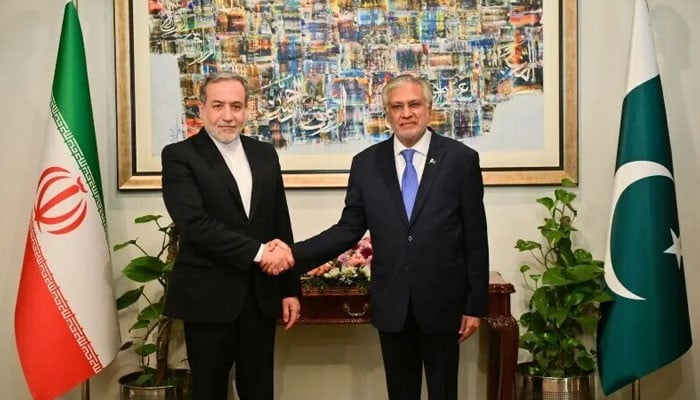
Pakistan's Deputy Prime Minister Ishaq Dar has called on Iranian Foreign Minister Abbas Araghchi to ensure uninterrupted cross-border energy flows, addressing critical regional electricity shortages and broader bilateral trade commitments.
The Core Development
Pakistan's Deputy Prime Minister and Foreign Minister, Mohammad Ishaq Dar, held high-level telephonic consultations with his Iranian counterpart, Seyed Abbas Araghchi, emphasizing the vital imperative of sustaining uninterrupted energy supplies. The official exchange focused on reinforcing bilateral cooperation, regional stability, and commercial trade corridors. Dar explicitly stressed that regularized cross-border power transmission and stable petroleum product deliveries remain fundamental to economic stability along Pakistan's southwestern border. The diplomatic engagement comes at a delicate juncture, as geopolitical frictions across the Middle East threaten commercial supply chain security and transport logistics. Islamabad and Tehran have previously established institutional targets to expand two-way trade toward an ambitious 10 billion dollar threshold, with energy cooperation forming the bedrock of this bilateral framework. Crucially, Pakistan's maritime hub of Gwadar and the wider Makran division in Balochistan remain heavily dependent on imported Iranian electricity, making uninterrupted grid interconnections indispensable to civilian operations and industrial development.
Commercial & Economic Implications
From a trade and macroeconomic perspective, the continuity of Iranian energy flows directly governs the operational cost structure across Balochistan's wholesale distribution, retail commerce, and processing sectors. The Makran coastal belt is largely isolated from Pakistan's national electricity grid, depending primarily on cross-border transmission circuits, including the 100-megawatt Polan-Gabd interconnection inaugurated in 2023. Any curtailment or voltage instability in Iranian supply instantly forces commercial establishments, cold-storage warehouses, and port terminals onto secondary diesel generation. This reliance on imported high-speed diesel elevates commercial operating overheads by an estimated 35 to 45 percent under current fuel tariff schedules. Furthermore, formal and informal inflows of Iranian liquefied petroleum gas (LPG) provide an essential price buffer for consumers and transport operators across southern Pakistan. Sustained cross-border fuel supplies mitigate localized energy inflation, protecting freight margins for logistics networks that transport basic commodities from rural hubs into metropolitan retail markets across Sindh and Punjab.
Related Intelligence: Pakistan Urges Iran to Protect Energy Supplies and Maritime Trade Lanes
Stakeholder Perspectives & Market Reactions
Chambers of commerce and industrial associations in Balochistan and Karachi have welcomed Islamabad's high-level diplomatic intervention. Representatives from the Quetta Chamber of Commerce and Industry noted that energy intermittency in border regions severely disrupts processing plants and designated border-market bazaars, dampening cross-border trade velocity. Legal and financial analysts observe that while short-term electricity supply contracts face manageable compliance exposure, broader bilateral energy initiatives remain constrained by international regulatory risks, specifically United States sanctions frameworks. Market observers also highlight the long-standing shadow of the stalled Iran-Pakistan (IP) gas pipeline project, where Pakistan confronts substantial contractual liabilities if project implementation remains paralyzed. Energy sector stakeholders stress that institutionalizing viable cross-border settlement mechanisms, including barter frameworks and local-currency trade, is essential to protect Pakistani commercial importers from secondary financial sanctions while securing stable input pricing.
Forward Outlook & Key Watchpoints
In the coming months, bilateral engagements will center on joint technical committees tasked with monitoring transmission reliability and reviewing bilateral tariff settlements. Key watchpoints include Tehran's capacity to maintain contracted electricity exports as seasonal domestic consumption fluctuates inside Iran. Concurrently, Islamabad faces the complex challenge of balancing urgent domestic energy deficits against diplomatic compliance risks under the Countering America's Adversaries Through Sanctions Act (CAATSA). Observers will closely track progress on the operationalization of established border sustainment markets and the formalization of cross-border payment clearings. If energy supplies remain uninterrupted, Pakistan will avoid localized inflation spikes and preserve critical supply chain continuity in southwestern trade zones; conversely, supply shocks will necessitate costly fiscal interventions and emergency fuel subsidies to stabilize regional commerce.
Join Our Official WhatsApp Channel
Receive live commodity alerts, policy changes, and commercial intelligence directly on WhatsApp.