
Protests Threaten Rs120 Billion Daily Loss, Warns Finance Minister
Political sit-ins and protest marches threaten to cost Pakistan Rs120 billion daily, Finance Minister Muhammad Aurangzeb warned, describing domestic unrest during acute global economic headwinds as self-inflicted damage to national recovery.
The Core Development
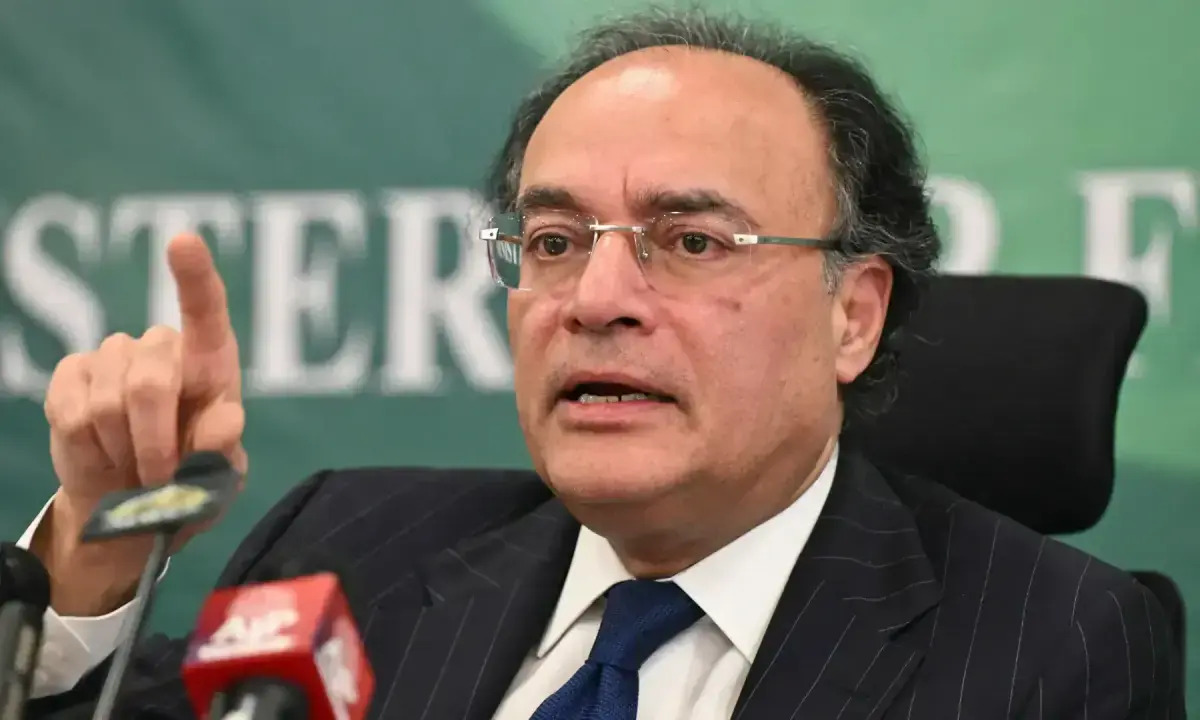
Pakistan's Finance Minister Muhammad Aurangzeb has issued a grave warning regarding impending political agitations and sit-ins, revealing that disruptions to routine commerce and mobility cost the national exchequer and private sector an estimated Rs120 billion per day. The finance minister delivered this assessment during a televised address ahead of a planned march on Islamabad scheduled for September 27 by the Pakistan Tehreek-e-Insaf (PTI), which is mobilizing supporters to demand the release of party founder Imran Khan and advocate for constitutional supremacy. Concurrently, Jamaat-i-Islami (JI) initiated a march toward the capital opposing heavy petroleum levies, compounding administrative pressure on the federal seat of government.
Aurangzeb categorized these coordinated disruptions as a form of "self-inflicted pain," emphasizing that domestic instability actively undermines ongoing macroeconomic stabilization efforts. Highlighting the difficult external environment, particularly supply chain vulnerabilities and economic pressures stemming from Middle East geopolitical conflicts, the minister argued that domestic shutdowns compound foreign financial shocks. The federal government has reaffirmed its commitment to maintaining order, indicating that law enforcement and administrative agencies will prevent unauthorized sit-ins from paralyzing federal territory.
Commercial & Economic Implications
The estimated Rs120 billion daily toll reflects severe operational paralysis across multiple critical economic transmission channels. Chief among these is the domestic wholesale distribution and logistics network. Key freight arteries connecting the industrial and agricultural heartlands of Punjab and Khyber Pakhtunkhwa to Islamabad and northern markets—specifically the Grand Trunk (GT) Road and motorways—routinely face container blockades and security cordons during such standoffs, halting commercial movement.
For wholesale distributors and retail traders, transport interruptions immediately stall inventory turnover across fast-moving consumer goods (FMCG), agricultural produce, and industrial inputs. Perishable commodities are particularly vulnerable; transit delays lead to heavy post-harvest spoilage, triggering immediate localized shortages and artificial retail price spikes in urban consumer markets. Furthermore, urban commercial centers face direct revenue losses as consumer footfall evaporates amid transport shutdowns and security concerns. At the macro level, interrupted business activity depresses daily value-added tax and customs receipts, jeopardizing the Federal Board of Revenue's (FBR) fiscal collection targets under ongoing structural adjustment benchmarks.
Related Intelligence: Tour Fallout Highlights Cultural Sector Exposure to Middle East Geopolitical Rifts
Stakeholder Perspectives & Market Reactions
Business communities and merchant bodies have voiced growing concern over recurring political disruptions, warning that the commercial ecosystem cannot withstand recurring administrative gridlock. Regional trade associations across Islamabad, Rawalpindi, and Lahore have repeatedly called for dispute resolution through dialogue, noting that small-to-medium enterprises (SMEs) and daily wage earners suffer the steepest losses when access to wholesale markets is restricted.
Capital market analysts and economic observers echo the finance minister's assessment, noting that heightened political volatility impairs sovereign risk metrics and weakens domestic business confidence. Foreign direct investment (FDI) inflows and private capital commitments remain sensitive to governance stability and logistics reliability. While political organizers defend mass demonstrations as a constitutional right to protest government policies and inflation, financial analysts stress that coercive physical blockades inevitably translate into broader factory closures and trade deceleration.
Forward Outlook & Key Watchpoints
Heading toward September 27, federal and provincial authorities are expected to enforce strict security arrangements, including Section 144 restrictions, container placements, and heightened police deployments along major transit routes. The critical operational watchpoint will be whether regulatory interventions successfully avert transit gridlock or inadvertently exacerbate supply chain friction through extensive road closures.
Market observers will closely track inter-city freight freight rates, urban food inflation metrics, and transport continuity across the northern corridor. Sustained disruption not only risks triggering short-term inflationary pressure on essential consumer goods but also complicates broader economic targets monitored by multilateral lenders. Sustaining open transit routes and continuous commercial operations will be essential to protecting Pakistan's nascent economic recovery from self-generated market volatility.
Join Our Official WhatsApp Channel
Receive live commodity alerts, policy changes, and commercial intelligence directly on WhatsApp.