
New Delhi Locked Down as Mass Protests Target Election Chief
New Delhi faces severe transport restrictions and heavy police deployment as mass protests demand the election chief's resignation over alleged voter-roll irregularities.
The Core Development
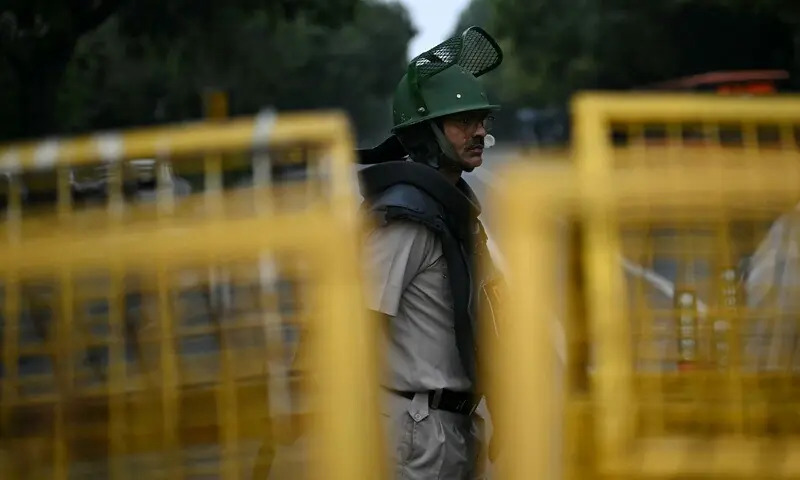
New Delhi has been placed under a stringent security lockdown, with authorities deploying thousands of police personnel and implementing sweeping transport restrictions across the capital and its surrounding transit corridors. The heightened security posture comes ahead of mass demonstrations scheduled for Saturday, organized by the youth-led Cockroach Janata Party (CJP). The protests mark the culmination of weeks of intense opposition mobilization triggered by a major investigative report published last month. The newspaper exposé alleged widespread misconduct and irregularities by the Election Commission of India (ECI) during a nationwide special intensive voter-roll revision. While the ECI has categorically rejected all accusations of impropriety, maintaining that the revision was strictly a procedural exercise designed to weed out duplicate and ineligible voters, the opposition refuses to back down, demanding the immediate resignation of the country's chief election authority.
Commercial & Economic Implications
For regional commercial operators and cross-border traders, particularly those monitoring South Asian economic corridors from Pakistan, the escalation of political instability in New Delhi carries immediate operational risks. Transportation bottlenecks, road closures, and heightened security checkpoints inside the capital threaten to disrupt domestic supply chains, retail trade distribution, and wholesale logistics that depend on smooth transit through northern India. Any prolonged civic unrest or systemic institutional friction in India's primary political and financial hub invariably dampens investor sentiment, exerts pressure on regional capital markets, and introduces volatility into consumer price indices and retail pricing structures across the broader subcontinent. Commercial enterprises are closely evaluating inventory levels and alternative distribution routes to insulate operations from potential spillover disruptions.
Related Intelligence: New Delhi Imposes Security Lockdown Ahead of High-Stakes Electoral Protests
Stakeholder Perspectives & Market Reactions
Business councils, trader associations, and industry bodies across the region have expressed growing apprehension regarding the economic fallout of protracted political confrontation. While civil liberties groups and opposition leaders defend the demonstrations as a vital defense of democratic accountability and electoral integrity, trade federations warn that recurring street protests and administrative lockdowns severely impair commercial productivity. Legal experts and constitutional analysts remain divided, with critics of the ECI calling for an independent judicial inquiry into the voter-roll discrepancies, while government defenders emphasize the importance of upholding institutional stability and rejecting challenges to statutory election procedures.
Forward Outlook & Key Watchpoints
As Saturday's demonstrations unfold, market analysts and regional stakeholders will closely monitor police enforcement measures, crowd containment strategies, and the potential for wider civil unrest across other major Indian metropolitan centers. Key watchpoints include the duration of transport restrictions in New Delhi, the official government and judicial response to the CJP's demands, and any subsequent legislative or administrative adjustments to the ECI's voter-revision protocols. The resolution or escalation of this political standoff will heavily influence investor confidence and commercial predictability across South Asia in the coming quarters.
Join Our Official WhatsApp Channel
Receive live commodity alerts, policy changes, and commercial intelligence directly on WhatsApp.