
Maldives President Arrives in Pakistan to Revitalize Bilateral Trade Ties
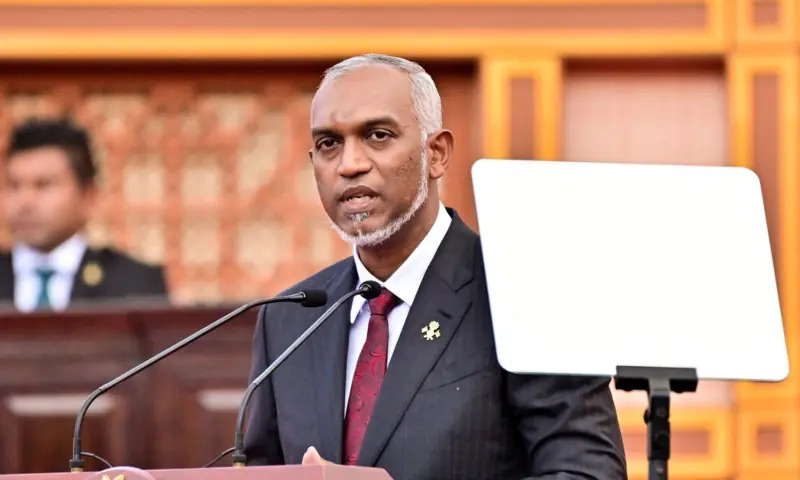
Maldives President Dr. Mohamed Muizzu has commenced a historic three-day state visit to Islamabad, seeking to overhaul bilateral commercial ties and expand trade logistics between both maritime nations.
The Core Development
President Dr. Mohamed Muizzu of the Republic of Maldives touched down in Islamabad on Tuesday, embarking on a pivotal three-day official visit aimed at recalibrating political, economic, and strategic ties between the two South Asian nations. The visit, undertaken on the formal invitation of Prime Minister Shehbaz Sharif, marks a significant diplomatic milestone as the first visit by a Maldivian head of state to Pakistan in over eleven years. The high-level engagement also serves to commemorate the upcoming 60th anniversary of the establishment of formal diplomatic relations between Islamabad and Malé, first cemented in 1966.
According to an official communique issued by Pakistan's Ministry of Foreign Affairs, President Muizzu’s itinerary includes high-level restricted consultations followed by extensive delegation-level talks with Prime Minister Sharif. Discussions will center on expanding institutional linkages across trade, tourism, climate vulnerability collaboration, and maritime connectivity. In addition to executive deliberations, the visiting head of state is scheduled to meet President Asif Ali Zardari, who will host a formal state banquet in honor of the Maldivian delegation. Ministerial representatives from commerce, maritime affairs, and foreign service will hold targeted sidebar discussions to finalize bilateral memorandums of understanding.
Commercial & Economic Implications
From a trade and commercial perspective, President Muizzu's visit presents an opportunity to diversify Pakistan's export profile within the Indian Ocean Rim. Currently, bilateral trade volume between Pakistan and the Maldives remains modest, hovering below its actual market potential due to indirect shipping routes and regulatory barriers. For Pakistani wholesale exporters, particularly in agro-commodities, pharmaceuticals, light engineering, and textile furnishings, the Maldives represents an attractive, high-value consumer market heavily reliant on imports.
Expanding direct maritime freight channels and air cargo connectivity between Karachi and Malé could significantly curtail logistics lead times and transit costs for domestic producers. Pakistan’s staple agricultural exports—such as Basmati rice, fresh citrus, onions, and potatoes—stand to gain market share against regional competitors if preferential tariff quotas or streamlined customs clearance mechanisms are established. Furthermore, joint ventures in hospitality procurement, halal food supply chains, and construction materials could provide foreign exchange inflows, directly benefiting Pakistani wholesale distributors and primary manufacturers seeking new oceanic export destinations.
Related Intelligence: Pakistan and Qatar Expand Bilateral Internal Security and Strategic Cooperation
Stakeholder Perspectives & Market Reactions
Commercial circles and trade promotion bodies in Pakistan have welcomed the diplomatic reboot. Officials from the Federation of Pakistan Chambers of Commerce and Industry (FPCCI) and regional trade bodies have frequently highlighted that the absence of dedicated commercial agreements has historically hampered direct business-to-business transactions between Islamabad and Malé. Exporters have long advocated for a formalized Preferential Trade Agreement (PTA) to eliminate non-tariff barriers.
On the diplomatic front, observers note that President Muizzu's administration has systematically pursued a more diversified external foreign and economic policy, seeking balanced partnerships across Asia. Diplomatic analysts emphasize that institutionalizing trade ties with Pakistan allows the island nation to enhance its food security architecture and access cost-effective medical supplies, while allowing Islamabad to project greater economic diplomacy within the Indian Ocean territory.
Forward Outlook & Key Watchpoints
Moving forward, market participants will closely monitor whether the bilateral talks yield actionable frameworks, including the formalization of a joint business council and targeted tariff relief protocols. Key watchpoints include potential announcements regarding direct commercial shipping services connecting Karachi Port and Port Qasim to Malé, as well as bilateral agreements on banking transaction channels.
The durability of this diplomatic re-engagement will ultimately depend on bureaucratic follow-through. Concrete mechanisms, such as business visa facilitations, mutual recognition of quality standards, and dedicated trade delegations scheduled over the coming fiscal year, will determine whether this historic state visit translates into tangible transaction volumes for Pakistani producers and logistics operators.
Join Our Official WhatsApp Channel
Receive live commodity alerts, policy changes, and commercial intelligence directly on WhatsApp.