
Lula Defends Brazil Sovereignty at UN Amid Renewed US Latin America Push
Brazilian President Luiz Inacio Lula da Silva issued a stern warning against foreign interference at the UN, clashing with renewed US hemispheric assertiveness.
Geopolitical & Core Developments
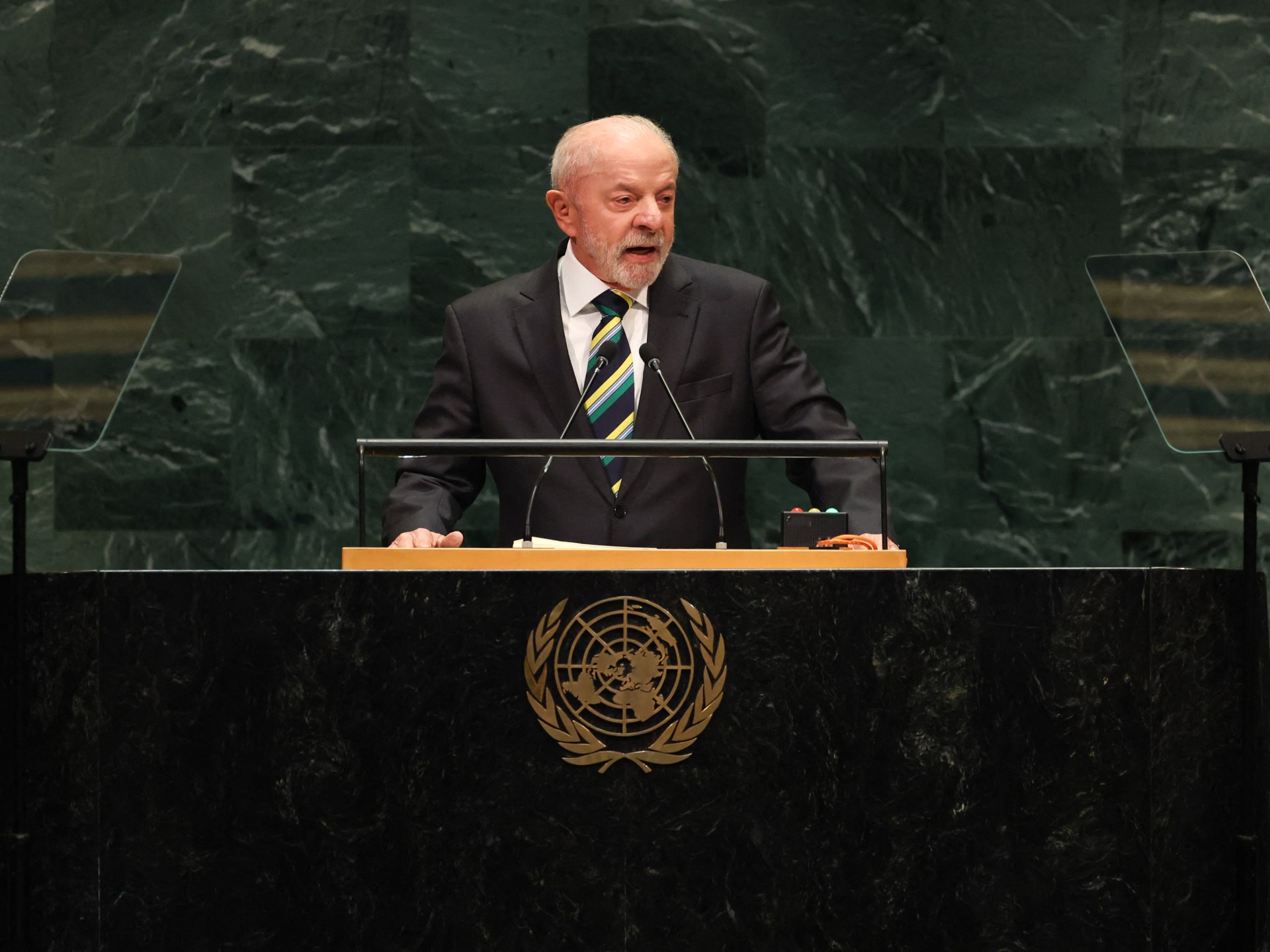
Brazilian President Luiz Inacio Lula da Silva used the global stage of the United Nations General Assembly to deliver a resolute defense of national sovereignty, directly cautioning against foreign interference in Latin American affairs. Lula's address struck a defiant tone against external hegemonic pressures, emphasizing that regional stability depends on multilateral respect, self-determination, and adherence to international law. This high-stakes diplomatic confrontation unfolded against the backdrop of an assertive foreign policy stance from Washington, where US leadership renewed declarations of American predominance in the Western Hemisphere. The juxtaposition of these competing visions highlights a growing ideological and strategic fracture within the Americas, reminiscent of historical Cold War fault lines, yet adapted to a multipolar era defined by resource competition and supply chain security.
The timing of Lula's remarks is particularly sensitive, coinciding with a broader recalibration of United States foreign policy under Donald Trump. As Washington signals an intent to reassert its traditional sphere of influence across Latin America through economic leverage and security demands, Brasilia has positioned itself as a leading champion of autonomous regional diplomacy. Lula underscored that emerging economies will no longer accept subordinate status in global governance structures, pointing to Brazil's leadership within multilateral groupings such as BRICS as proof of an evolving geopolitical reality. This strategic posture aims to insulate South American governance and economic policymaking from external coercion, setting the stage for protracted diplomatic friction between traditional allies and rising regional heavyweights.
Global Trade & Economic Ripples
The rising diplomatic friction between Brasilia and Washington carries profound implications for global commodity markets, international trade routes, and foreign direct investment across Latin America. Brazil remains a cornerstone of global agricultural supply chains, serving as a primary exporter of soybeans, iron ore, beef, and crucial industrial minerals. Any escalation in geopolitical posturing could disrupt trade negotiations, complicate bilateral tariff discussions, and introduce regulatory uncertainty for multinational corporations operating within the Mercosur bloc.
Furthermore, energy markets and strategic mineral supply chains are directly implicated in this diplomatic standoff. As global powers vie for control over critical transition minerals—including lithium and rare earth elements abundant in South America—sovereignty disputes threaten to weaponize export controls and environmental regulations. Shipping lanes across the South Atlantic and Caribbean basins could face increased strategic oversight, potentially impacting maritime logistics, freight rates, and insurance premiums for commodities transiting the region. Currency markets have already registered subtle tremors, with the Brazilian real experiencing heightened volatility as foreign exchange traders reprice sovereign risk premiums in response to the deteriorating diplomatic climate.
Related Intelligence: Sudan Famine Crisis Threatens Regional Stability and Commodity Flows
International Reactions & Diplomatic Stances
Reactions across the international community have exposed deep divisions between traditional Western capitals and the Global South. European Union diplomats have expressed quiet concern over the potential destabilization of trade pacts, urging both Washington and Brasilia to maintain open channels of communication to prevent a total breakdown in hemispheric cooperation. Meanwhile, emerging economies within the BRICS alliance have rallied behind Lula's defense of sovereignty, viewing his remarks as a necessary pushback against unilateral economic sanctions and extraterritorial jurisdiction.
Market analysts and geopolitical risk consultancies have upgraded their watchlists for Latin America, warning that corporate strategies must account for regulatory divergence and potential trade retaliations. Multilateral bodies, including the Organization of American States and various UN agencies, have issued calls for restraint, emphasizing that cooperative frameworks remain essential for addressing transnational challenges such as climate change, migration, and organized crime. However, the hardening rhetoric from both the White House and the Planalto suggests that diplomatic compromises will prove difficult to secure in the near term.
Strategic Outlook & Future Scenarios
Looking ahead, the trajectory of US-Brazil relations will likely be defined by a series of upcoming diplomatic summits and potential economic skirmishes. If the current administration in Washington implements punitive trade measures or aggressive diplomatic arm-twisting to enforce hemispheric compliance, Brazil is expected to accelerate its pivot toward alternative commercial partners, notably China and fellow BRICS nations. This realignment could permanently alter traditional trade matrices, reducing Western market share in South America's most dynamic economies.
Conversely, a de-escalation could emerge if pragmatic commercial interests override ideological posturing, preserving integrated supply chains and fostering a negotiated equilibrium. Nevertheless, the events at the UN signal that the era of unhindered US hegemony in Latin America has officially closed, replaced by a competitive multipolar dynamic where regional powers actively contest the rules of global engagement. Stakeholders across energy, agriculture, and finance must navigate this volatile landscape with heightened strategic agility.
Join Our Official WhatsApp Channel
Receive live commodity alerts, policy changes, and commercial intelligence directly on WhatsApp.