
Iran Refuses Surrender After Trump Annihilation Threat at UN
Iranian President Masoud Pezeshkian vowed defiance at the UN following US President Donald Trump's annihilation threat, as stalled diplomacy deepens Middle East volatility.
The Core Development
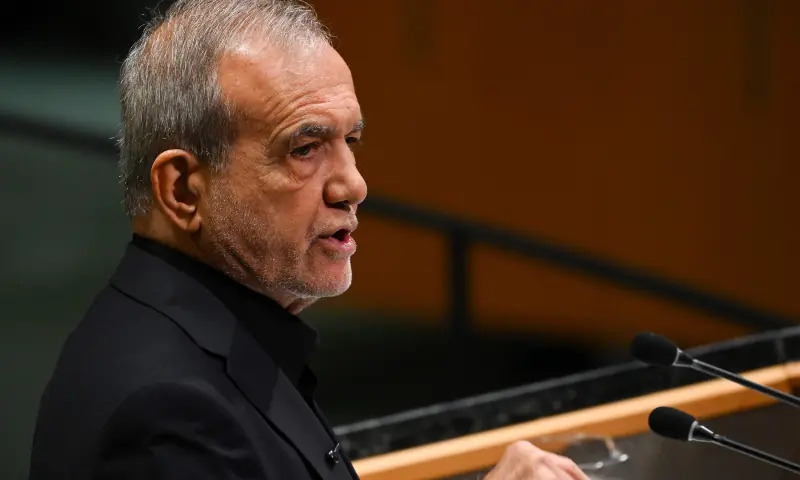
Iranian President Masoud Pezeshkian delivered a defiant address at the United Nations General Assembly in New York, declaring that Tehran would never surrender to the United States. This came merely a day after US President Donald Trump used the same global platform to issue a severe threat of absolute annihilation against the Islamic Republic. The duelling high-level speeches bookended the first round of indirect shuttle diplomacy between Washington and Tehran in months. These backchannel discussions ultimately yielded no public concessions from either administration regarding the ongoing, devastating Middle East conflict.
Speaking at the UN for the first time since aggressive escalations involving Washington and Israel, President Pezeshkian rigorously defended Iran's recent military actions as entirely defensive measures. He further insisted that Tehran harbors no intentions of developing or acquiring nuclear weapons, aiming to reassure the international community amidst soaring geopolitical tensions. However, the juxtaposition of Trump's unyielding rhetoric and Pezeshkian's firm stance underscores a widening diplomatic chasm, leaving international mediators with narrowing pathways to de-escalation.
Commercial & Economic Implications
For Pakistan, the hardening standoff between the United States and Iran carries profound economic repercussions, primarily transmitted through global energy markets and international supply chains. Any military escalation or tightening of sanctions resulting from this diplomatic breakdown threatens to destabilize crude oil benchmarks. As an energy-importing nation, Pakistan faces immediate vulnerability to imported inflation if global petroleum prices surge. Higher energy costs directly inflate domestic transport, manufacturing, and electricity tariffs, cascading down to retail consumer prices and straining household purchasing power across major urban centers like Karachi, Lahore, and Islamabad.
Furthermore, regional instability disrupts vital trade corridors and maritime routes across the Middle East, impacting wholesale distribution networks for various imported commodities and industrial raw materials. Pakistani retail trade associations and business chambers have expressed mounting anxiety over currency volatility and foreign exchange reserves, which remain sensitive to external oil shocks. Sustained geopolitical friction in the Persian Gulf region risks exacerbating domestic inflationary pressures, complicating the central bank's monetary policy trajectory and slowing broader industrial growth.
Related Intelligence: US-Iran Diplomacy Falters in New York Amid Deepening Regional Strains
Stakeholder Perspectives & Market Reactions
Business leaders and financial analysts in Pakistan are closely monitoring the fallout from the New York exchanges, warning that prolonged belligerence between Washington and Tehran could severely constrain foreign direct investment in South Asia. Local trader bodies emphasize that unpredictable commodity pricing makes inventory management and long-term business planning nearly impossible for small and medium enterprises. Economic commentators point out that Pakistan's fragile economic recovery leaves little room to absorb external commodity shocks driven by geopolitical conflicts.
Legal and policy experts suggest that Islamabad must maintain a cautious diplomatic equilibrium, balancing its strategic energy interests and historical ties with neighboring Iran against the imperative of maintaining stable financial relations with Western donor nations and multilateral lenders. Official statements from policy circles urge restraint from all belligerent parties, emphasizing that global trade stability relies entirely on uninterrupted diplomatic channels.
Forward Outlook & Key Watchpoints
As the diplomatic impasse persists, market participants and policy planners must monitor several critical indicators over the coming weeks. Key watchpoints include potential shifts in US enforcement of secondary sanctions on Iranian energy exports, OPEC+ production adjustments in response to Middle East security threats, and any resumption of backchannel talks between Washington and Tehran. For Pakistan's business community, navigating this volatile external environment will require agile supply chain strategies, robust risk management, and close alignment with shifting regulatory frameworks governing international trade and finance.
Join Our Official WhatsApp Channel
Receive live commodity alerts, policy changes, and commercial intelligence directly on WhatsApp.