
Khyber Pakhtunkhwa Under Governor Rule As Economic Lifelines Face Severe Disruption
Federal authorities have imposed emergency rule in Khyber Pakhtunkhwa under constitutional provisions, triggering immediate security lockdowns and severe commercial paralysis across Peshawar.
The Core Development
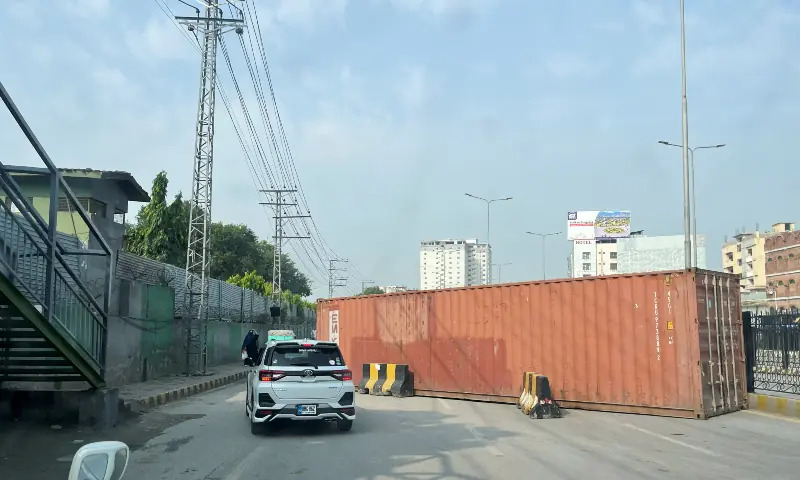
The federal government has officially imposed a state of emergency and governor's rule in Khyber Pakhtunkhwa (KP), setting off a profound political and administrative crisis across the province. The decisive measures were formally approved under Articles 232 and 234 of the Constitution of Pakistan, following swift presidential endorsement of recommendations put forward by the federal cabinet. In direct response to the constitutional intervention, heavy security measures were implemented overnight, most notably in the provincial capital of Peshawar, where authorities deployed large shipping containers to seal off vital transportation arteries and urban corridors.
By Sunday morning, strategic intersections and commercial hubs across Peshawar had become impassable. Shipping containers were positioned near the city's central railway station to effectively sever access routes leading toward Khyber Bazaar, Shoba Bazaar, and adjoining commercial districts. Similar blockades were established in the vicinity of historic Edwardes College, blocking vital entry points to Jail Road and the Malik Saad Shaheed Flyover. Further compounding traffic paralysis, heavy barricades were erected near the iconic Bala Hisar Fort and outside the regional Pakistan International Airlines (PIA) office, cutting off critical vehicular flow toward Mall Road and central administrative zones.
Commercial & Economic Implications
For Kalyar Traders and the broader commercial community operating within Khyber Pakhtunkhwa, the sudden imposition of emergency rule and subsequent road blockades present an immediate threat to economic stability. Peshawar serves as the primary wholesale and retail distribution nexus for the entire province, acting as a critical trading conduit linking domestic markets with western trade routes. The physical obstruction of key arteries such as Khyber Bazaar and Shoba Bazaar directly paralyzes daily commercial turnover, preventing the seamless movement of Fast-Moving Consumer Goods (FMCG), agricultural produce, and industrial inventory.
Supply chain disruptions of this magnitude instantly reverberate through local pricing mechanisms. Logistical delays caused by detours and security checkpoints increase transportation overheads for distributors, costs that inevitably cascade down to retail consumers already grappling with stubborn inflationary pressures. Wholesale merchants report an immediate contraction in foot traffic and trading volumes, threatening liquidity for small and medium enterprises (SMEs) that form the backbone of the provincial economy. Furthermore, interruptions near transport hubs like the railway station and major commercial corridors threaten to stall regional commerce, dampening business confidence at a critical fiscal juncture.
Related Intelligence: Khyber Pakhtunkhwa Faces Governor Rule Amid Rising Instability
Stakeholder Perspectives & Market Reactions
Business councils, trade associations, and industrial bodies have expressed deep apprehension regarding the economic fallout of the prolonged administrative shutdown. Representatives from local merchant associations have emphasized that continuous blockades and political uncertainty inflict irreparable damage on commercial productivity. Industry stakeholders point out that investor sentiment remains fragile, and abrupt security measures undermine ongoing efforts to stabilize commercial operations and stimulate regional trade recovery.
Legal and constitutional experts are closely monitoring the invocation of Articles 232 and 234, debating the long-term governance ramifications of federal intervention in provincial affairs. Meanwhile, public response has been marked by widespread frustration, as daily commuters and working professionals face severe mobility restrictions. Official statements from administrative authorities maintain that these security protocols are necessary preventive measures designed to preserve public order and safeguard state infrastructure amidst heightened political tensions.
Forward Outlook & Key Watchpoints
As the situation unfolds, market participants and economic analysts at Kalyar Traders are closely tracking several critical indicators over the coming days. Key watchpoints include the duration of the container blockades, potential modifications to traffic management plans by local administrations, and any indications of a de-escalation in political hostilities between federal and provincial stakeholders.
Economic recovery will depend heavily on how swiftly commercial arteries are cleared to restore normal supply chain velocity. If emergency measures and logistical bottlenecks persist through the upcoming trading week, provincial markets could face severe stock depletion, inventory backlogs, and accelerated price volatility. Policymakers and business leaders must urgently coordinate to balance administrative imperatives with the unhindered flow of commerce, ensuring that the economic lifeblood of Khyber Pakhtunkhwa is shielded from prolonged paralysis.
Join Our Official WhatsApp Channel
Receive live commodity alerts, policy changes, and commercial intelligence directly on WhatsApp.