
Khyber Pakhtunkhwa Rejects Federal Emergency Threats Amid Rising Political Friction
Khyber Pakhtunkhwa Chief Minister Sohail Afridi has strongly rejected federal threats of imposing governor's rule amid escalating policy disputes over national counterterrorism measures.
The Core Development
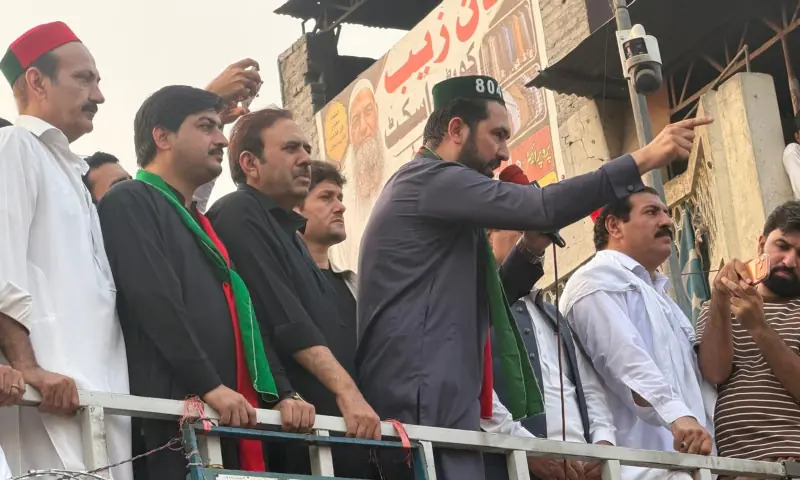
Tensions between the federal administration and the Khyber Pakhtunkhwa (KP) provincial government have reached a critical juncture. Addressing thousands of supporters in Mardan on the seventh day of the ongoing Pakistan Tehreek-e-Insaf (PTI) long march, KP Chief Minister Sohail Afridi declared that his administration would vehemently resist any unconstitutional intervention. The stark warning comes in direct response to active deliberations within Islamabad regarding the potential imposition of emergency powers or governor's rule in the province, ostensibly triggered by irreconcilable differences over national counterterrorism protocols and security enforcement.
Chief Minister Afridi emphasized that state machinery, arrests, and intimidation tactics would fail to break the resolve of party workers. The march, which originated in Peshawar with the ultimate destination set for Islamabad's high-security D-Chowk, serves as a primary vehicle for mounting pressure on the central government. Afridi maintained that the Pakhtun population refuses to bow to coercion, framing the ongoing political confrontation as a defense of provincial autonomy against central overreach.
Commercial & Economic Implications
Extended political instability and the specter of administrative paralysis in Khyber Pakhtunkhwa carry severe ramifications for regional commerce, wholesale trade networks, and national supply chains. KP serves as a critical commercial corridor connecting Pakistan with Central Asian markets through key trade routes like Torkham. Persistent political friction, highway blockades, and potential administrative lockdowns directly disrupt cross-border logistics, depressing cargo movement and escalating transportation costs for perishable goods and industrial raw materials.
Local markets in Peshawar, Charsadda, and Mardan are already experiencing heightened volatility as retail and wholesale merchants hedge against supply chain disruptions. Consumer price inflation in the region risks upward pressure due to transport bottlenecks and diminished investor confidence. Furthermore, prolonged uncertainty dampens private sector investment in the province, delaying critical infrastructure projects and undermining employment generation in retail and manufacturing sectors that rely on uninterrupted commercial operations.
Related Intelligence: Mexican Court Sentences Three Over Surf Killings
Stakeholder Perspectives & Market Reactions
Business councils, trader associations, and legal experts have expressed profound anxiety over the escalating standoff between federal and provincial authorities. Major trade bodies in Peshawar have warned that any unconstitutional disruption of the provincial government or prolonged street agitation will inflict catastrophic losses on commercial enterprises still recovering from previous economic shocks. Business leaders emphasize that political stability is an absolute prerequisite for normal market functioning and consumer confidence.
Legal constitutional experts note that invoking emergency provisions or governor's rule under Article 232 or Article 234 of the Constitution requires clear evidence of a breakdown in constitutional machinery, a threshold that remains legally contentious. Meanwhile, public response along the march route reflects sharp polarization, with fervent support for the PTI's demands for the release of incarcerated founder Imran Khan juxtaposed against deep apprehension over the potential economic fallout of a broader political confrontation.
Forward Outlook & Key Watchpoints
The immediate trajectory of the crisis depends heavily on the progress of the PTI long march as it approaches the federal capital and the formal policy responses emanating from Islamabad. Key indicators to monitor include executive decisions regarding counterterrorism coordination committees, potential legal challenges in superior courts should emergency measures be gazetted, and any emergency decrees from the federal cabinet. Market participants and economic analysts will closely watch security arrangements in Islamabad and Peshawar, as any escalation into civil unrest threatens to trigger severe commercial disruptions and further strain Pakistan's fragile macroeconomic stability.
Join Our Official WhatsApp Channel
Receive live commodity alerts, policy changes, and commercial intelligence directly on WhatsApp.