
Khyber Pakhtunkhwa Chief Minister Reaffirms Anti-Op Stance as PTI March Enters Week Two
Khyber Pakhtunkhwa Chief Minister Sohail Afridi maintains staunch opposition to military operations as the PTI long march completes one week, triggering widespread economic anxiety across commercial corridors.
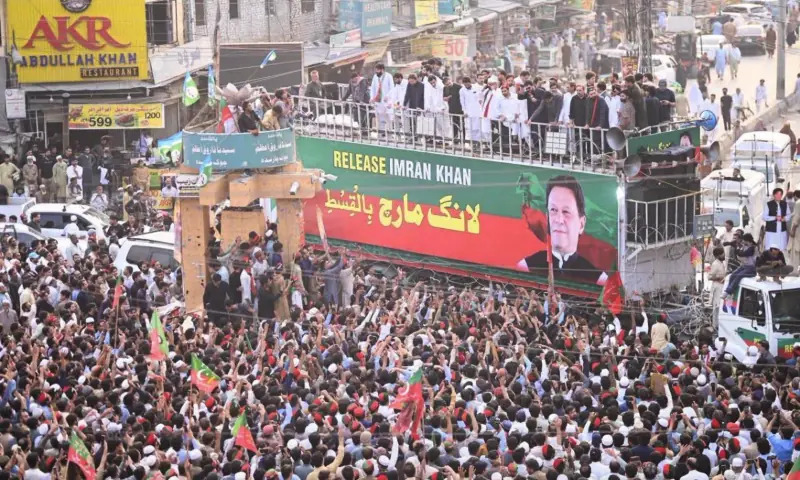
The Core Development
Khyber Pakhtunkhwa Chief Minister Sohail Afridi on Saturday reiterated his uncompromising stance against any prospective military operations within the province, marking a definitive policy line as the Pakistan Tehreek-e-Insaf (PTI) long march completed its first week. Initiated on October 4 from Lakki Marwat under the rallying cry of asserting provincial autonomy and resisting federal security diktats, the march has rapidly evolved into a high-stakes political showdown.
However, the logistical trajectory of the demonstration has been fraught with continuous recalibrations. Initially projected as a direct, unyielding march toward the federal capital of Islamabad, the route plan has undergone multiple alterations. Analysts and political observers note that the ultimate destination of the convoy remains distinctly tentative. While convergence points up to October 11 have been mapped out, Chief Minister Afridi has yet to formally unveil the definitive itinerary for the trek beyond Swabi, leaving security apparatuses and political commentators guessing about the movement's terminal phase.
Commercial & Economic Implications
For the business community in Khyber Pakhtunkhwa and broader northern trade corridors, the protracted nature of the long march presents severe economic headwinds. Retail trade, wholesale distribution networks, and inter-provincial supply chains are already absorbing the shockwaves of heightened security blockades, containerized road closures, and localized transport suspensions.
Commercial hubs connecting Peshawar, Charsadda, Mardan, and Swabi report a marked contraction in daily footfall and consumer spending. Wholesale markets handling perishable agricultural goods, fast-moving consumer goods (FMCG), and industrial raw materials face escalating logistical costs as delivery trucks are forced to detour through secondary, poorly maintained rural routes. These transport delays directly translate into inflationary pressures, driving up commodity prices for end-consumers already grappling with a high-inflation macroeconomic environment. Furthermore, investor confidence in regional trade infrastructure remains deeply depressed as long-term commercial planning is continually derailed by recurrent political upheavals.
Stakeholder Perspectives & Market Reactions
Representative bodies of traders, industrial chambers, and commercial associations have voiced mounting frustration over the economic collateral damage inflicted by sustained political agitation. Business leaders argue that the compounding effect of shuttered bazaars, restricted mobility, and uncertain regulatory enforcement threatens the survival of small and medium-sized enterprises (SMEs) across the province.
Legal and policy experts emphasize the constitutional friction underlying Chief Minister Afridi's anti-operation rhetoric. The standoff between provincial leadership and federal counterterrorism mandates creates a governance vacuum, unnerving institutional investors who prioritize regulatory predictability and internal security above all else. Public response remains polarized, with ardent PTI supporters rallying behind the Chief Minister's defiance, while commercial stakeholders desperately appeal for negotiated settlements to safeguard economic lifelines.
Forward Outlook & Key Watchpoints
As the PTI long march transitions past its initial weekly milestone, market observers and political analysts are closely monitoring key operational triggers. The immediate watchpoint remains the formal announcement of the march itinerary beyond Swabi and whether the convoy attempts to breach federal territory in Islamabad.
Policy enforcement mechanisms adopted by the federal government, potential deployment of contingency security protocols, and any emergency interventions by provincial trade bodies to establish safe commercial corridors will dictate the near-term economic trajectory. For Kalyar Traders and the wider business ecosystem, restoring unimpeded logistical mobility and establishing a durable political truce are paramount to preventing further erosion of commercial activity in Pakistan's vital northern markets.
Join Our Official WhatsApp Channel
Receive live commodity alerts, policy changes, and commercial intelligence directly on WhatsApp.