
Khyber Pakhtunkhwa Chief Minister Afridi Rejects Military Operations as PTI Long March Enters Seventh Day
Khyber Pakhtunkhwa Chief Minister Sohail Afridi reaffirmed his stance against military operations as the PTI long march marked its one-week milestone with tentative route plans.
The Core Development
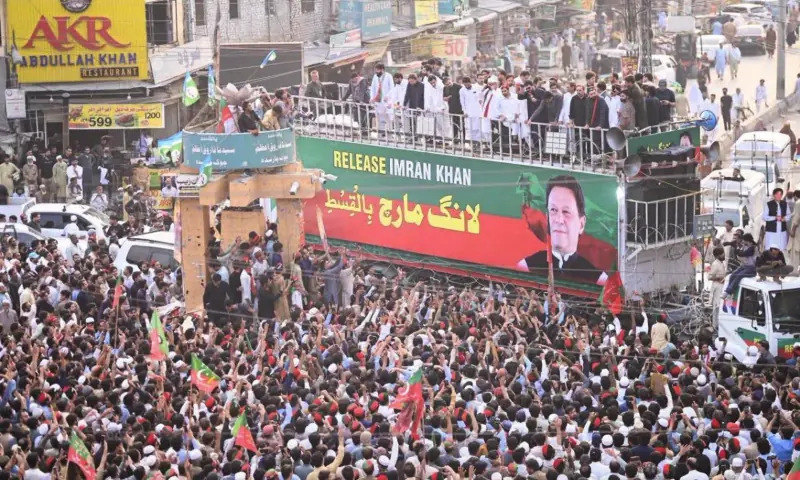
Khyber Pakhtunkhwa Chief Minister Sohail Afridi on Saturday reiterated his uncompromising opposition to any prospective military operations within the province, speaking as the Pakistan Tehreek-e-Insaf (PTI) long march marked a full week since its initial launch. The demonstration, which commenced on October 4 from Lakki Marwat under Chief Minister Afridi's direct leadership, has experienced a series of strategic and logistical route adjustments. Initially projected to culminate directly in Islamabad, the ultimate destination and timeline of the march remain fluid and tentative. Following continuous modifications to the route plan, the chief minister has yet to announce definitive operational itineraries for the trek beyond Swabi past October 11, fueling intense speculation regarding the ultimate political objectives of the provincial administration.
Commercial & Economic Implications
The ongoing political mobilization and persistent uncertainty surrounding the PTI long march carry profound ramifications for commercial activity, wholesale distribution networks, and retail trade across Khyber Pakhtunkhwa and northern economic corridors. Extended political demonstrations and associated logistical bottlenecks directly disrupt inter-provincial supply chains, impeding the seamless flow of goods from major ports and manufacturing hubs toward regional consumer markets. Commercial freight operators report significant delays and heightened security overheads, which inevitably translate into inflated transportation costs. For ordinary consumers, these disruptions risk exacerbating inflationary pressures, particularly concerning perishable foodstuffs, essential commodities, and fuel prices. Regional markets in Charsadda, Swabi, and surrounding districts face suppressed consumer footfall and depressed retail turnovers as businesses navigate an unpredictable operational environment characterized by heightened security deployments and occasional thoroughfare closures.
Related Intelligence: Federal Leadership Weighs Khyber Pakhtunkhwa Emergency Amid Security Crisis
Stakeholder Perspectives & Market Reactions
Business councils, trade associations, and regional chambers of commerce have expressed growing apprehension regarding the prolonged political agitation. Representatives from major wholesale and retail bodies note that sustained political polarization dampens investor sentiment and stalls critical commercial transactions. While provincial leadership frames the march as a vital democratic assertion of regional rights and policy autonomy—specifically concerning counterterrorism governance—commercial stakeholders emphasize the urgent necessity of political stability to safeguard fragile economic recovery gains. Legal experts and policy analysts remain divided on the constitutional implications of a sitting provincial chief executive spearheading a sustained anti-government march, noting that the friction between federal security mandates and provincial administrative positions creates systemic unpredictability for the domestic business climate.
Forward Outlook & Key Watchpoints
As the PTI long march progresses past its initial weekly milestone toward Swabi, key economic and political actors are closely monitoring several critical indicators. The immediate trajectory of the march post-October 11 will dictate whether commercial transit routes experience normalization or prolonged disruption. Key watchpoints for corporate planners, financial analysts, and market participants include official announcements regarding final destination points, potential engagement or friction between provincial leadership and federal law enforcement agencies, and any emergency administrative measures implemented to secure major trade arteries. Sustained stability hinges on effective conflict resolution mechanisms that insulate commercial supply chains and consumer markets from escalating political friction.
Join Our Official WhatsApp Channel
Receive live commodity alerts, policy changes, and commercial intelligence directly on WhatsApp.