
Federal Leadership Weighs Khyber Pakhtunkhwa Emergency Amid Security Crisis
Prime Minister Shehbaz Sharif and President Asif Ali Zardari met in Islamabad to discuss national security as the federal government evaluates a constitutional emergency in Khyber Pakhtunkhwa.
The Core Development
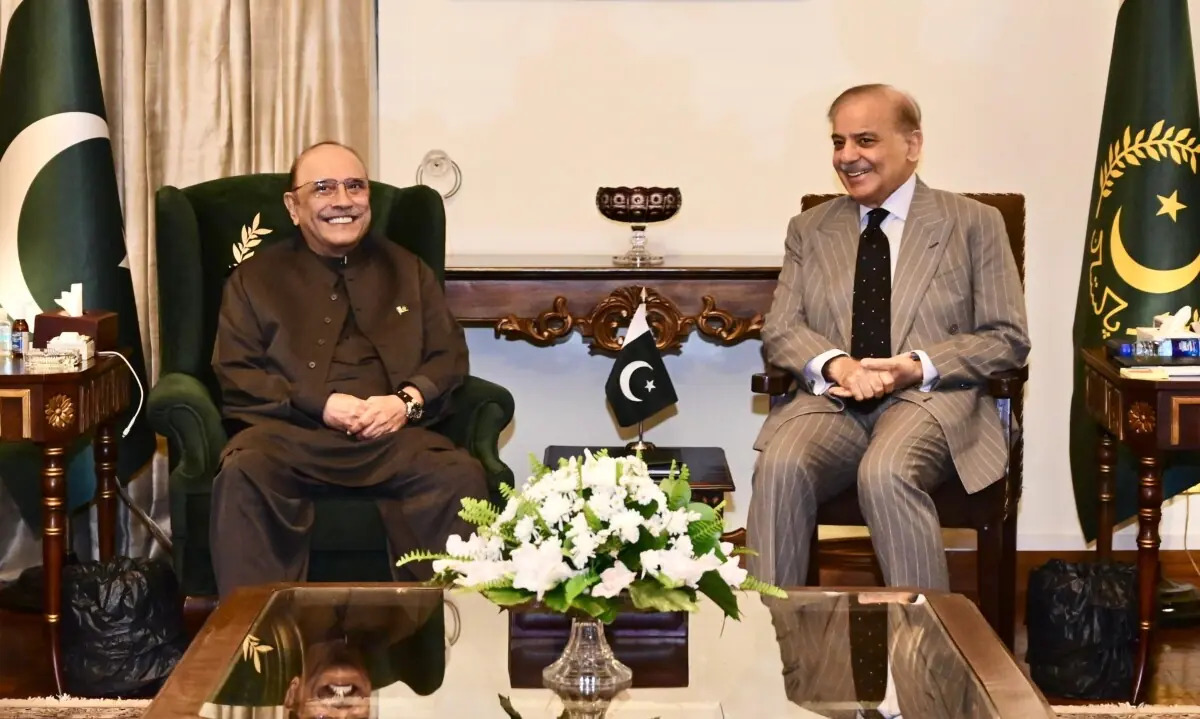
Prime Minister Shehbaz Sharif held a high-stakes consultative meeting with President Asif Ali Zardari at the Presidency in Islamabad on Saturday to deliberate on the deteriorating security landscape and volatile political dynamics across the country. The deliberations centered heavily on mounting internal security challenges and active federal deliberations regarding the potential imposition of a constitutional emergency in Khyber Pakhtunkhwa. According to official communiques released by the President House, the premier was accompanied by an influential delegation comprising Deputy Prime Minister and Foreign Minister Ishaq Dar, Adviser to the Prime Minister on Political Affairs Rana Sanaullah, Interior Minister Mohsin Naqvi, Law Minister Azam Nazeer Tarar, and Attorney General for Pakistan Mansoor Usman Awan. Key coalition partners from the Pakistan Peoples Party, including Senator Sherry Rehman and Syed Naveed Qamar, were also in attendance, signaling broad-based political alignment among the ruling coalition partners as executive authorities weigh drastic administrative measures.
Commercial & Economic Implications
Macroeconomic stability and commercial confidence in Pakistan remain acutely vulnerable to prolonged political friction and sub-national governance crises. The prospect of an administrative emergency in Khyber Pakhtunkhwa introduces profound uncertainties for wholesale distribution networks, inter-provincial trade corridors, and regional retail supply chains linking Punjab and Sindh with western border markets. Prolonged disruptions or security lockdowns in the province typically exert upward pressure on regional commodity prices and fuel inflation volatility, directly penalizing everyday consumers and eroding profit margins for small and medium-sized enterprises. Major trade bodies operating along the Grand Trunk Road and key logistical arteries have expressed apprehension that heightened political confrontation could stifle foreign direct investment inflows and derail critical fiscal consolidation targets mandated under international lending programs. Maintaining uninterrupted commercial transit through northwestern trade routes is vital for regional economic viability, making any sweeping administrative intervention a matter of intense financial gravity.
Related Intelligence: Verstappen Triumphs in Chaotic Singapore Grand Prix Sprint Amid Supply Chain Disruptions
Stakeholder Perspectives & Market Reactions
Legal experts, trade associations, and political stakeholders have voiced sharply divergent views regarding the constitutional viability and economic fallout of invoking emergency powers in the province. Constitutional analysts emphasize that an emergency declaration under Article 232 or related provisions requires extraordinary justification and carries severe democratic and legal hurdles that could invite protracted judicial challenges. Meanwhile, representatives from various chambers of commerce and industry bodies have cautioned against any administrative measures that might exacerbate political polarization or trigger civil unrest, warning that commercial markets thrive best under predictable legal frameworks and stable governance. While federal officials maintain that national security overrides provincial friction, opposition factions and regional trade voices demand transparency, caution, and strict adherence to constitutional boundaries to prevent economic paralysis.
Forward Outlook & Key Watchpoints
As federal authorities deliberate their next tactical moves, market participants, investors, and political analysts are closely monitoring subsequent administrative developments in Islamabad and Peshawar. Key watchpoints include formal announcements from the federal cabinet regarding the specific scope of any emergency measures, potential reactions from provincial legislative assemblies, and legal challenges that may be mounted in superior courts. The ability of the central government to balance rigorous national security imperatives with democratic norms and commercial stability will critically determine market confidence and investor sentiment in the coming weeks.
Join Our Official WhatsApp Channel
Receive live commodity alerts, policy changes, and commercial intelligence directly on WhatsApp.