
Kim Jong Un Reappears as Succession Questions Weigh on Regional Security
North Korea released new imagery of leader Kim Jong Un, quelling recent rumors regarding his health while highlighting long-term succession risks that influence regional geopolitical stability and Northeast Asian markets.
Geopolitical & Core Developments
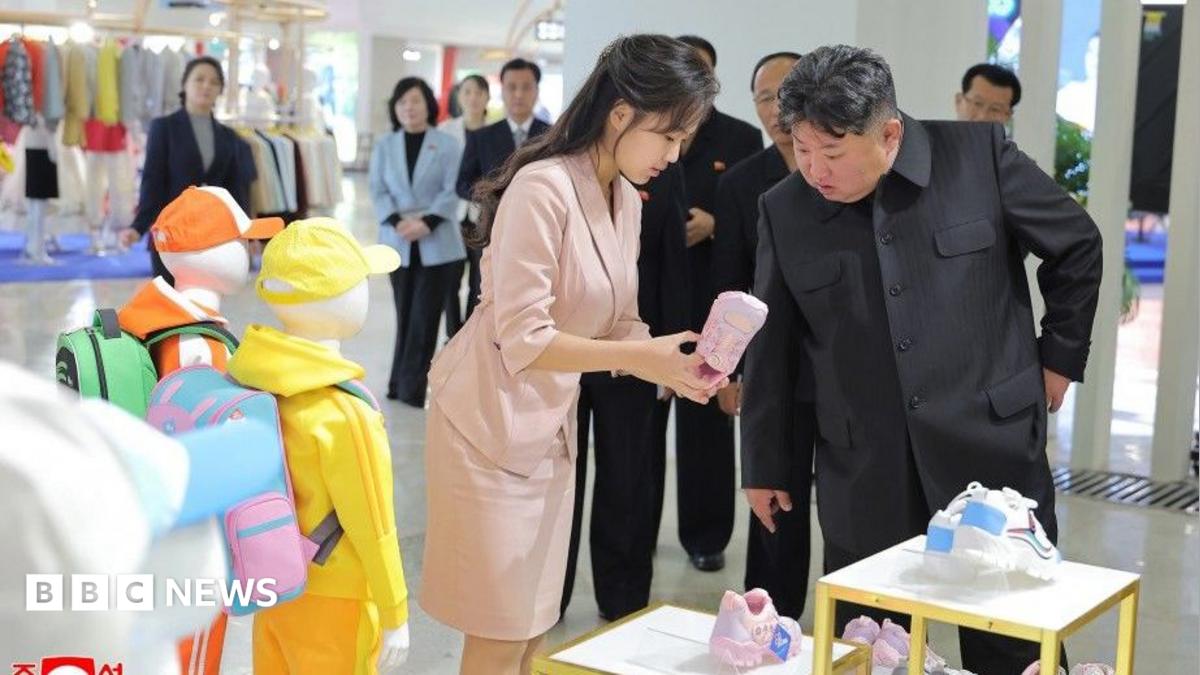
North Korean state media published verified photographic evidence showing supreme leader Kim Jong Un attending high-profile public engagements alongside his young daughter, Kim Ju Ae. The release followed several days of intense international speculation and unverified claims circulating across online networks suggesting the North Korean leader was either critically incapacitated or deceased. Pyongyang routinely utilizes deliberate visual messaging through the Korean Central News Agency (KCNA) to counter foreign intelligence assessments and assert internal political cohesion.
The persistence of health rumors surrounding the Kim dynasty reflects the opaque nature of North Korea's governance framework. Given Pyongyang's status as a declared nuclear-armed state with an expanding ballistic missile arsenal, any ambiguity regarding the command-and-control hierarchy presents severe strategic challenges for South Korea, Japan, and the United States. The deliberate positioning of Kim Ju Ae within military and state ceremonies further suggests that Pyongyang is proactively managing succession optics to deter internal factional instability and project dynastic durability amid international pressure.
Global Trade & Economic Ripples
While North Korea remains largely insulated from direct participation in global trade networks due to extensive multilateral sanctions, sudden instability within Pyongyang exerts measurable secondary pressures across broader Asia-Pacific commerce. The Korean Peninsula sits adjacent to vital maritime routes in the Yellow Sea and Sea of Japan, which handle significant volumes of containerized trade, industrial inputs, and liquefied natural gas (LNG) shipments destined for South Korea and Japan.
During episodes of unconfirmed leadership crises in North Korea, regional financial assets often experience heightened volatility. The South Korean won and equity indices such as the KOSPI typically face transient selling pressure as institutional investors hedge against the tail risk of abrupt regime collapse or military miscalculation. Furthermore, heightened regional militarization diverts capital toward defensive postures, adding an indirect geopolitical risk premium to regional shipping insurance, tech manufacturing supply chains, and sovereign debt markets across East Asia.
Related Intelligence: Sovereign Debt Pressures Mount in France as Global Bond Markets Shift
International Reactions & Diplomatic Stances
Diplomatic and intelligence services across Seoul, Washington, and Tokyo maintained a measured stance throughout the recent wave of rumors, consistently stating that no unusual military movements or state irregularities were detected north of the Demilitarized Zone. The South Korean Ministry of Unification emphasized that monitoring mechanisms remain continuously calibrated to identify structural shifts in North Korea's internal leadership dynamics.
In Washington, defense analysts and geopolitical strategists reiterated that leadership continuity in Pyongyang does not diminish the systemic challenge posed by North Korea's illicit weapons programs. Multilateral bodies, including the United Nations Security Council, remain deadlocked on implementing further enforcement mechanisms against North Korea, largely due to ongoing diplomatic shielding by Beijing and Moscow. Chinese diplomatic sources consistently reinforce the necessity of stability along the Sino-North Korean border, viewing the preservation of the current regime as critical to avoiding a humanitarian or refugee crisis.
Strategic Outlook & Future Scenarios
The reappearance of Kim Jong Un temporarily resolves near-term speculation, yet the fundamental drivers of regional instability remain active. Pyongyang is expected to continue its tempo of tactical missile testing, technical reconnaissance satellite deployments, and bilateral defense alignments with the Russian Federation. These military activities ensure that the Korean Peninsula remains a central focal point of superpower friction between the United States and the Beijing-Moscow axis.
Looking ahead, international observers will closely track future state convocations and Party plenums for further constitutional institutionalization of Kim Jong Un's daughter. Failure to formalize a transparent succession architecture guarantees that episodic rumors concerning Kim's health will recur, each time triggering brief spikes in regional sovereign risk and strategic re-evaluations among allied defense commands.
Join Our Official WhatsApp Channel
Receive live commodity alerts, policy changes, and commercial intelligence directly on WhatsApp.