
Italy Enacts Sweeping Security Decrees Targeting Civil Demonstrations and Public Unrest
Italy has introduced severe legal penalties against public demonstrations, criminalizing transport blockades and violent protest participation amid growing geopolitical tensions and persistent labor unrest across Southern Europe.
Geopolitical & Core Developments
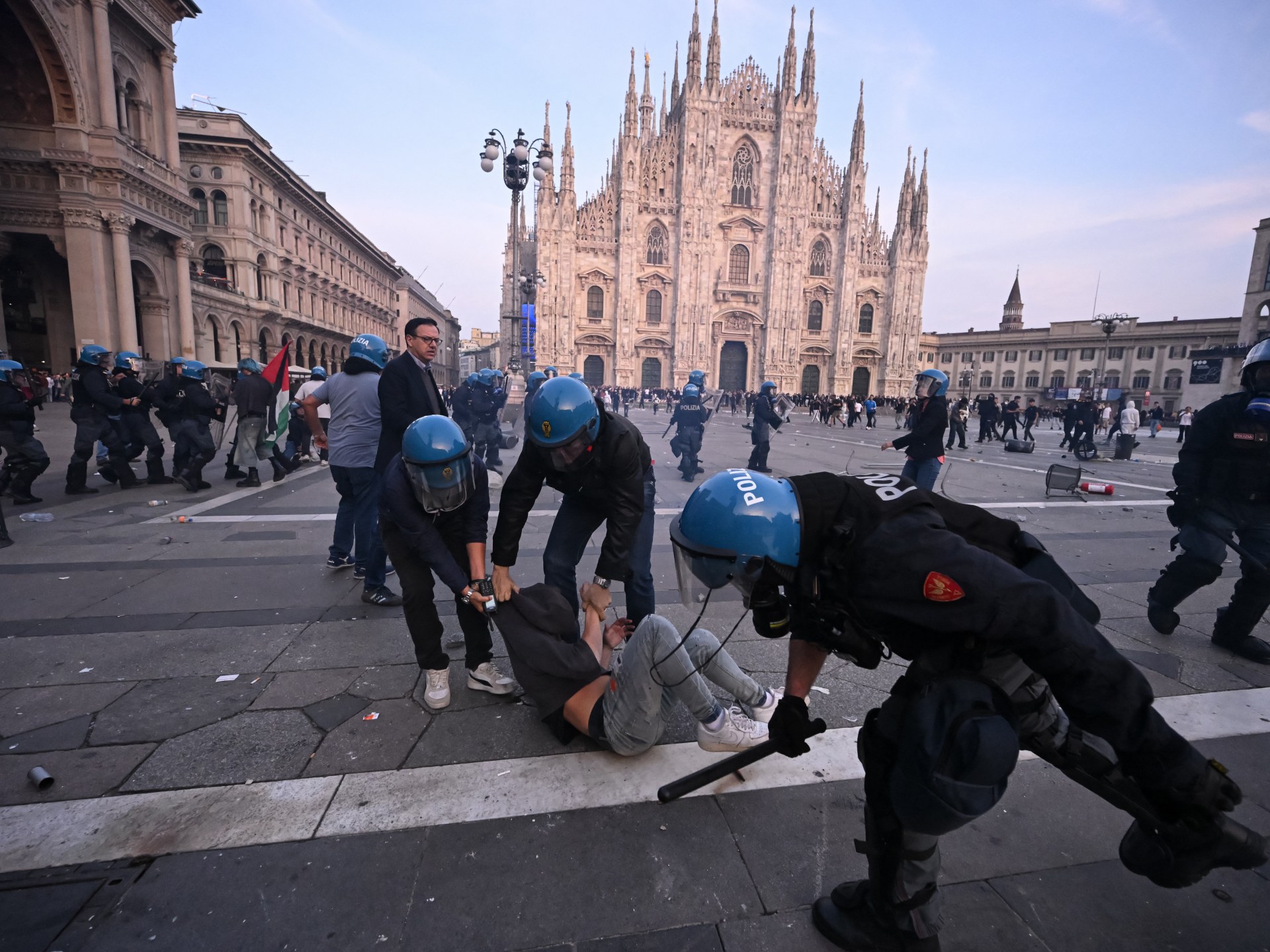
The Italian government led by Prime Minister Giorgia Meloni has approved a contentious public security framework that fundamentally reshapes the state's policing powers and the legal boundaries of public assembly. Central to the legislative package is the codification of a specific criminal offence: violent participation in public demonstrations. The bill imposes mandatory prison terms not only for individuals who commit overt physical violence against law enforcement or property, but also establishes collective liability frameworks that enable authorities to prosecute individuals present in disruptive crowds.
The regulatory overhaul extends beyond isolated street clashes, taking direct aim at escalating civil disobedience strategies across Europe. The measures criminalize unauthorized road and rail blockades—a tactic increasingly deployed by environmental movements, labor unions, and transport workers protesting economic conditions. The executive decree also broadens police pre-emptive detention powers and substantially increases penalties for passive resistance against public officials. The Meloni administration defends the intervention as an imperative modernization of public order statutes, framed against a volatile domestic backdrop marked by recurrent clashes over infrastructure projects, military logistics, and social welfare cuts.
Global Trade & Economic Ripples
While ostensibly focused on internal public order, the economic implications of Italy's security laws reverberate through Southern Europe's transit and commercial corridors. Italy functions as a critical maritime gateway for Mediterranean freight entering the wider European Union market. Industrial actions, port strikes, and environmental blockades across key arterial junctions—such as Genoa, Trieste, and the trans-Alpine Brenner corridor—have repeatedly disrupted critical supply chains, costing logistics operators millions of euros in demurrage and cargo delays.
By classifying the obstruction of critical logistical infrastructure as a major criminal act rather than an administrative infraction, Rome intends to guarantee operational continuity for manufacturing, automotive components, and intermodal container freight. Industry lobbies have quietly welcomed the suppression of localized wildcat strikes that often choke regional manufacturing hubs in Lombardy and Veneto. However, institutional investors caution that heightened social polarization could trigger asymmetric labor backlash, potentially provoking protracted national walkouts that disrupt energy distribution networks and key industrial operations.
Related Intelligence: Canada Pushes LNG Expansion Amid Scrutiny Over Investor Human Rights
International Reactions & Diplomatic Stances
The legislative moves have sparked intense debate across European capitals, multilateral organizations, and human rights bodies. Opposition parties within Italy have denounced the legislation as authoritarian overreach designed to criminalize legitimate dissent, comparing the statutes to mid-twentieth-century emergency laws. Human rights monitors, including representatives affiliated with the Council of Europe, have expressed formal concern over the ambiguity of the new criminal definitions, warning that subjective policing could deter peaceful civic engagement and violate European Convention standards.
Conversely, conservative and nationalist factions across the European Union have praised Rome's hardline approach. Governments in Central and Eastern Europe confronting similar disruptions from climate activists and agricultural lobbies view the Italian package as a viable blueprint for preemptive crowd control. For Brussels, the measure exposes deep political fractures between the preservation of fundamental assembly rights and the demand from core industrial lobbies to secure commercial arteries against recurrent domestic instability.
Strategic Outlook & Future Scenarios
The immediate trajectory will hinge on parliamentary ratification, where the ruling coalition commands comfortable majorities, followed by anticipated constitutional challenges before Italy's Constitutional Court. Legal analysts project that the law's most restrictive clauses—particularly regarding passive resistance and indirect culpability in crowd settings—will face prolonged constitutional scrutiny.
Over the medium term, the government's security pivot will face critical stress tests as European macroeconomic pressures mount. High inflation, industrial reorganization under green mandates, and austerity measures will continue to fuel underlying labor unrest across Mediterranean economies. If the new decrees successfully deter disruptive demonstrations without provoking wider public backlash, several EU member states are anticipated to mirror the legislation to insulate critical transportation hubs. If, however, the measures exacerbate clashes and criminalize legitimate industrial unionism, Rome risks setting off a volatile cycle of civil confrontations that could imperil internal governance and disrupt cross-border commerce.
Join Our Official WhatsApp Channel
Receive live commodity alerts, policy changes, and commercial intelligence directly on WhatsApp.