
Peshawar High Court De-Seals KP Deputy Speaker Residence Amid Institutional Impasse
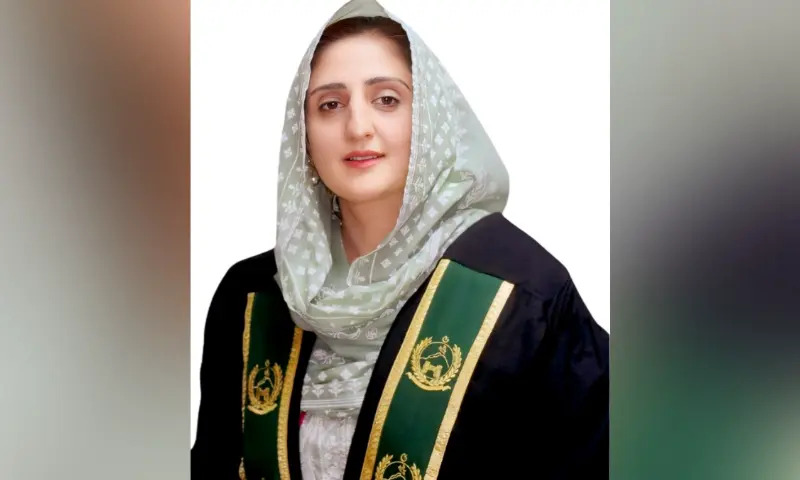
The Peshawar High Court has ordered the provisional de-sealing of KP Assembly Deputy Speaker Suriya Bibi's official residence, restraining law enforcement from arresting her amid an ongoing constitutional crisis under governor's rule.
The Core Development
The Peshawar High Court (PHC) on Wednesday issued a series of significant judicial directives, ordering relevant provincial authorities to provisionally de-seal the official residence of Khyber Pakhtunkhwa Assembly Deputy Speaker Suriya Bibi. The bench, comprising Justice Ijaz Anwar and Justice Muhammad Faheem Wali, took up a constitutional petition challenging the executive decision to lock down her official quarters and an anticipated detention attempt initiated under administrative security laws.
Alongside restoring physical access to the premises, the division bench restrained law enforcement agencies from arresting the provincial official till further orders, offering critical interim relief amid an escalating legal and political showdown. The deputy speaker had moved the court seeking protection against coercive measures under Section 3 of the Maintenance of Public Order (MPO) Ordinance—a tool frequently utilized by provincial administrations to preempt political mobilization. The assembly and its associated legislative machinery have remained non-functional since the federal government enforced governor's rule and declared an emergency in Khyber Pakhtunkhwa on October 11. The court has formally issued notices to the provincial administration, the Khyber Pakhtunkhwa Inspector General of Police, and auxiliary administrative departments, demanding formal responses ahead of the next scheduled hearing.
Commercial & Economic Implications
While the immediate proceedings concern legislative protocol and human rights protections, the institutional standoff carries pronounced macroeconomic and commercial ramifications for regional trade corridors. Khyber Pakhtunkhwa serves as Pakistan's primary logistical gateway to Afghanistan and Central Asian republics via the Torkham border terminal. The paralysis of elected parliamentary structures and heightened administrative friction have introduced an acute layer of political risk, impeding provincial regulatory approvals, capital disbursement for infrastructure maintenance, and local public-private trade partnerships.
For enterprise operators, wholesale distributors, and retail networks in Peshawar, Charsadda, and surrounding industrial enclaves, the uncertainty has triggered defensive inventory management. Heightened executive use of the MPO framework and routine crackdowns routinely correlate with spontaneous transport disruptions, road closures, and elevated local freight premiums. When transit corridors face intermittent friction, fast-moving consumer goods (FMCG) distribution networks and perishable agricultural commodities experience extended turnaround times, elevating operational costs that are ultimately passed down to consumers via regional headline inflation.
Stakeholder Perspectives & Market Reactions
Legal and constitutional analysts have viewed the high court's intervention as an indispensable check on executive overreach, emphasizing that parliamentary privileges and protections cannot be unilaterally dissolved through administrative decrees, even under governor's rule. Legal counsel for the petitioner argued that the sealing of the residence constituted a punitive measure devoid of due process, designed exclusively to intimidate legislative leadership.
Conversely, regional trade bodies and chamber executives have expressed growing fatigue over the continuing institutional deadlock. Leadership from the Khyber Pakhtunkhwa Chamber of Commerce and Industry noted that sustained governance friction sidelines vital fiscal policy debates. The absence of a functioning legislative floor has stalled provincial procurement guidelines, sales tax harmonization efforts, and budgetary oversight, leaving industrial zones to navigate a fractured bureaucratic hierarchy without clear administrative accountability.
Forward Outlook & Key Watchpoints
The release of the high court's detailed written order will outline the precise operational boundaries imposed on regional law enforcement and the timeframe granted to the KP inspector general to submit compliance reports. The ongoing challenge against Section 3 MPO usage will establish an essential legal benchmark for other provincial lawmakers seeking immunity from arbitrary detentions.
Market observers and trade operators should monitor the broader constitutional challenge regarding the legality of the emergency imposition itself. If judicial rulings continue to circumscribe federal executive authorities in Peshawar, a protracted jurisdictional confrontation could ensue. Critical watchpoints include the upcoming departmental responses, potential counter-appeals filed in higher appellate forums, and the durability of transport corridors essential for bilateral regional trade.
Join Our Official WhatsApp Channel
Receive live commodity alerts, policy changes, and commercial intelligence directly on WhatsApp.