
Houthi Strike Near Riyadh Airport Escalates Gulf Regional Security Risks
A claimed Houthi strike near Riyadh's King Khalid International Airport caused extensive flight disruptions, escalating security tensions across the Gulf and introducing renewed geopolitical volatility into international energy and aviation markets.
Geopolitical & Core Developments
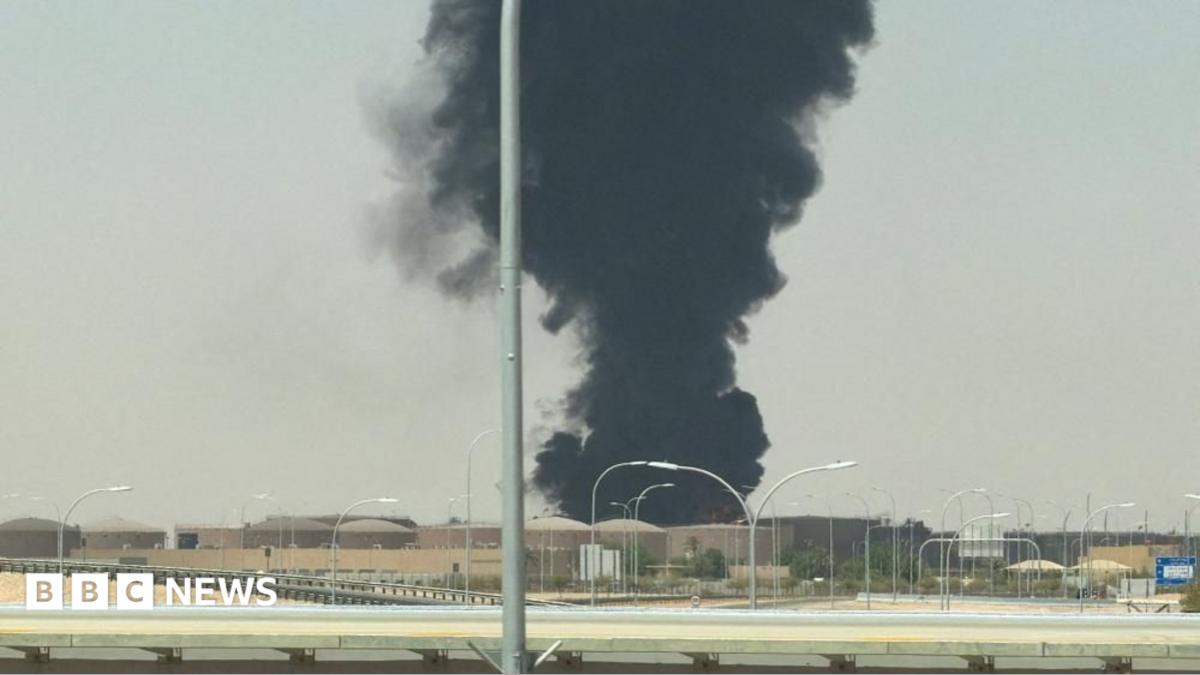
A cross-border aerial offensive claimed by Yemen's Houthi movement struck close to King Khalid International Airport in Riyadh, marking a severe escalation in the regional security matrix. Visual reports of thick plumes of smoke ascending near the airport perimeter precipitated immediate operational halts, stranding thousands of passengers, triggering ground stops, and forcing commercial airliners into holding patterns or diversions to regional alternatives across the Gulf.
Saudi air defense batteries were activated to intercept the incoming ordnance, reported to be an advanced long-range ballistic missile accompanied by unmanned aerial loitering munitions. While the Saudi-led coalition has routinely intercepted short-range projectiles in border provinces such as Jazan and Asir, an incursion penetrating deep into the capital underscores the evolving technical reach of Houthi arsenals. The incident threatens to unravel fragile diplomatic initiatives and backchannel engagements previously brokered to de-escalate the broader Yemeni civil war, exposing the persistent fragility of Middle Eastern peace frameworks.
Global Trade & Economic Ripples
Global energy markets responded with immediate sensitivity to the security breach in the Saudi capital. Brent crude futures and West Texas Intermediate registered upward momentum during intraday trading as commodity desks priced in an elevated geopolitical risk premium across the Arabian Peninsula. Although crude extraction and refining complexes maintained uninterrupted output, financial markets remain acutely sensitive to any threat menacing core Saudi infrastructure.
Beyond hydrocarbons, the commercial aviation sector faces tangible operational strain. King Khalid International Airport serves as a vital transit and cargo hub linking Europe, Asia, and Africa. Protracted disruptions disrupt critical air-freight schedules, elevate jet fuel consumption through forced rerouting, and impose steep war-risk surcharges across regional commercial flights. Concurrently, maritime logistics in the nearby Red Sea and Bab el-Mandeb strait remain under shadow, as heightened kinetic activities typically coincide with increased asymmetric threats to global commercial shipping corridors.
Related Intelligence: Houthi Strikes on Saudi Aramco Sites Spark Fresh Energy Market Volatility
International Reactions & Diplomatic Stances
The strikes drew widespread international condemnation from foreign ministries and multilateral bodies. The United States Department of State reaffirmed its ironclad commitment to the defense of Saudi sovereign territory, denouncing attacks that directly endanger innocent civilians and imperil international civil aviation protocols. Western allies reiterated that such cross-border aggression violates the fundamental tenets of international humanitarian law.
The Gulf Cooperation Council issued a unified statement characterizing the incident as a brazen attempt to destabilize energy corridors and regional commerce. Meanwhile, the United Nations Special Envoy for Yemen expressed deep apprehension, warning that military escalations fundamentally jeopardize humanitarian access, alienate key regional partners, and torpedo ongoing dialogues intended to construct a durable roadmap for regional ceasefires and sustainable peace.
Strategic Outlook & Future Scenarios
The trajectory of the conflict now tilts toward calculated military retaliation and defensive recalibration. The Saudi-led coalition is expected to conduct targeted air operations against Houthi command nodes, missile storage bunkers, and drone assembly infrastructure in Sana'a and Saada to deter further deep-territory strikes.
Diplomatically, Riyadh will likely increase pressure on international institutions to enforce arms interdiction mechanisms along Yemeni maritime access routes, curbing illicit weapon transfers. In the commercial arena, institutional investors and logistics operators will closely watch upcoming diplomatic summits and security briefings. If cross-border targeting of metropolitan infrastructure persists, elevated insurance rates, structural freight volatility, and enduring energy price fluctuations will remain entrenched features of global market forecasts.
Join Our Official WhatsApp Channel
Receive live commodity alerts, policy changes, and commercial intelligence directly on WhatsApp.