
Jamaat-e-Islami Launches Train March Over Petroleum Levy as Fiscal Tensions Mount
Jamaat-e-Islami has launched a nationwide train march demanding the rollback of heavy petroleum levies, mounting intense political pressure on the coalition government amid strict IMF revenue covenants.
The Core Development
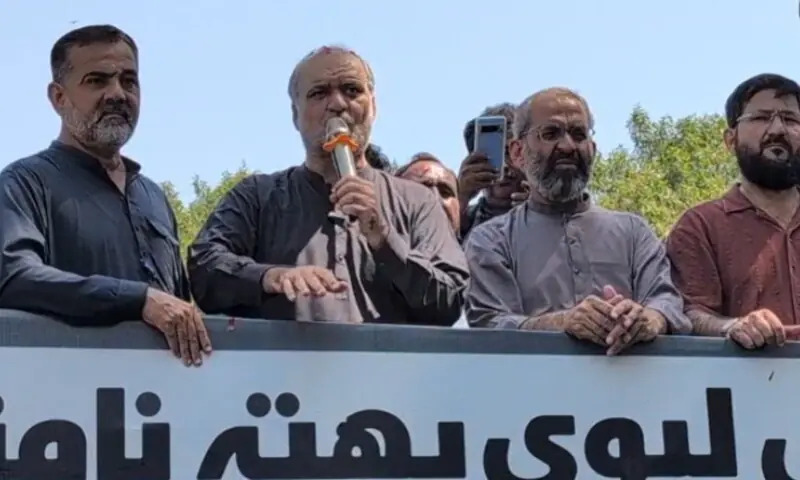
Jamaat-i-Islami (JI) has formally initiated a high-stakes 'train march' from Karachi towards Islamabad, escalating its sustained agitation against elevated petroleum taxation and rising domestic energy costs. Addressing thousands of party supporters, trade representatives, and citizens at Karachi's Cantonment Railway Station prior to departure, JI Emir Hafiz Naeemur Rehman delivered a stern warning to the federal coalition. Rehman cautioned that if the federal administration fails to abolish or drastically reduce the petroleum development levies on motor fuel, the protest movement could rapidly evolve into a comprehensive campaign aimed at ousting the government.
The demonstration is planned to traverse Pakistan's central railway corridor, staging rallies and mobilizing support across urban commercial centers in Sindh and Punjab before converging on the federal capital. The core grievance rests on cumulative fuel taxation and the Petroleum Development Levy (PDL), which party leadership and merchant bodies argue have driven domestic fuel costs to unsustainable levels, exacerbating an already severe cost-of-living crisis across the country.
Commercial & Economic Implications
For commercial enterprises, wholesale distribution networks, and freight forwarders, the elevated petroleum taxation regime has become a primary driver of structural supply chain inflation. Motor fuels serve as a foundational input across all segments of Pakistan's economy. Sustained levies directly elevate per-kilometer freight charges for primary haulage, which immediately cascades into the landed wholesale prices of agricultural produce, industrial inputs, and fast-moving consumer goods.
However, the federal government faces severe macroeconomic constraints that restrict its ability to offer unilateral tax concessions. Under the ongoing Extended Fund Facility (EFF) arranged with the International Monetary Fund (IMF), Pakistan is bound by rigorous fiscal consolidation benchmarks. The PDL serves as an indispensable pillar of non-tax revenue generation, budgeted to collect upwards of Rs1.2 trillion in the current fiscal year. Dismantling or sharply curtailing this levy without compensatory revenue measures would widen the primary fiscal deficit, breach multilateral covenants, and imperil broader external balance stability. Consequently, wholesale and retail traders find themselves squeezed between inelastic state revenue mandates and diminishing consumer purchasing power.
Related Intelligence: India Education Deficit Exposes Human Capital Risks Amid Supply Chain Push
Stakeholder Perspectives & Market Reactions
The protest march has generated notable resonance across Pakistan's business community. Various regional trader associations, goods transport unions, and small-enterprise federations have articulated mounting frustration over operating cost inflation. Merchant bodies in major trading clusters, including Karachi's Jodia Bazaar and Lahore's wholesale hubs, have reported persistent contractions in consumer retail demand, driven by the combined weight of high electricity tariffs and steep fuel costs.
Conversely, macroeconomic analysts and institutional investors remain cautious regarding the potential fallout of protracted street unrest. Market observers note that political instability poses an immediate risk to capital market stability and currency valuation. While business chambers advocate for rationalized energy tariffs, financial experts emphasize that maintaining compliance with the IMF program remains paramount to preventing balance-of-payments volatility. Finance ministry officials have consistently reiterated that fiscal discipline cannot be compromised, effectively ruling out discretionary fiscal rollbacks.
Forward Outlook & Key Watchpoints
The near-term trajectory of this political standoff depends heavily on the federal government's operational response as the train march nears Rawalpindi and Islamabad. Key indicators to monitor include whether law enforcement agencies will allow peaceful assembly within the capital or enforce Section 144 to restrict access to key administrative zones, potentially triggering transport blockades across major transit arteries.
Furthermore, market participants should closely observe upcoming fortnightly petroleum price determinations. While global crude oil price fluctuations could offer marginal room for price relief, structural reductions in the PDL remain improbable without prior multilateral clearance. Should the protest escalate into prolonged sit-ins, interprovincial logistics corridors could face temporary distribution delays, compounding operational challenges for wholesale freight and consumer goods supply chains nationwide.
Join Our Official WhatsApp Channel
Receive live commodity alerts, policy changes, and commercial intelligence directly on WhatsApp.