
French Student Protest Clashes Trigger National Security and Economic Anxiety
Severe student protests in France resulting in a teenager's critical injury have intensified domestic political friction and raised broader concerns regarding Eurozone market stability.
Geopolitical & Core Developments
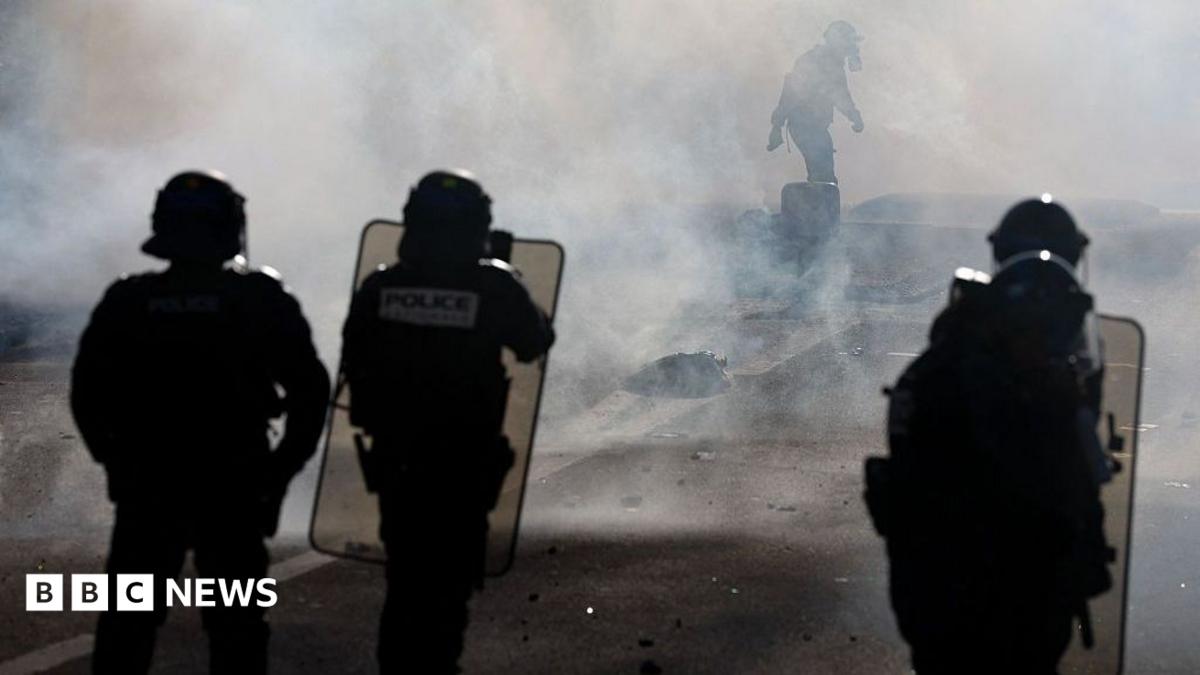
A localized demonstration outside a secondary school in the Pas-de-Calais region of northern France escalated into violent clashes on Monday, culminating in a catastrophic incident that left a teenage protester with critical injuries. According to the local prefecture, the youth's hand was severed during the confrontation with security forces, prompting immediate intervention by emergency medical services. While local authorities have confirmed that the teenager's life is no longer in danger, the severity of the trauma has ignited a firestorm across the French political landscape.
The incident occurs against a backdrop of mounting social friction in France, driven by contentious public sector reforms, cost-of-living pressures, and growing youth disillusionment. Student unions and civil liberty groups have mobilized rapidly, condemning what they characterize as disproportionate use of force by law enforcement agencies. Conversely, the Ministry of the Interior has defended the deployment of security personnel, citing the necessity to maintain public order amidst escalating aggression from fringe elements within the student demonstrations. This polarization underscores a deepening crisis in state-society relations, testing the administrative capacity of the central government to manage domestic dissent without triggering widespread civil disruption.
Global Trade & Economic Ripples
While the events in Pas-de-Calais are fundamentally domestic in nature, sustained civil unrest in core Eurozone economies carries significant implications for regional economic stability and investor sentiment. France represents the second-largest economy within the European Union, and prolonged disruptions, transit blockades, and urban unrest invariably introduce friction into domestic supply chains and retail commerce. Financial markets remain sensitive to indicators of political instability within the bloc, as persistent social unrest can impair consumer confidence, stall retail velocity, and impact foreign direct investment.
Furthermore, heightened security measures and potential nationwide strikes affect logistics networks, commuting patterns, and localized manufacturing operations. Commodity traders monitoring European industrial output are increasingly factoring domestic political risk into their short-term risk assessments. Although direct impacts on global energy markets or international shipping lanes remain minimal, the psychological effect of perceived European instability can exert downward pressure on the euro and influence broader sovereign debt yields as investors demand higher risk premiums for Eurozone assets.
Related Intelligence: Yemeni Energy Collapse Threatens Regional Stability and Humanitarian Crisis
International Reactions & Diplomatic Stances
International observers, including human rights monitors and European partners, are closely monitoring the fallout from the Pas-de-Calais confrontation. Multilateral bodies have reiterated the fundamental right to peaceful assembly while emphasizing the corresponding obligation of state authorities to exercise restraint and proportionality in crowd control management. Neighboring European capitals are viewing the domestic turbulence with cautious concern, mindful of the potential contagion effects that social unrest in France historically exerts across continental Europe.
Financial analysts and risk advisory firms have updated their outlooks for French domestic security, advising institutional clients to prepare for potential secondary strikes and extended labor mobilization. Diplomatic circles suggest that the incident will feature prominently in upcoming parliamentary debates, potentially forcing a recalibration of national policing doctrines and public order management strategies ahead of the next electoral cycle.
Strategic Outlook & Future Scenarios
Looking ahead, the trajectory of French domestic politics will heavily depend on the government's ability to de-escalate tensions through transparent investigations and constructive dialogue with student and labor representatives. The official inquiry into the Pas-de-Calais incident will serve as a critical test case for judicial accountability and police oversight. If accountability measures are perceived as insufficient, further nationwide mobilizations are virtually guaranteed, potentially paralyzing key transport hubs and educational institutions.
For international businesses and global market participants, the primary risk lies in the potential coalescence of student movements with broader labor union strikes, which could severely disrupt French economic output in the upcoming quarters. Policymakers in Paris face the delicate challenge of restoring public trust in law enforcement while safeguarding economic momentum against the backdrop of broader European economic headwinds.
Join Our Official WhatsApp Channel
Receive live commodity alerts, policy changes, and commercial intelligence directly on WhatsApp.