
France Paralyzed by Nationwide Unrest Over Escalating Cost-of-Living Crisis
Violent demonstrations swept through France as over half a million citizens protested surging living costs, triggering hundreds of arrests and raising fears of broader macroeconomic and logistical instability across Western Europe.
Geopolitical & Core Developments
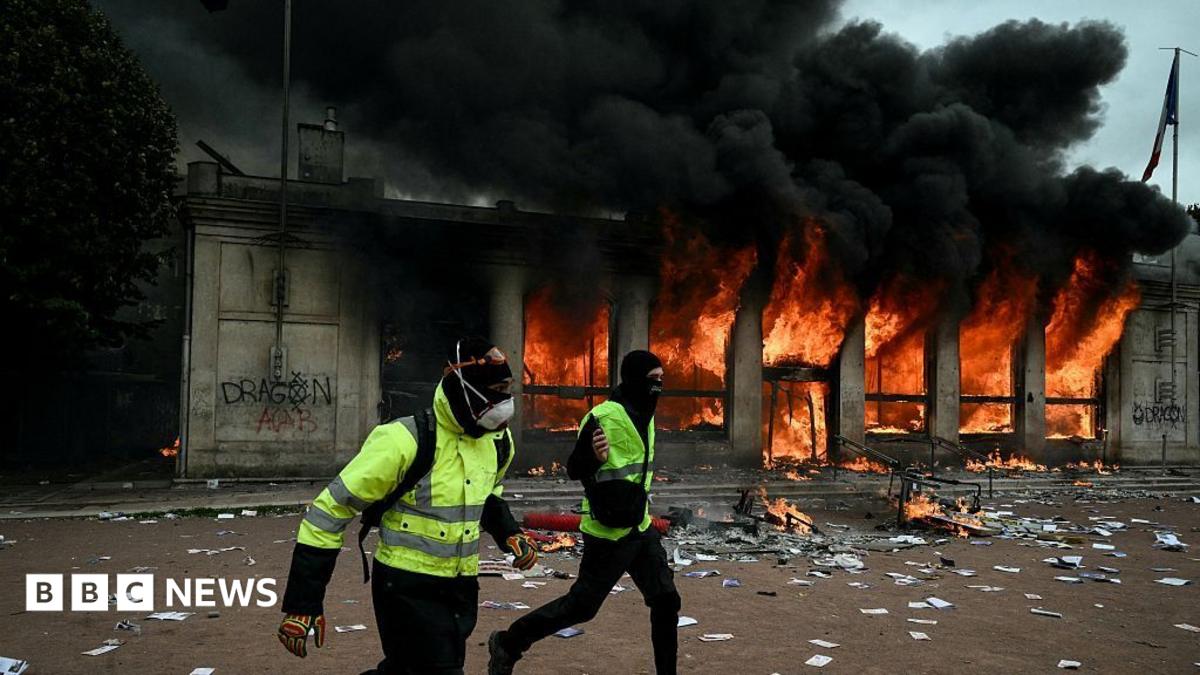
France was convulsed by a dramatic escalation of nationwide civil unrest this week as more than 500,000 citizens mobilized across Paris, Lyon, Marseille, and Nantes to protest deteriorating living standards and entrenched inflationary pressures. What commenced as coordinated trade union rallies rapidly descended into volatile street confrontations, marked by commercial looting, municipal infrastructure arson, and pitched battles between radicalized factions and security forces. The French Interior Ministry confirmed the deployment of tens of thousands of gendarmes and national police officers, culminating in hundreds of preventative and active detentions nationwide.
The domestic political stakes for the French administration have reached an acute juncture. Confronting systemic voter dissatisfaction fueled by purchasing power erosion, rising utility tariffs, and contested fiscal priorities, the executive branch faces an intensifying legitimacy challenge. Parliamentary divisions have compounded the crisis, rendering legislative compromises fragile while opposition blocs leverage street mobilization to press for fiscal concessions, mandatory price caps, and index-linked wage adjustments. The scale of the unrest highlights profound structural vulnerabilities within Europe's second-largest economy, threatening governance continuity and social stability.
Global Trade & Economic Ripples
The immediate commercial fallout of the nationwide disruption has begun rippling across cross-border supply chains and localized commodity circulation. Intermittent blockades targeting primary arterial highways, suburban logistics hubs, and regional rail depots have slowed the movement of intermediate goods between France and adjacent European Union markets, notably Germany, Spain, and northern Italy. Urban retail centers suffered substantial structural damages and prolonged inventory interruptions, undermining quarterly retail sales projections during an already precarious economic cycle.
Energy infrastructure and refined product transport routes remain under close scrutiny. While primary refining complexes have avoided indefinite operational halts, distribution chokepoints and localized fuel depot access restrictions have stoked precautionary commercial stocking. On foreign exchange markets, sovereign risk premiums on French government bonds (OATs) widened marginally against German Bunds, reflecting investor unease regarding sovereign fiscal trajectory and the state's capacity to rein in spending deficits without inciting perpetual public backlash. Sustained industrial paralysis risks compounding wider European Union industrial stagnation.
Related Intelligence: Premier League Surges Spark Global Sports Media Valuations and Retail Consumption
International Reactions & Diplomatic Stances
The swift deterioration of civil order in France has generated targeted assessments across international diplomatic circles and multilateral institutions. European Union partners in Brussels have monitored the situation closely, emphasizing the fundamental necessity of maintaining civic order while safeguarding lawful democratic assembly. Privately, European policymakers expressed concern that structural social volatility in a cornerstone member state could disrupt coordinated regional fiscal reforms and complicate broader Eurozone economic governance frameworks.
Market intelligence agencies and sovereign risk analysts have issued cautious commentaries, highlighting that prolonged internal instability jeopardizes France's credit profile and structural investment appeal. Several sovereign diplomatic missions, including those from the United States and the United Kingdom, issued calibrated travel notices advising commercial travelers and expatriate personnel to exercise heightened vigilance around central urban transit nodes. Sovereign actors observe the situation as a bellwether for wider European socio-economic friction amidst structurally elevated interest rates and persistent living-cost strain.
Strategic Outlook & Future Scenarios
Over the near-to-medium term, the trajectory of the French crisis hinges on the administration's willingness to re-engage with structured labor confederations and deliver targeted budgetary reliefs. Should executive authorities pursue an exclusively securitized containment response without addressing core purchasing power deficits, coordinated wildcat strikes across critical transport, maritime cargo handling, and municipal sanitation networks appear increasingly probable.
In the event of synchronized industrial action spreading to strategic commercial ports, such as Marseille-Fos and Le Havre, maritime cargo movements across Northern and Southern European logistics belts would encounter compounded delays, escalating container dwell times and domestic freight rates. Conversely, should the government yield extensive fiscal concessions, France's structural budget deficit will widen, exacerbating institutional friction with European fiscal oversight bodies. The crisis underscores a protracted period of macroeconomic vulnerability, wherein structural inflation and political polarization converge to test sovereign European stability.
Join Our Official WhatsApp Channel
Receive live commodity alerts, policy changes, and commercial intelligence directly on WhatsApp.