
Albanian Civil Unrest Escalates as Police Clash with Anti-Rama Protesters
Violent street clashes in Tirana intensified as Albanian police deployed rubber bullets against anti-government demonstrators demanding the resignation of Prime Minister Edi Rama, clouding the nation's European integration prospects.
Geopolitical & Core Developments
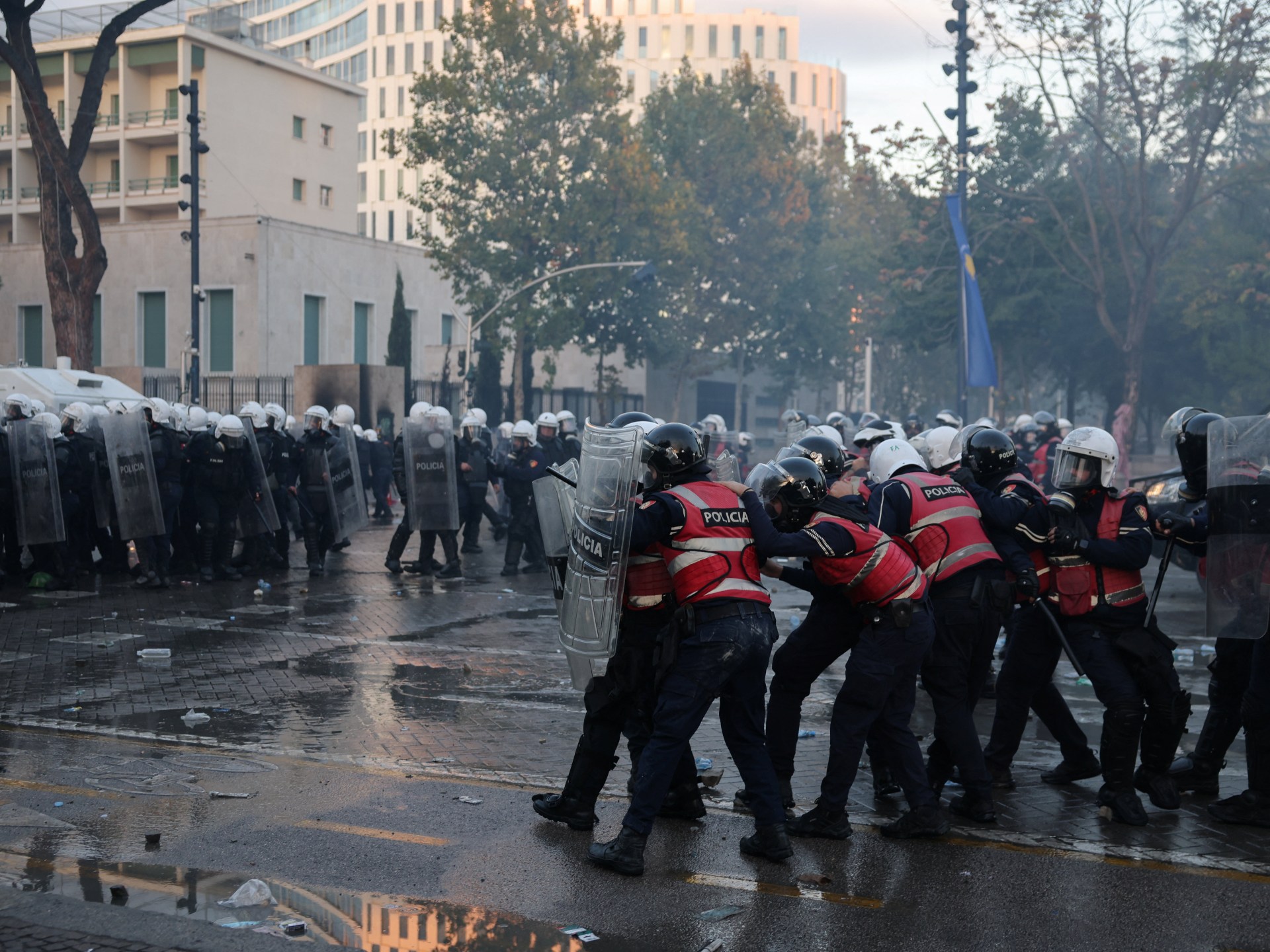
Civil unrest in Albania reached a critical flashpoint this week as security forces in Tirana deployed rubber bullets, water cannons, and tear gas against thousands of demonstrators demanding the immediate resignation of Prime Minister Edi Rama. The demonstrations, which have paralyzed the capital for five consecutive days, reflect a coalescing of broad-based public discontent, drawing together student associations, civil society organizations, and opposition political factions. Protesters accuse the Rama administration of entrenched corruption, institutional decay, economic mismanagement, and electoral manipulation.
The unrest escalated significantly outside key government compounds, including the Prime Ministry and parliament buildings, where demonstrators breached security barriers and hurled projectiles at law enforcement. Interior Ministry officials defended the use of non-lethal munitions, citing threats to public infrastructure and state personnel, while opposition leaders condemned the police response as authoritarian suppression. Edi Rama, who has governed the NATO-member nation since 2013, has repeatedly dismissed the protests as politically orchestrated attempts to derail legitimate governance, refusing demands to dissolve parliament or schedule snap elections.
Global Trade & Economic Ripples
While Albania represents an emerging economy within the peripheral European architecture, persistent destabilization carries tangible implications for cross-border logistics and regional investment. The country serves as a pivotal transit geography for the Trans Adriatic Pipeline (TAP), a crucial artery transporting natural gas from Azerbaijan's Shah Deniz II field across Greece and Albania to Italy. Although pipeline operations remain fortified and physically insulated from urban unrest, heightened geopolitical friction across the Western Balkans elevates sovereign risk premiums, deterring foreign direct investment across energy and infrastructure portfolios.
Furthermore, disruption within Tirana and surrounding logistics corridors threatens maritime and overland freight routes connecting the Adriatic port of Durres with landlocked Balkan partners, including North Macedonia and Kosovo. Extended instability threatens to weaken the Albanian lek against the euro, compounding import-driven inflationary pressures across food and consumer goods. For institutional capital assessing near-shoring initiatives across Southeastern Europe, prolonged civil strife undermines Tirana's positioning as an emerging industrial and manufacturing destination.
Related Intelligence: US-Ukraine Geopolitical Rift Strains Energy Markets and Emerging Economy Supply Chains
International Reactions & Diplomatic Stances
The deterioration of domestic stability has drawn pointed scrutiny from international observers, multilateral bodies, and strategic allies. The European Union delegation in Tirana, alongside the United States Embassy, issued joint statements calling for immediate de-escalation, urging state security apparatuses to exercise proportionality and demanding demonstrators maintain peaceful assemblies. Both Brussels and Washington reiterated that the legitimate avenues for political grievances reside within institutional dialogues rather than street confrontations.
Diplomatic missions from regional partners have expressed apprehension over the spillover potential into an already delicate Western Balkan theater. NATO monitors have maintained active communication with defense authorities in Tirana to verify that national security command structures remain intact. Simultaneously, international human rights monitors have initiated inquiries into the use of rubber bullets against civil demonstrators, questioning whether the escalation breached international conventions on policing assemblies.
Strategic Outlook & Future Scenarios
The trajectory of the crisis hinges upon whether Rama's administration can open credible channels of mediation or if the opposition movement broadens into nationwide industrial strikes. A sustained impasse risks derailing Albania's protracted negotiations for European Union membership, as Brussels links enlargement benchmarks directly to judicial independence, democratic stability, and human rights enforcement.
In the near term, if the government maintains its refusal to concede to political dialogue, street mobilization is anticipated to expand beyond Tirana into secondary regional hubs such as Shkoder and Vlore. Alternatively, should international pressure mount, Rama may be compelled to reshuffle his cabinet or establish a cross-party consultative council to forestall further disruption. Investors and commodity markets will continue monitoring the security posture surrounding critical energy infrastructure, particularly the TAP system, to ensure broader European energy flows remain uncompromised.
Join Our Official WhatsApp Channel
Receive live commodity alerts, policy changes, and commercial intelligence directly on WhatsApp.