
Federal Government Weighs Emergency Rule in Khyber Pakhtunkhwa Amid Security Crisis
The federal government is weighing emergency imposition in Khyber Pakhtunkhwa amid escalating security challenges, sparking intense debate among trade bodies and political stakeholders over economic stability and constitutional authority.
The Core Development
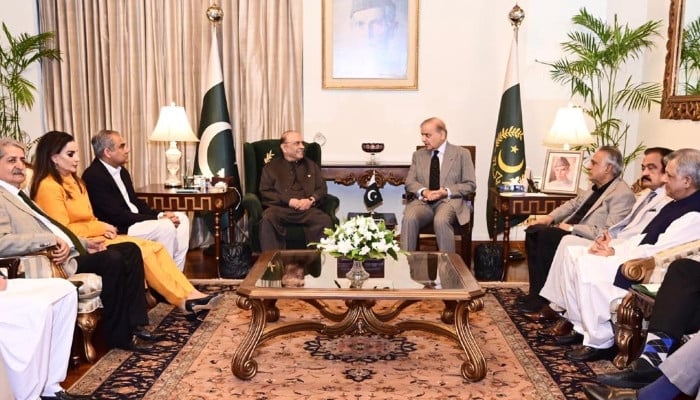
の高 Federal authorities in Islamabad are actively evaluating the imposition of a state of emergency in Khyber Pakhtunkhwa (KP), according to high-level administrative sources. This pivotal policy deliberation comes in the wake of mounting security challenges, governance bottlenecks, and persistent disruptions across key economic corridors in Pakistan's northwestern frontier. The proposed administrative shift aims to bypass regional legislative deadlocks and empower federal law enforcement apparatuses to restore order. Key stakeholders, including federal ministries, security agencies, and provincial administrators, have held a series of closed-door consultations in Islamabad to draft a comprehensive framework that could potentially invoke emergency constitutional provisions.
The timeline of these discussions has accelerated following a series of high-profile security incidents that severely impaired administrative functions in several peripheral districts. The federal cabinet is reviewing security reports detailing infrastructural vulnerabilities, logistical blockades on the Grand Trunk Road and key trade routes to Afghanistan, and administrative paralysis. While no formal proclamation has been gazetted yet, executive orders are reportedly being drafted to outline the scope, duration, and enforcement mechanisms of the contemplated emergency measures.
Commercial & Economic Implications
For Kalyar Traders and the broader business community operating across Pakistan, the prospect of emergency rule in Khyber Pakhtunkhwa introduces profound commercial volatility. KP serves as the vital commercial gateway for bilateral trade with Central Asia and Afghanistan, particularly through the Torkham border crossing. Any suspension of normal administrative operations or heightened security crackdowns directly impacts wholesale distribution networks, retail supply chains, and freight forwarding operations.
Market analysts and commodity traders note that prolonged uncertainty in the region typically triggers speculative hoarding, spikes in transportation risk premiums, and inflationary pressures on essential food items and raw materials. Retail markets in Peshawar, Nowshera, and Mardan are already experiencing cautious buying behavior. Wholesalers report delays in dispatching manufactured goods and agricultural produce out of the province, threatening inventory levels nationwide. Furthermore, investor confidence in regional industrial estates, such as the Hattar Special Economic Zone, remains subdued as enterprises reassess security expenditures and operational continuity.
Related Intelligence: Khyber Pakhtunkhwa Rejects Federal Emergency Threats Amid Rising Political Friction
Stakeholder Perspectives & Market Reactions
Reaction from trade associations and industry bodies has been swift and critical. The Sarhad Chamber of Commerce and Industry (SCCI) along with various regional trader alliances have expressed deep apprehension, arguing that administrative coercion and emergency decrees will stifle rather than stimulate commercial recovery. Business leaders contend that economic stabilization requires political consensus and sustained public-private dialogue, warning that emergency measures could exacerbate capital flight from the province.
Legal experts and constitutional analysts are divided over the legality and efficacy of imposing emergency rule without the explicit concurrence of the provincial assembly. Opposition political parties have decried the move as an assault on provincial autonomy guaranteed under the eighteenth amendment. Conversely, federal defenders maintain that extraordinary circumstances warrant extraordinary executive action to protect national security interests and safeguard vital economic arteries from permanent disruption.
Forward Outlook & Key Watchpoints
As the federal executive finalizes its policy review, the coming days will prove critical in determining the trajectory of governance in Khyber Pakhtunkhwa. Key watchpoints for corporate leaders, investors, and supply chain managers include the formal convening of the federal cabinet, potential legislative responses from the KP provincial assembly, and the official operational guidelines accompanying any emergency declaration.
Business entities and trading houses are advised to maintain flexible logistical contingencies, diversify supply routes where feasible, and closely monitor regulatory updates from the Ministry of Interior. The ultimate success or failure of the federal government's strategy will depend heavily on its ability to balance security imperatives with the uninterrupted flow of commerce and retail trade across the region.
Join Our Official WhatsApp Channel
Receive live commodity alerts, policy changes, and commercial intelligence directly on WhatsApp.