
Federal Government Calls for Bipartisan Security Talks Amid Rising Terror Threats
The federal government has invited opposition parties to hold decisive dialogue on national security, urging Pakistan Tehreek-e-Insaf to prioritize institutional counter-terrorism efforts over social media campaigns.
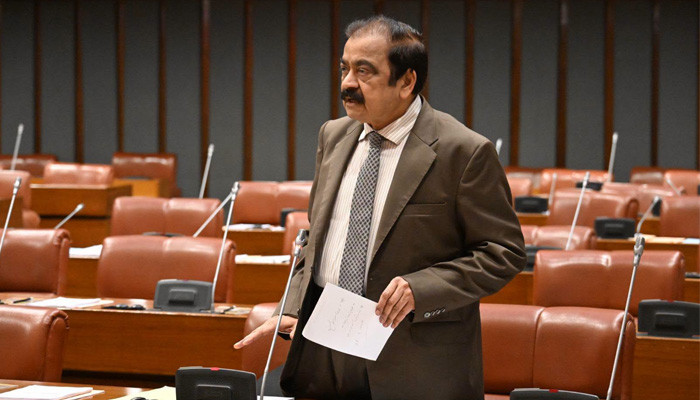
The Core Development
The federal administration has formally extended an olive branch to the parliamentary opposition, urging political adversaries—most notably the Pakistan Tehreek-e-Insaf (PTI)—to convene for comprehensive dialogue on national security and counter-terrorism. Addressing the media and legislative stakeholders in Islamabad, senior government representatives stressed that rising militant activity requires an uncompromised, unified national posture. Ministers specifically called on PTI leadership to step away from pervasive social media narratives and participate constructively in institutional forums, including the National Assembly and parliamentary committees.
The appeal comes against a backdrop of escalating security challenges across Khyber Pakhtunkhwa and Balochistan, where attacks against law enforcement personnel and strategic infrastructure have risen sharply. Federal authorities noted that counter-terrorism policy cannot be subordinated to partisan rhetoric. Emphasizing the operational requirements of national counter-extremism initiatives like Azm-e-Istehkam, officials highlighted that political polarization impairs military and civil enforcement synergy, offering hostile elements an environment of administrative distraction.
Commercial & Economic Implications
For wholesale merchants, distribution networks, and industrial stakeholders, lingering security friction imposes measurable economic penalties. Sustained political deadlock over defense and law enforcement undermines the operational confidence required for long-term domestic and foreign direct investment. Critical trade arteries connecting industrial hubs in Punjab and Sindh to western border points in Khyber Pakhtunkhwa and Balochistan face direct risk from regional instability, threatening overland transit commerce with Central Asia.
Furthermore, supply chain disruptions exacerbate logistics expenses through increased transit insurance premiums, delays at transport check-posts, and erratic delivery schedules. For retail and wholesale distribution networks managed by commercial enterprises across Pakistan, stability in national policy is essential to shield pricing from security-induced freight volatility. Chronic instability also complicates the sovereign macro-fiscal trajectory, as international financial institutions and bilateral partners scrutinize internal governance and security safeguards before disbursing project finance.
Related Intelligence: Pakistan Engages Central Asia at SCO Meeting to Bolster Trade Corridor
Stakeholder Perspectives & Market Reactions
Commercial chambers and trade associations across the country have expressed measured support for legislative reconciliation. Business community leaders note that domestic commerce cannot sustain recurring political volatility alongside structural macroeconomic adjustments. Industry bodies, including the Federation of Pakistan Chambers of Commerce and Industry (FPCCI), have repeatedly underscored that economic revival remains inextricably linked to physical security and broad-based political stability.
Conversely, opposition representatives have met the government's invitation with caution, maintaining that meaningful national dialogue requires reciprocal goodwill, the withdrawal of legal cases against key party figures, and respect for electoral mandates. Legal analysts observe that while executive calls for consensus are vital, formal counter-terrorism implementation requires statutory backing through bipartisan parliamentary committees rather than ad-hoc press briefings. Market observers note that equity indices remain sensitive to domestic political standoffs, reflecting investor fatigue with ongoing administrative friction.
Forward Outlook & Key Watchpoints
The immediate trajectory will hinge on whether the federal government convenes an all-parties conference (APC) or issues formal invitations through the National Assembly Secretariat. Observers will monitor whether PTI assigns senior legislative figures to participate in preliminary terms-of-reference negotiations or sustains its confrontational posture outside parliament.
In the coming weeks, key variables include the operationalization of federal security directives, budget allocations for provincial counter-terrorism departments, and the mitigation of border-adjacent security vulnerabilities. If executive leadership succeeds in bridging the partisan divide, Pakistan could secure the administrative stability needed to sustain economic stabilization and lower geopolitical risk premia. Failure to establish consensus risks compounding supply chain vulnerabilities and depressing regional trade corridors at a fragile economic juncture.
Join Our Official WhatsApp Channel
Receive live commodity alerts, policy changes, and commercial intelligence directly on WhatsApp.