
FCC Disposes of Challenge to KP Chief Minister Following Emergency Rule
The Federal Constitutional Court has disposed of a legal challenge regarding KP's chief minister appointment following the imposition of governor's rule, deepening political and commercial uncertainty across the northwestern province.
The Core Development
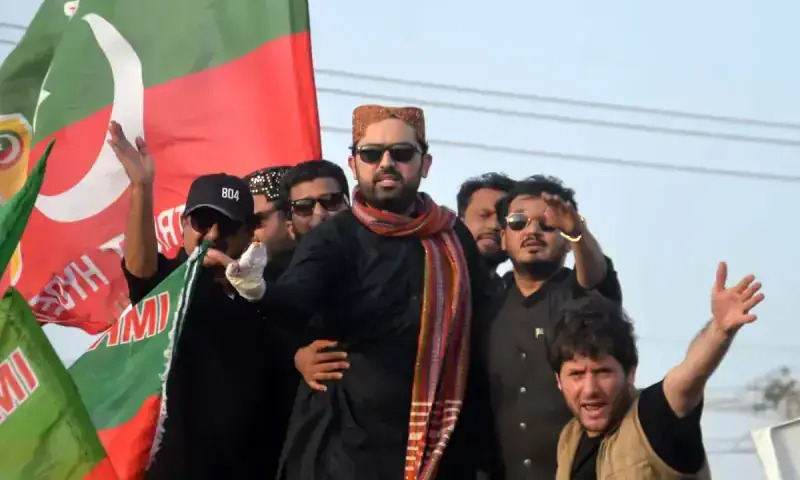
The Federal Constitutional Court (FCC) in Islamabad has formally disposed of a constitutional petition challenging the appointment of non-functional Khyber Pakhtunkhwa Chief Minister Sohail Afridi, declaring the litigation infructuous in light of the federal government's recent enforcement of governor's rule and emergency measures across the province.
The administrative intervention, enacted early this week, dissolved effective provincial executive autonomy after the federal cabinet cited what it termed a deliberate disengagement by the Pakistan Tehreek-e-Insaf (PTI)-led provincial administration from counter-terrorism efforts and national security protocols. Under the emergency proclamation, operational authority was transferred directly to the provincial governor, effectively sidelining the provincial cabinet. Simultaneously, law enforcement authorities placed Chief Minister Sohail Afridi and several senior cabinet members into preventative custody, prompting strong condemnations from opposition legal representatives who challenged the constitutionality of the administrative takeover.
The bench concluded that the subsequent invocation of emergency constitutional provisions superseded the original relief sought regarding the executive appointment, rendering an immediate judicial determination on the appointment process redundant under current legal parameters.
Commercial & Economic Implications
For enterprise operators, wholesale suppliers, and commodity distributors operating within Khyber Pakhtunkhwa, the suspension of representative governance introduces significant commercial friction. Peshawar serves as the primary gateway for transit trade into Afghanistan and the wider Central Asian Republics. Political instability combined with preventative detentions has disrupted freight logistics, exacerbated local clearance delays at cargo hubs, and created elevated security overheads along critical arterial transit routes, including the Indus Highway and the Grand Trunk Road corridor.
Wholesale markets in Peshawar, Mardan, and Swat are reporting heightened precautionary behavior among traders. Interprovincial supply chains face operational delays due to increased security checkpoints and surveillance protocols implemented under emergency regulations. This friction threatens to escalate localized transportation costs, with direct spillover effects on retail consumer price indices for essential kitchen commodities, construction materials, and imported inputs. Furthermore, the governance vacuum imperils the disbursement of provincial public sector development expenditures, stalling public procurement and delaying state payments to private contractors and logistical vendors.
Related Intelligence: Parliament Debates Emergency and Governor Rule Measures Across Khyber Pakhtunkhwa
Stakeholder Perspectives & Market Reactions
The business and legal fraternities have voiced acute concern over the institutional precedent and its macro-financial consequences. The Sarhad Chamber of Commerce and Industry (SCCI) along with regional trade unions warned that governance uncertainty paralyzes long-term industrial investment and undermines cross-border trade facilitation. Commercial operators have called for uninterrupted freight processing at the Torkham border terminal to prevent systemic working capital depletion among perishable exporters.
Conversely, legal observers are sharply divided. Government legal advisers maintain that the declaration of emergency was a constitutionally sanctioned necessity to restore public order, neutralize security liabilities, and protect economic infrastructure from asymmetric threats. However, constitutional lawyers aligned with the opposition argue that circumventing elected provincial assemblies destabilizes federal cohesion, warning that prolonged central rule diminishes provincial fiscal predictability under the National Finance Commission framework and invites protracted legal challenges.
Forward Outlook & Key Watchpoints
The trajectory of regional commerce over the next quarter depends directly on the duration of governor's rule and subsequent legislative proceedings. Market analysts must monitor whether the federal government seeks an extension of emergency powers from the joint sitting of Parliament within the mandated statutory timeframe. Any protracted period of central administration without clear legislative consensus risks deepening administrative inertia across provincial regulatory bodies.
Key watchpoints for investors and distributors include legal challenges lodged against the emergency proclamation itself before higher constitutional benches, the operational continuity of cross-border customs infrastructure, and the maintenance of interprovincial freight corridors. If political confrontation intensifies into sustained logistical blockades, downstream wholesale markets in Punjab and Sindh will inevitably experience margin compression and volatile spot pricing on transshipped goods.
Join Our Official WhatsApp Channel
Receive live commodity alerts, policy changes, and commercial intelligence directly on WhatsApp.