
Brazil Approves Shorter Working Week Bolstering Lula Ahead of Run-Off
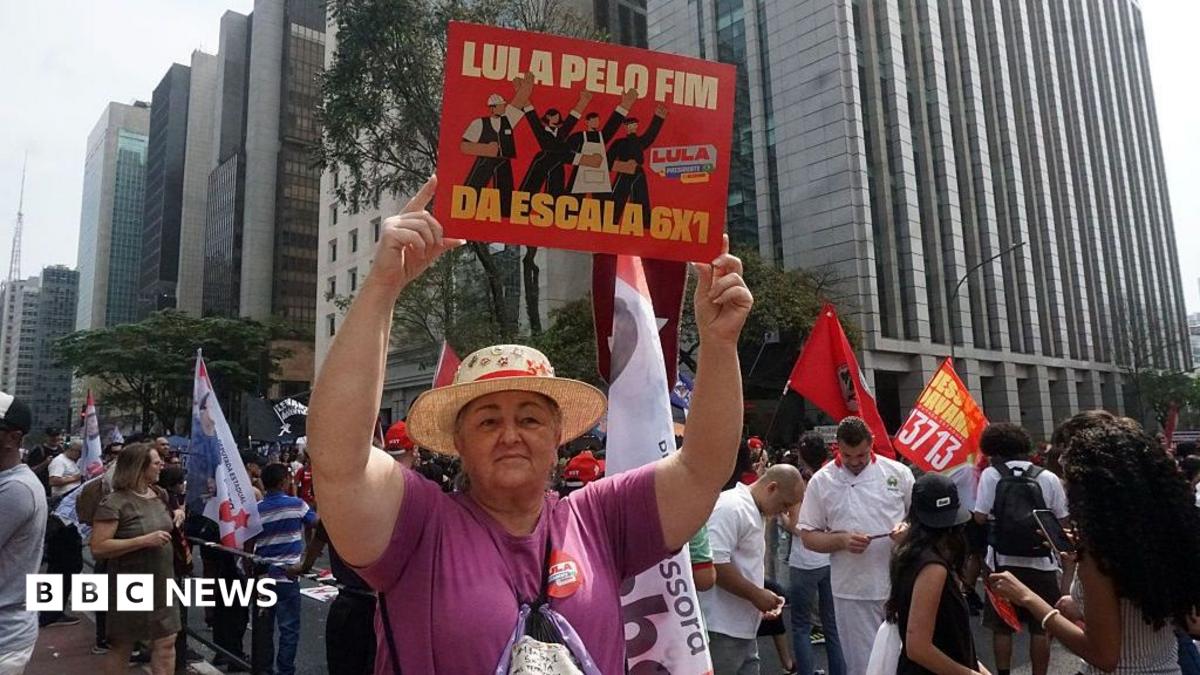
Brazil's Congress has approved landmark legislation reducing weekly working hours, delivering a timely legislative victory for President Luiz Inácio Lula da Silva ahead of a pivotal electoral showdown.
Geopolitical & Core Developments
In a consequential move for Latin America's largest democracy, the National Congress of Brazil has approved comprehensive legislation to reduce standard weekly working hours. The legislative breakthrough delivers a substantial domestic and political victory to President Luiz Inacio Lula da Silva as his administration faces an intensely polarized presidential run-off election in just ten days.
Lula's progressive coalition has long campaigned on strengthening social protections and modernizing labor codes inherited from mid-twentieth-century industrial frameworks. Negotiated through intensive committee deliberations across both legislative chambers, the measure was fiercely contested by conservative factions aligned with the agrarian and financial lobbies. The final passage represents a delicate parliamentary compromise, phasing in weekly hour reductions across strategic economic sectors while safeguarding base wages. Supporters within the administration anticipate that the passage of this marquee welfare reform will energize working-class turnout and consolidate support across decisive urban industrial belts in Sao Paulo, Minas Gerais, and Rio de Janeiro.
Global Trade & Economic Ripples
Brazil occupies a systemic position within global resource networks, standing as the preeminent exporter of soybeans, iron ore, crude petroleum, beef, and refined sugar. A structural compression in statutory working hours fundamentally alters unit labor costs, operational shifts, and corporate overhead across these capital-intensive export sectors.
Commodity trading houses and multinational agribusinesses are evaluating whether productivity gains can sufficiently counterbalance rising overtime expenditures. Port operations at critical maritime conduits—notably the Port of Santos and the northern Arco Norte terminals—may face altered shift logistics, potentially introducing temporary bottlenecks during peak harvest cycles. Currency markets have registered moderate volatility, with foreign exchange traders balancing the prospective boost to domestic household consumption against broader fiscal and corporate margin compressions. Furthermore, the industrial manufacturing sector, particularly automotive and aerospace manufacturing concentrated in the south-southeast corridor, must adapt contractual standards to avoid erosion of international cost competitiveness against emerging market peers.
International Reactions & Diplomatic Stances
Market observers, international labor organizations, and regional governments have closely scrutinized the vote. The International Labour Organization (ILO) issued measured praise, characterizing the reform as an important alignment with international best practices regarding worker welfare and work-life balance in the post-pandemic economic landscape.
Conversely, international credit rating agencies and multinational corporate federations have sounded notes of caution. The National Confederation of Industry (CNI) and commercial agricultural lobbies argued that the statutory transition could exacerbate structural labor supply deficits if not matched by aggressive capital expenditure in industrial automation. Wall Street analysts tracking Latin American sovereign debt noted that institutional stability hinges on the broader political outcome in ten days, with foreign direct investment inflows largely remaining in a wait-and-see posture pending post-election policy certainty.
Strategic Outlook & Future Scenarios
The trajectory of the Brazilian economy over the coming quarters remains acutely tethered to the impending electoral run-off. A triumph for Lula would empower his administration to advance complementary economic programs, including progressive tax adjustments and targeted state-led infrastructure spending under the Growth Acceleration Program (PAC). Conversely, an opposition victory could precipitate legislative gridlock or administrative attempts to dilute the implementation timeline of the newly enacted labor provisions.
Over the medium term, regional neighbors within the Mercosur trade bloc—most notably Argentina and Uruguay—are assessing the structural implications for regional labor harmonization and manufacturing supply chain integration. With upcoming G20 and BRICS multilateral summits poised to highlight green industrialization and sustainable employment standards, Brazil's aggressive labor recalibration positions the nation at the vanguard of the Global South's regulatory discourse, testing whether socio-economic concessions can coexist harmoniously with competitive, resource-driven trade supremacy.
Join Our Official WhatsApp Channel
Receive live commodity alerts, policy changes, and commercial intelligence directly on WhatsApp.