
Parliament Debates Emergency and Governor Rule Measures Across Khyber Pakhtunkhwa
Pakistan's Parliament has convened a joint sitting to debate resolutions ratifying emergency provisions and governor's rule in Khyber Pakhtunkhwa, stirring constitutional debate and raising commercial concerns across northern trade corridors.
The Core Development
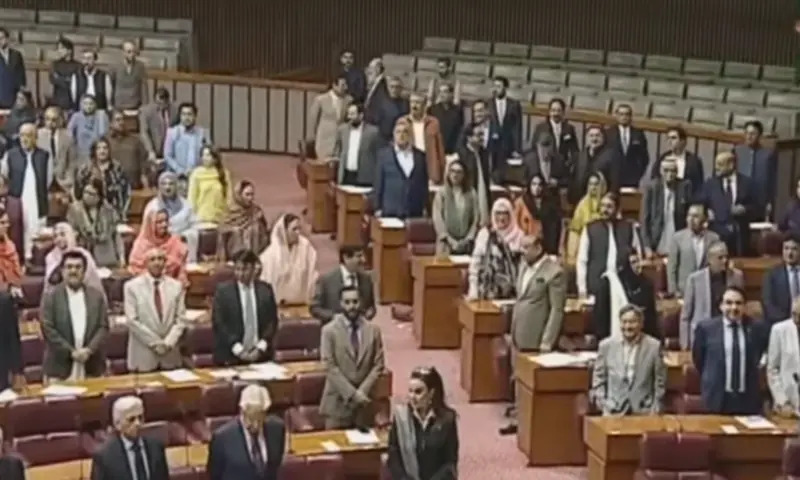
A joint sitting of Pakistan's Parliament convened in Islamabad to deliberate on dual resolutions concerning the formal imposition of an emergency and the potential enforcement of governor's rule in Khyber Pakhtunkhwa (KP). The high-stakes legislative session brought together lawmakers from both the National Assembly and the Senate, following earlier, separate votes where each chamber passed preliminary resolutions supporting the federal government's administrative intervention.
The constitutional framework governing the move centers on Articles 232 and 234 of the Constitution of Pakistan. Under Article 232, whenever the President proclaims an emergency unilaterally, the proclamation must be laid before both Houses of Parliament for approval within a mandatory ten-day window. Concurrently, the mechanism for governor's rule, codified under Article 234, empowers the executive to assume direct provincial oversight in cases where the constitutional machinery of a province has experienced systemic collapse. Lawmakers engaged in sharp procedural and constitutional debates regarding the threshold required to justify centralizing administrative authority over the northwestern province.
Commercial & Economic Implications
The introduction of emergency administrative oversight in KP carries tangible ramifications for regional wholesale trade, transport logistics, and retail supply chains. KP serves as the primary overland conduit for transit trade between Pakistan, Afghanistan, and broader Central Asian markets. Protracted political confrontations and heightened administrative scrutiny invariably translate into logistical gridlock along the primary N-5 highway corridor and border entry points, most notably the Torkham crossing.
For wholesale merchants and FMCG distributors operating out of key commercial centers like Peshawar, Nowshera, and Mardan, heightened uncertainty elevates inventory risks. Interrupted distribution networks frequently drive localized price spikes in perishable commodities, grains, and construction materials. Furthermore, regional commercial banks and trade financiers tend to adopt risk-averse postures amid jurisdictional ambiguities, curtailing short-term credit facilities extended to provincial enterprises. This contraction in commercial liquidity threatens to exacerbate retail inflation across regional consumer markets already navigating broader macroeconomic headwinds.
Related Intelligence: Parliament Debates Governor Rule in Khyber Pakhtunkhwa Amid Economic Uncertainty
Stakeholder Perspectives & Market Reactions
The legislative debate has triggered polarized responses across legal, political, and commercial circles. Legal experts and opposition representatives argue that triggering Article 234 undermines provincial autonomy guaranteed under the Eighteenth Constitutional Amendment, cautioning that using emergency powers for governance disputes sets a precarious constitutional precedent. Conversely, federal proponents contend that deteriorating administrative cohesion and security obligations necessitate unified executive authority to restore civic order and preserve public institutions.
Trading associations, including representatives from the Sarhad Chamber of Commerce and Industry (SCCI), have expressed measured concern regarding the operational climate. Business leaders caution that political uncertainty directly dampens private sector investment, delays public infrastructure disbursements, and creates bureaucratic friction at provincial excise and taxation touchpoints. Market participants have called on federal authorities to ensure that commercial logistics, port clearances, and cargo handling continue unimpeded regardless of the governing executive structure in Peshawar.
Forward Outlook & Key Watchpoints
The immediate trajectory hinges on the conclusive vote in the joint parliamentary sitting to confirm the statutory scope and duration of the emergency proclamations. Legal observers anticipate immediate challenges in the superior judiciary, where petitions contesting the factual basis of the Article 234 invocation are likely to be lodged before the Supreme Court of Pakistan.
Over the coming weeks, market analysts and business operators should monitor three critical watchpoints: the potential appointment of a principal administrative team by the governor, any adjustments to provincial development expenditure allocations under direct federal supervision, and the operational continuity of cross-border customs terminals. If bureaucratic workflows stall during the transition, regional consumer markets could experience supply volatility through the next fiscal quarter.
Join Our Official WhatsApp Channel
Receive live commodity alerts, policy changes, and commercial intelligence directly on WhatsApp.