
Parliament Debates Governor Rule in Khyber Pakhtunkhwa Amid Economic Uncertainty
Pakistan's Parliament is deliberating resolutions on governor's rule and emergency in Khyber Pakhtunkhwa, heightening commercial friction and logistics vulnerabilities across regional supply routes.
The Core Development
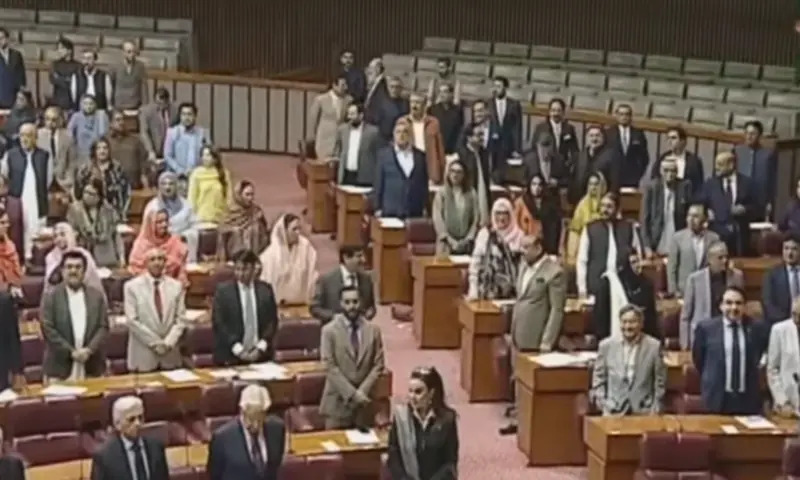
A high-stakes joint sitting of the National Assembly and the Senate was convened in Islamabad to debate formal resolutions concerning the imposition of governor's rule and emergency powers in Khyber Pakhtunkhwa. The parliamentary session follows separate endorsements passed by both legislative chambers approving federal intervention under the constitutional architecture of Pakistan. Central to the ongoing debate are Articles 232 and 234 of the Constitution. Article 232 mandates that should the President issue a Proclamation of Emergency autonomously, the measure must secure legislative ratification from both Houses within a strict ten-day window. Concurrently, proceedings under Article 234 permit the federal executive to assume direct governance over provincial administration when provincial machinery fails to operate in conformity with constitutional provisions. The parliamentary deliberations highlight deep institutional friction between the central government in Islamabad and regional stakeholders, raising complex procedural hurdles concerning legislative oversight, executive federalism, and the governance framework of the northwestern border province.
Commercial & Economic Implications
The administrative uncertainty in Khyber Pakhtunkhwa carries immediate economic ramifications for Pakistan's domestic distribution networks and regional commerce. Khyber Pakhtunkhwa serves as the primary trade gateway between Pakistan and Central Asian markets via the Torkham and Ghulam Khan border crossings. Prolonged political volatility threatens the steady movement of commercial transit, leading to freight holding delays, escalating demurrage charges, and elevated risk premiums for logistics operators. In wholesale markets across Peshawar, Rawalpindi, and Lahore, distribution networks for essential consumer staples, pharmaceuticals, and industrial construction inputs are facing operational friction. Supply chain disruptions are driving local transportation costs up by an estimated 10 to 15 percent across northern trade arteries. For wholesale distributors and retail traders, bureaucratic bottlenecks emerging from central-provincial administrative disputes threaten inventories, increase working capital requirements, and amplify inflationary pressures on perishable commodities and imported consumer goods.
Related Intelligence: Retail Friction Exposes Broader Global Consumer Trends and Cultural Divides
Stakeholder Perspectives & Market Reactions
The private sector and regional commercial associations have reacted to the political maneuvers with caution. The Sarhad Chamber of Commerce and Industry and regional wholesale merchant groups have underscored that sustained political impasse imperils regional investment, tax collection, and cross-border commercial liquidity. Traders note that clearance cycles at dry ports and transit hubs invariably suffer when administrative hierarchies undergo sudden federal realignments. Legal commentators have raised critical concerns over the statutory validity and implementation thresholds of Article 234, noting that direct federal rule without strong regional consensus risks protracted litigation before the Supreme Court. Meanwhile, treasury representatives maintain that emergency measures are vital to preserve state authority, security coordination, and fiscal stability across the northwestern frontier, arguing that an orderly governance model is a prerequisite for long-term commercial confidence.
Forward Outlook & Key Watchpoints
The immediate trajectory will hinge on whether Parliament formally ratifies the Article 234 proclamation and the specific operational mandate conferred upon the governor. If direct federal rule is extended, market participants must monitor potential bureaucratic restructuring across the Khyber Pakhtunkhwa Revenue Authority, provincial development portfolios, and local procurement departments. Key watchpoints include freight flow continuity through bilateral land customs stations, municipal security operations around major wholesale clusters, and the response of provincial civil servants to federal oversight. Prolonged confrontation will likely compress private capital expenditure in regional logistics and retail ventures, requiring traders to maintain flexible supply buffers and closely monitor regulatory realignments emanating from the federal secretariat in Islamabad.
Join Our Official WhatsApp Channel
Receive live commodity alerts, policy changes, and commercial intelligence directly on WhatsApp.