
Fazlur Rehman Rebuts Coalition Accusations Amid Deepening Khyber Pakhtunkhwa Governance Feud
JUI-F chief Maulana Fazlur Rehman rejected allegations that his critiques of state counter-terrorism policies stemmed from political grievances over provincial offices, cautioning against character assassination amid worsening regional security dynamics.
The Core Development
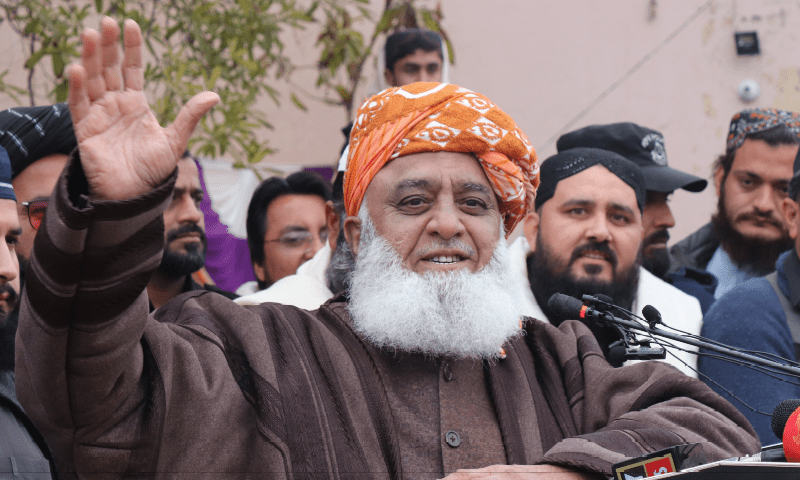
Jamiat Ulema-i-Islam-Fazl (JUI-F) chief Maulana Fazlur Rehman has delivered an emphatic clarification regarding his party’s public position on Pakistan’s national security framework, asserting that recent critiques were targeted exclusively at policy outcomes rather than state institutions. The statement follows sharp allegations made by senior members of the federal coalition, who claimed the religious-political leader was motivated by a desire to secure the governorship of Khyber Pakhtunkhwa.
The friction escalated after Interior Minister Mohsin Naqvi publicly claimed that an unnamed party head was aggrieved over being denied the gubernatorial slot in Khyber Pakhtunkhwa, suggesting that frustration over administrative exclusion was driving critiques of federal counter-terrorism policy. Rehman rejected these assertions as deliberate character assassination, maintaining that his concerns stem from the operational failures of prevailing security approaches in the province. He reaffirmed that systemic policy miscalculations have created severe governance voids, worsening local unrest across critical southern and western districts.
Commercial & Economic Implications
The ongoing political confrontation between mainstream power centers and prominent regional parties introduces critical headwinds for Pakistan’s economic stability, particularly within northern and western commercial corridors. Khyber Pakhtunkhwa serves as the country’s primary logistics artery for overland trade with Afghanistan and the wider Central Asian Republics. Persistent friction between federal authorities and influential local factions compounds the operational risks facing formal freight forwarders, wholesale distributors, and retail businesses.
Escalating policy divergence frequently undermines coordinated law enforcement, leading to increased transport security costs, extended transit times, and localized supply chain disruptions. In agricultural and dry-fruit distribution hubs, such logistical uncertainties drive up retail margins and feed food inflation. For Pakistan’s mercantile community, the absence of political coherence on provincial security directly dampens private capital expenditure, depressing credit extension to small and medium enterprises operating across peripheral markets.
Related Intelligence: Nawaz Sharif Backs Governor Rule In Khyber Pakhtunkhwa Amid Mounting Friction
Stakeholder Perspectives & Market Reactions
Business chambers across Peshawar, Bannu, and Dera Ismail Khan have voiced escalating concern over the political deadlock, highlighting that administrative friction invariably trickles down to market stability. Local trade associations emphasize that when security policy becomes a subject of overt political recrimination, business confidence drops precipitously, encouraging capital flight to more stable urban centers such as Lahore and Karachi.
Federal government spokespersons maintain that robust counter-terrorism strategies remain vital to economic revitalization and foreign direct investment protection, arguing that consensus across political actors is necessary to uphold state writ. Conversely, political analysts observe that alienating influential figures like Rehman—who wields substantial grassroots sway across the tribal belts—complicates federal efforts to maintain civil-military policy cohesion. Legal experts note that constitutional debates over provincial autonomy and federal intervention exacerbate polarization, clouding the timeline for effective governance reforms.
Forward Outlook & Key Watchpoints
The immediate trajectory of this dispute will hinge on whether formal backchannel talks between the ruling coalition and the JUI-F leadership succeed in de-escalating political rhetoric. Key developments to monitor include upcoming parliamentary debates over national security allocations, counter-terrorism frameworks, and any formalized shifts in federal administrative strategy regarding Khyber Pakhtunkhwa.
Stakeholders will closely watch bilateral trade flows along the Torkham and Ghulam Khan borders, where security conditions directly correlate with trade revenues and logistics continuity. If political consensus continues to deteriorate, institutional paralysis could further undermine local administrative coordination, elevating commercial risk premiums across western transport corridors and weighing heavily on the broader macroeconomic recovery.
Join Our Official WhatsApp Channel
Receive live commodity alerts, policy changes, and commercial intelligence directly on WhatsApp.