
Federal Government Defends Governor Rule Imposition in Khyber Pakhtunkhwa
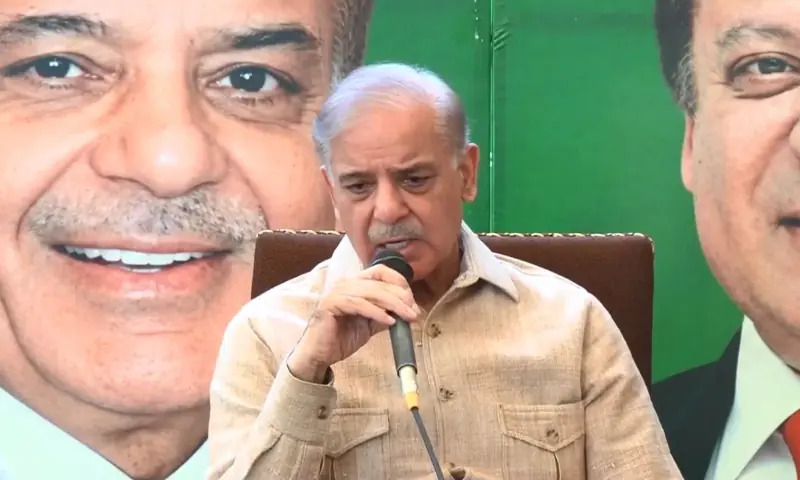
Prime Minister Shehbaz Sharif reiterated that the federal government was forced to impose emergency and Governor's Rule in Khyber Pakhtunkhwa due to non-cooperation on counter-terrorism.
The Core Development
Prime Minister Shehbaz Sharif has reaffirmed the federal government's decision to invoke constitutional emergency measures and impose Governor's Rule in Khyber Pakhtunkhwa, maintaining that the Centre was left with no viable alternative. The administrative intervention, enacted on October 11 following formal presidential approval of the federal cabinet's resolution, materialized after prolonged friction between Islamabad and the provincial administration in Peshawar. The federal leadership cited what it characterized as a persistent and deliberate disengagement by the Pakistan Tehreek-e-Insaf (PTI)-led provincial executive from the national counter-terrorism architecture.
The legislative endorsement of the emergency measures was secured through a joint sitting of Parliament earlier this week, despite vociferous resistance and walkouts staged by opposition lawmakers. Addressing high-level administrative figures and national stakeholders on Saturday, the Prime Minister emphasized that national security and regional stability could not be compromised by political divergences. The Centre maintains that constitutional provisions governing state authority had to be utilized to re-establish unified command structures, curb militant resurgence, and ensure that counter-terror operations receive unhindered provincial logistical and policy backing.
Commercial & Economic Implications
The enforcement of emergency governance across Khyber Pakhtunkhwa carries acute ramifications for wholesale distribution networks, supply chain integrity, and localized retail enterprise across northern Pakistan. KP functions as the primary geographical corridor facilitating bilateral trade and regional transit with Afghanistan and Central Asian republics. The imposition of Governor's Rule introduces immediate administrative volatility that routinely rattles logistics corridors, specifically through key border crossings such as Torkham.
Freight forwarders, wholesale distributors, and commercial importers are factoring in risk premiums due to heightened security protocols, vehicle checks, and potential disruption to transit movement. For the retail sector within Peshawar, Mardan, Swat, and surrounding commercial districts, political friction typically dampens consumer spending, depresses inventory turnover, and increases carrying costs for fast-moving consumer goods. Additionally, the suspension of normal provincial legislative procedures is poised to delay the release of provincial development portfolio funds, stalling civic infrastructure projects and suppressing local purchasing power.
Related Intelligence: Anti-Terrorism Court Emphasizes Judicial Independence in High-Profile Activist Hearing
Stakeholder Perspectives & Market Reactions
The political and mercantile response to the Centre's decision reflects deep systemic polarization. The leadership of the provincial opposition has condemned the invocation of Governor's Rule as an unconstitutional usurpation of the democratic mandate, vowing to challenge the parliamentary endorsement in the superior judiciary. They argue that the measure bypasses legitimate provincial autonomy guaranteed under the Eighteenth Amendment.
Conversely, regional trade bodies and chamber representatives have voiced measured anxiety regarding operational stability. While commercial leadership in KP has long demanded a definitive end to extortion, security threats, and militant harassment, they remain apprehensive about protracted administrative disruptions. Business associations have cautioned that direct bureaucratic rule must not translate into stifling bureaucratic bottlenecks, aggressive municipal taxation, or arbitrary border closures that penalize formal enterprise.
Forward Outlook & Key Watchpoints
The near-term trajectory depends on two primary legal and security benchmarks: the prospective judicial scrutiny of the emergency notification before the Supreme Court of Pakistan and the operational restructuring of provincial law enforcement machinery. Institutional observers will be monitoring whether the Governor's administration initiates targeted security operations and whether these actions stabilize the law-and-order baseline in volatile southern districts.
Market participants must closely track customs clearance metrics, cargo transit velocity at northern checkpoints, and provincial revenue collection trends over the next fiscal quarter. The normalization of commercial activity will ultimately hinge on how swiftly the administrative transition provides visible security assurances without suffocating the regional flow of commerce and consumer goods.
Join Our Official WhatsApp Channel
Receive live commodity alerts, policy changes, and commercial intelligence directly on WhatsApp.