
Violent French Protests Over Inflation Pressure European Economic Stability
Violent clashes broke out across France as nationwide demonstrations over the rising cost of living disrupted transport networks and renewed pressure on European fiscal governance.
Geopolitical & Core Developments
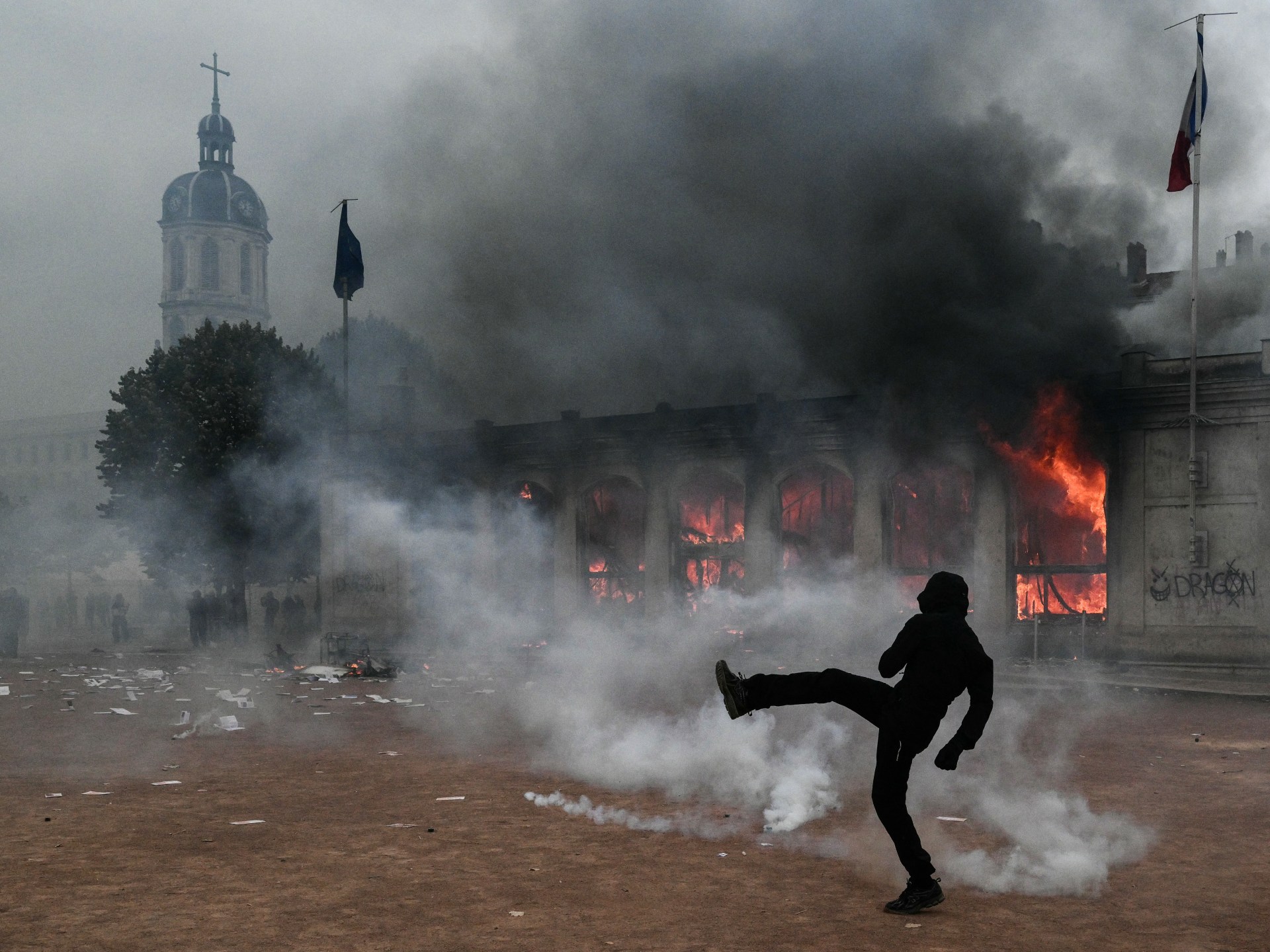
France was swept by extensive civil unrest as tens of thousands of demonstrators took to the streets across Paris, Lyon, Marseille, and other major metropolitan hubs to protest sustained inflationary pressures and declining real wages. Organized by cross-sector trade union confederations alongside civil society groups, the nationwide mobilization rapidly deteriorated into skirmishes between front-line police and organized protest blocs. Security forces deployed tear gas and water cannons to disperse crowds attempting to breach security perimeters near critical state institutions and commercial districts.
The demonstrations underscore an escalating domestic governance crisis for President Emmanuel Macron's administration, which is caught between constitutional requirements to rein in ballooning public deficits and broad societal resistance to austerity measures. Discontent has been compounded by persistently elevated prices for household electricity, food commodities, and basic services, which have significantly outpaced nominal wage growth over successive quarters. The timeline of social unrest threatens to disrupt legislative agendas, leaving the executive branch structurally constrained in enacting long-term economic reforms.
Global Trade & Economic Ripples
While predominantly centered on domestic cost-of-living grievances, the unrest carries direct consequences for European commercial logistics and cross-border trade flows. Coordinated labor walkouts in the transport and energy sectors disrupted operations at domestic freight corridors, rail terminals, and key maritime gateways, including the Port of Marseille-Fos. Prolonged bottlenecks in French logistical arteries inevitably introduce delivery friction across continental supply chains, particularly impacting automotive components, agricultural exports, and intermediate chemical products.
In financial markets, the domestic instability injected volatility into sovereign debt pricing. The yield spread between French 10-year government bonds (OATs) and the German benchmark Bund widened marginally as investors priced in heightened political risk and potential obstacles to deficit reduction. The euro experienced choppy trading against major currencies, weighed down by concerns that prolonged domestic paralysis in the European Union's second-largest economy could weaken regional GDP momentum. Furthermore, localized industrial strikes targeting refineries and power transmission nodes raise lingering concerns over domestic energy supply margins ahead of seasonal peak demand.
Related Intelligence: Bangladesh Measles Crisis Signals Regional Supply Chain and Health Risks
International Reactions & Diplomatic Stances
Multilateral institutions and sovereign partners have monitored developments closely, reflecting France's systemic importance to continental policy cohesion. While foreign ministries across Western capitals observed standard protocols by classifying the demonstrations as internal sovereign matters, private diplomatic briefings reflect rising anxiety regarding France's domestic stability. European Union policymakers in Brussels are acutely sensitive to the fiscal implications, as persistent social instability could derail Paris's commitments to align with the revised EU fiscal framework and deficit caps.
International credit rating agencies have highlighted that structural domestic turbulence limits the government's latitude to introduce fiscal consolidation measures. Market analysts noted that the scale of popular pushback mirrors broader discontent across Western economies, where central bank interest rate interventions have subdued headline economic expansion without fully insulating lower-income demographics from cumulative price shocks.
Strategic Outlook & Future Scenarios
The trajectory of the crisis will depend on whether labor unions maintain prolonged rolling strikes across strategic infrastructure, particularly energy logistics, rail transit, and public sector administration. Should the administration pursue emergency unilateral executive decrees to enforce budgetary controls, further radicalization of public demonstrations remains probable, raising the risk of prolonged civil friction.
In the medium term, sustained domestic polarization threatens to compromise Paris's diplomatic influence within European Council negotiations, where leadership consensus on industrial policy, energy security, and joint defense financing is paramount. Investors will closely observe upcoming quarterly economic indicators and bond auctions to evaluate whether structural social fragmentation begins eroding France's broader investment attractiveness and institutional predictability.
Join Our Official WhatsApp Channel
Receive live commodity alerts, policy changes, and commercial intelligence directly on WhatsApp.