
Deadly Strikes Hit St Petersburg Energy and Digital Infrastructure
Drone strikes struck critical oil depots and a major data center in St Petersburg, killing at least one person and escalating risks to Russian energy logistics.
Geopolitical & Core Developments
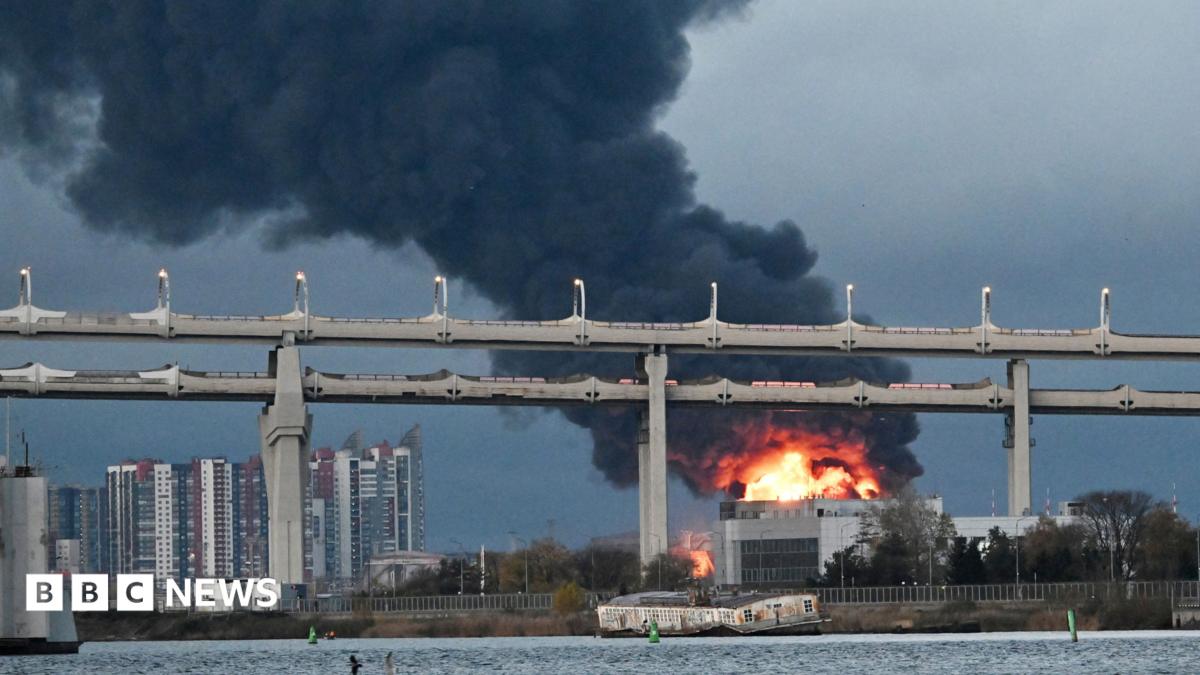
A coordinated overnight drone operation struck deep into Russian territory, hitting oil storage facilities and commercial data infrastructure in the St Petersburg metropolitan area. The assault resulted in at least one casualty, local authorities reported, alongside significant damage to an energy terminal and a major server facility utilized by VK, often described as Russia's domestic equivalent to Facebook. The strikes represent one of the most geographically distant penetrations of Russian airspace since the onset of the conflict, situated more than 800 kilometers north of the Ukrainian border.
Military analysts point to the precision targeting of dual-use assets as evidence of an expanding operational scope. While cross-border strikes have regularly targeted refineries across Russia's western and southern borderlands, reaching the Gulf of Finland basin signals elevated operational capabilities by adversarial forces. Regional emergency services contained localized industrial blazes, but the psychological and operational breach of Russia's second-largest financial and administrative center reflects a calculated strategy to degrade Russian domestic logistics, communication networks, and hydrocarbon handling infrastructure.
Global Trade & Economic Ripples
The vulnerability of St Petersburg's industrial perimeter presents immediate operational headaches for seaborne crude logistics. The region functions as a vital conduit for Russian petroleum export corridors through the Baltic Sea ports of Primorsk and Ust-Luga, which manage millions of barrels of Urals crude destined for non-Western buyers. Following reports of the attack, regional war risk insurance premiums for merchant vessels navigating Baltic Sea corridors experienced upward pressure as underwriting syndicates assessed heightened regional security concerns.
Energy markets observed immediate ripples across derivative pricing structures. Physical traders adjusted risk margins upward on northern delivery routes, mindful that prolonged disruption to regional bunkering or blending infrastructure could impede export flows. Furthermore, the targeted data center highlights rising secondary risks to the domestic digital infrastructure supporting logistics clearing houses, internal payment rails, and commercial operations within the Russian Federation.
International Reactions & Diplomatic Stances
Moscow characterized the incident as an act of state-sponsored terrorism against sovereign municipal and energy infrastructure, vowing retaliatory measures against defensive positions across the front lines. The Russian Ministry of Defense stated that air defense batteries neutralized multiple unmanned aerial vehicles, though falling debris and kinetic impacts triggered industrial damage.
Kyiv maintained its standard operational ambiguity regarding cross-border actions inside Russian sovereign boundaries, though defense officials reiterated Ukraine's broad strategic prerogative to dismantle logistics hubs feeding the Russian military apparatus. Western diplomatic figures and European defense attachés monitored the development closely, noting that attacks on Baltic rim installations demonstrate Ukraine's advancing domestic drone production capabilities. Market observers emphasized that expanding theater parameters continue to complicate third-party neutrality postures adopted by major Asian buyers of discounted Russian seaborne crudes.
Strategic Outlook & Future Scenarios
The trajectory of the conflict appears firmly entrenched in deep infrastructure attrition. As asymmetric aerial capabilities continue to mature, Russian interior defensive grids will face resource strain, forcing military planners to divert sophisticated air defense systems away from the southern and eastern operational fronts to safeguard vital industrial and urban centers.
Moving forward, global energy monitors anticipate that asymmetric targeting of logistics bottlenecks will increasingly factor into forward supply pricing. Continued strikes against domestic refining and storage nodes could eventually curtail Russian export velocity, triggering unexpected tightening in seaborne crude balances. The commercial sector must navigate elevated volatility across Baltic shipping lanes, where geopolitical friction points increasingly threaten physical hydrocarbon and merchant maritime infrastructure.
Join Our Official WhatsApp Channel
Receive live commodity alerts, policy changes, and commercial intelligence directly on WhatsApp.