
Musk Balances Political Entanglements Against High-Stakes Industrial and Technological Ambitions
Elon Musk's growing political integration with Donald Trump has polarized public perception, complicating the commercial trajectory of his industrial empire across aerospace, automotive, and global telecommunications infrastructure.
The Core Development
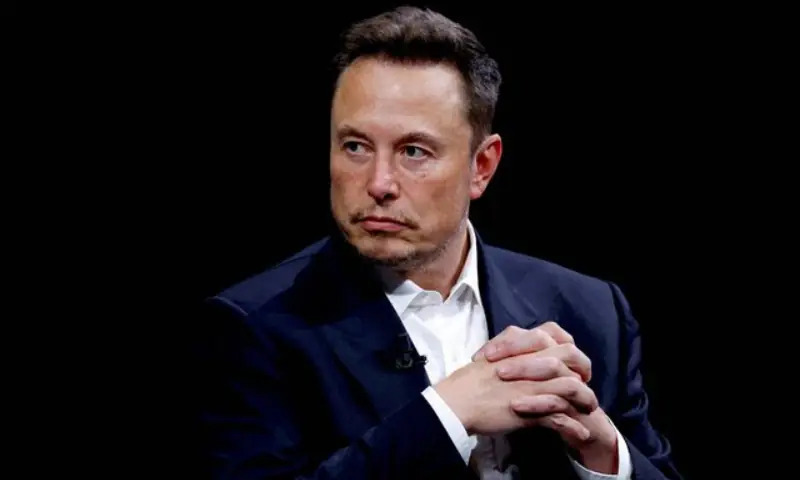
Elon Musk has re-entered the global spotlight with a rapid succession of technological demonstrations, ranging from automated aerospace achievements to cutting-edge vehicular prototypes. However, the international reception to these milestones is increasingly shaped by his explicit political alignment with US President Donald Trump. While Musk's commercial ventures continue to deliver engineering feats once relegated to science fiction—including SpaceX's Starship megarocket reaching orbit and deploying next-generation Starlink satellites—his active participation in American partisan politics has eroded the broad-based public consensus that once celebrated his ventures.
Media analysts and institutional observers note a distinct shift in how Musk's industrial footprint is assessed. The deployment of low-Earth orbit telecommunication constellations and the pursuit of autonomous transport solutions now occur against the backdrop of substantial regulatory, legislative, and fiscal patronage debates in Washington. Rather than operating strictly as an apolitical industrial innovator, Musk has established himself as a central figure in executive-level state apparatus reviews, complicating government contractor relationships, commercial partnerships, and cross-border regulatory approvals.
Commercial & Economic Implications
For enterprise operators, supply chain managers, and commercial logistics networks in frontier economies like Pakistan, the convergence of tech consolidation and political polarization presents concrete operational risks. Starlink's pending regulatory integration in South Asia, intended to provide high-bandwidth, low-latency connectivity to remote wholesale markets, agricultural hubs, and regional distribution networks, is increasingly vulnerable to shifting diplomatic and bilateral trade currents.
Pakistani tech startups, digital service providers, and business process outsourcing firms depend heavily on stable access to foundational tech infrastructure governed by North American policy frameworks. If key digital utilities and satellite-based communication systems become politicized, regulatory scrutiny in recipient countries could delay licensing approvals, elevate compliance costs, and introduce uncertainty for local internet service providers attempting to establish hybrid retail connectivity models. Moreover, import pricing for specialized electronic hardware, telecommunications receivers, and electric vehicle components could fluctuate if shifting industrial policies disrupt global supply chains.
Related Intelligence: Sudan Civil War Triggers Severe Healthcare Collapse and Supply Chain Crisis
Stakeholder Perspectives & Market Reactions
Institutional investors and corporate governance bodies have expressed measured concern over the reputational and regulatory exposure stemming from high-profile political positioning. In consumer-facing verticals such as electric vehicles, commercial sentiment has fractured along ideological lines, directly challenging market share in critical European and North American retail markets.
Within South Asian financial and trade circles, commercial chambers highlight the double-edged nature of commercial dependency on hyper-centralized enterprise leadership. Market analysts point out that while Starlink offers a viable contingency against traditional fiber-optic outages and domestic infrastructure shortfalls, heavy reliance on an entity subject to volatile geopolitical maneuvering introduces operational vulnerability. Legal experts monitoring technology compliance urge emerging-market regulators to secure rigorous service-level agreements and sovereign data protections before granting unrestricted spectrum access.
Forward Outlook & Key Watchpoints
Over the next two fiscal quarters, commercial stakeholders will monitor whether SpaceX and Tesla can maintain institutional independence from evolving US policy initiatives. Key watchpoints include Starlink's commercial rollout timelines across South Asian jurisdictions, the allocation of state aerospace contracts, and potential anti-trust or conflict-of-interest challenges initiated by international trade bodies.
For Pakistani traders and corporate planners, the priority remains establishing resilient, vendor-neutral communications infrastructure. As global technology networks face unprecedented politicization, enterprise decision-makers must balance the operational efficiencies of frontier commercial technologies against the regulatory, financial, and strategic volatility of their corporate operators.
Join Our Official WhatsApp Channel
Receive live commodity alerts, policy changes, and commercial intelligence directly on WhatsApp.