
Colombia Cultural Purge Signals Far-Right Shift Under President De La Espriella
Colombian President Abelardo de la Espriella has ordered the removal of perceived communist works from the National Museum, launching an institutional counterrevolution that heightens ideological polarization and rattles regional markets.
Geopolitical & Core Developments
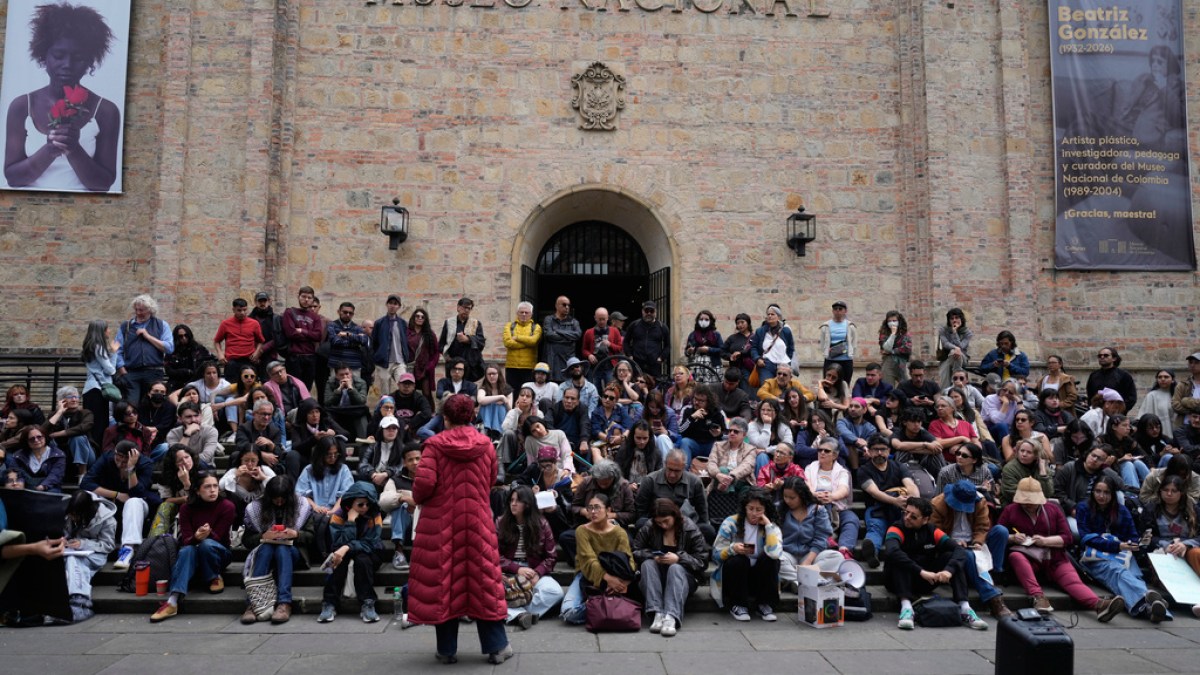
In an unprecedented escalation of state intervention into domestic cultural policy, Colombian President Abelardo de la Espriella has ordered an aggressive purge of exhibits at the National Museum in Bogota. Declaring the removal of historical works and documentation that allegedly glorify left-wing guerrilla movements and communist ideology, de la Espriella announced a broader campaign of counterrevolution across state-funded institutions. The administration contends that state cultural apparatuses have long been co-opted by Marxist ideologues to rewrite the history of Colombia's protracted internal armed conflict.
The directive represents a sharp rupture with the reconciliation frameworks established by prior administrations, particularly the historic 2016 peace accords with the Revolutionary Armed Forces of Colombia (FARC). By redefining official historical narratives, de la Espriella's administration is consolidating its conservative base while systematically dismantling memory initiatives supported by the Truth Commission and the Special Jurisdiction for Peace (JEP). The executive order has triggered immediate resignations among curatorial staff and public demonstrations across major metropolitan centers, underscoring deep-seated ideological fractures within the Andean nation.
Global Trade & Economic Ripples
While ostensibly focused on cultural heritage, the administration's aggressive ideological pivot has introduced renewed uncertainty into Colombia's macroeconomic outlook. Sovereign debt spreads have widened marginally as international bondholders assess the risk of heightened domestic civil unrest and policy unpredictability. International investors, already sensitive to political instability in Latin America, are monitoring whether the administration's nationalist agenda will spill into key commercial sectors, including extractive industries, infrastructure concessions, and agricultural exports.
Colombia remains a pivotal global exporter of thermal coal, Arabica coffee, crude petroleum, and cut flowers. Institutional instability and civil disruption threaten critical supply chain arteries, particularly transport corridors linking the interior industrial hubs to the Pacific port of Buenaventura and the Caribbean shipping terminals of Cartagena and Barranquilla. Furthermore, bilateral trade relations with progressive regional neighbors, notably Brazil and Chile, risk stagnation as ideological divergence complicates regulatory harmonization and regional trade integration under bodies like the Pacific Alliance.
Related Intelligence: US Alleges Canadian Election Interference Amid Deepening Bilateral Trade Rift
International Reactions & Diplomatic Stances
The move has drawn swift condemnation from international human rights monitors and multilateral cultural bodies. UNESCO officials expressed grave concern over the state-mandated alteration of historical archives, reiterating that national museums must preserve pluralistic accounts of conflict to prevent future atrocities. Human rights watchdogs warned that erasing documentation of state and paramilitary violence undermines transitional justice and violates international conventions on cultural rights.
Diplomatic reactions within the Americas have fractured along partisan lines. Conservative allies in the region praised the administration's stance against historical revisionism, framing it as a vital defense of democratic institutions against leftist subversion. Conversely, progressive governments across South America condemned the purge as an authoritarian erosion of democratic norms. In Washington, lawmakers offered mixed assessments, with some expressing support for a staunch anti-communist partner, while state department career officials urged adherence to democratic preservation and freedom of expression.
Strategic Outlook & Future Scenarios
The short-term trajectory points toward intensifying domestic confrontation and protracted legal challenges before Colombia's Constitutional Court, which has historically maintained robust protections for academic and artistic freedom. Legal scholars anticipate that injunctions against the executive orders will precipitate a constitutional standoff, testing the resilience of the nation's separation of powers.
Looking ahead, de la Espriella's cultural offensive is expected to extend to the Ministry of Education and public university curricula, setting the stage for nationwide student protests and labor union strikes. In the geopolitical arena, Colombia's hardening posture will further polarize regional summits, including forthcoming Organization of American States (OAS) ministerial meetings. Should civil unrest escalate into general strikes that impede commodity logistics, multinational firms operating in the energy and mining sectors will likely face mounting operational risks and elevated security costs throughout the remainder of the fiscal year.
Join Our Official WhatsApp Channel
Receive live commodity alerts, policy changes, and commercial intelligence directly on WhatsApp.