
Pakistan and Oman Deepen Bilateral Ties Amid Middle East Maritime Crisis
Pakistan and Oman agreed to expand bilateral trade and economic cooperation during the 8th Joint Ministerial Commission, addressing escalating Middle Eastern geopolitical friction and maritime transit vulnerabilities.
The Core Development
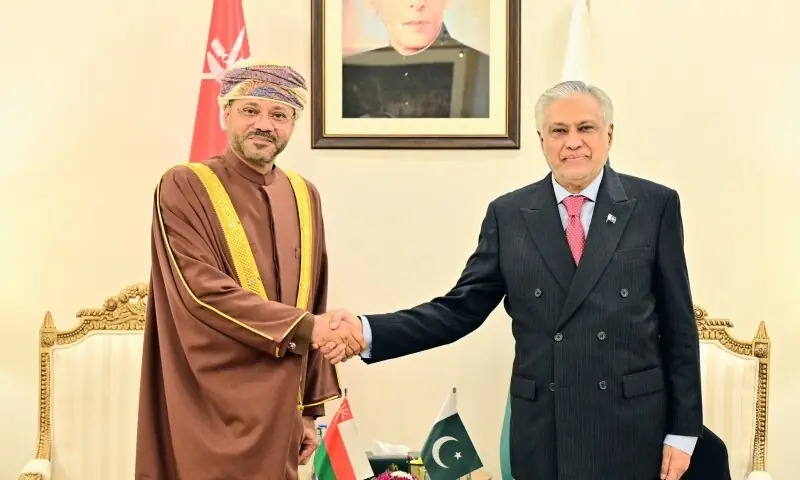
Deputy Prime Minister and Foreign Minister Senator Mohammad Ishaq Dar convened bilateral talks with the Foreign Minister of the Sultanate of Oman, Sayyid Badr Albusaidi, during the eighth session of the Pakistan-Oman Joint Ministerial Commission (JMC) in Islamabad. The high-level meeting addressed critical friction points across the broader Middle Eastern corridor, alongside formal deliberations on bilateral investment, energy security, and maritime logistics.
During a restricted bilateral session, both foreign ministers reviewed escalating regional hostility, specifically evaluating risks stemming from the broader US-Iran standoff, the continuing hostilities in Gaza, and ongoing asymmetric threats targeting maritime navigation through the Strait of Hormuz and Bab el-Mandeb strait. Deputy Prime Minister Dar commended Muscat's sustained diplomatic mediation within the Gulf Cooperation Council (GCC) and the wider Arab world. In his official address, Dar emphasized Pakistan’s distinctive strategic positioning as an active participant in the Organisation of Islamic Cooperation (OIC) and the United Nations, signaling Islamabad’s intent to leverage its historical diplomatic capital to de-escalate tensions along key sea lanes.
Commercial & Economic Implications
For Pakistan's domestic economy, the stability of maritime choke points directly dictates sovereign macroeconomic viability. The Strait of Hormuz and Bab el-Mandeb serve as vital energy transit corridors for Pakistan’s critical imports of crude oil, liquefied natural gas (LNG), and refined petroleum products sourced largely from GCC member states. Sustained volatility in these waters threatens to inflate global war-risk insurance premiums, driving freight and chartering costs higher for inbound bulk cargo to Port Qasim and Karachi Port.
Such freight escalations deliver an immediate pass-through shock to domestic supply chains. Importers of industrial inputs, raw chemicals, fertilizer, and agricultural commodities face mounting landed costs, which subsequently filter down to wholesale distribution networks. The local retail sector, already grappling with elevated headline inflation and diminished household purchasing power, risks additional cost-push pressure if sea routes face extended disruption or rerouting around the Cape of Good Hope, which substantially increases transit times.
Furthermore, deepening bilateral institutional linkages with Oman presents strategic hedging opportunities for Pakistani exporters. Oman's geographic proximity makes its ports, such as Sohar and Salalah, viable alternate transshipment points for Pakistani agro-produce, textiles, and light engineering goods aiming for rapid clearance into regional Gulf markets.
Related Intelligence: Escalation in Middle East as Saudi Coalition Strikes Yemen Following Aramco Attack
Stakeholder Perspectives & Market Reactions
Commercial stakeholders in Pakistan have closely monitored the ministerial talks, with market participants voicing urgent demand for tangible bilateral trade protocols. The Federation of Pakistan Chambers of Commerce and Industry (FPCCI) and regional maritime logistics operators have repeatedly stressed the need for localized trade settlement mechanisms and expanded direct containerized sea routes connecting Gwadar and Karachi with Omani ports.
Trade bodies also underscored the strategic necessity of finalizing the Pakistan-GCC Free Trade Agreement (FTA), pointing out that tariff reductions and simplified customs harmonization would allow Pakistani agricultural and value-added exports to gain competitive parity in Muscat. Legal and trade policy analysts noted that Muscat represents an underutilized diplomatic bridge for Islamabad, capable of facilitating direct commercial joint ventures across energy storage, fisheries, and mineral extraction.
Forward Outlook & Key Watchpoints
Moving forward, market observers and institutional investors will track the actionable implementation of the JMC's joint working groups. A primary watchpoint will be the timeline for finalizing targeted bilateral investment protection treaties and coastal shipping agreements that could formally link Gwadar with Omani port networks.
Additionally, developments surrounding regional maritime safety initiatives will dictate operational risk profiles for Pakistani merchant shipping. Should regional diplomatic mediation fail to ease friction across the Strait of Hormuz and the southern Red Sea corridor, commercial institutions anticipate intensified fiscal pressure on the national import bill, reinforcing the urgent domestic requirement for structured energy trade pacts and preferential market arrangements with reliable regional partners like Oman.
Join Our Official WhatsApp Channel
Receive live commodity alerts, policy changes, and commercial intelligence directly on WhatsApp.