
Middle East Crisis Deepens as Military Automation Disrupts Regional Trade
Escalating conflict in Gaza marked by automated military operations continues to disrupt regional stability, elevating global maritime freight rates and aggravating import costs for Pakistan.
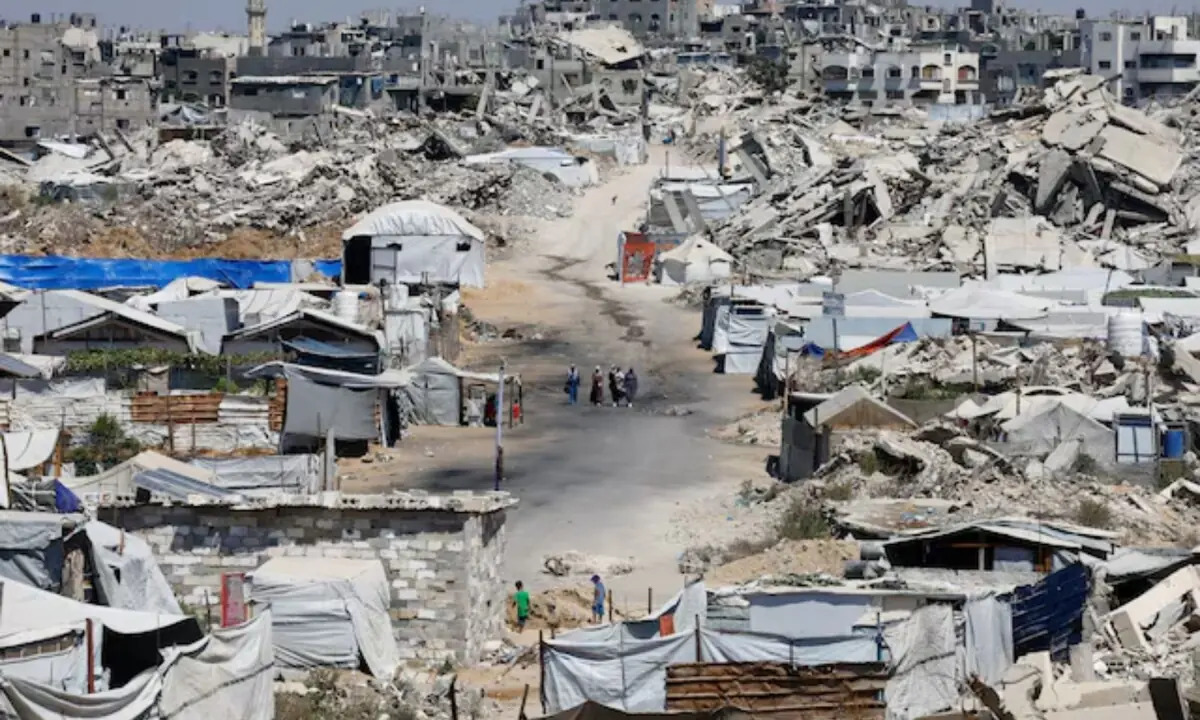
The Core Development
The ongoing conflict in the Gaza Strip entered a critical phase following the incident documented on February 29, 2024, widely designated as the Flour Massacre, where at least 115 Palestinian civilians were killed while attempting to access emergency food aid. According to survivor testimonies and eyewitness reports compiled by international agencies, Israeli armed tanks and quadcopter drones opened fire on crowds congregated around humanitarian logistics convoys in northern Gaza. The deployment of unmanned aerial systems, high-precision targeting algorithms, and automated perimeter defenses has transformed the mechanics of modern urban conflict, drawing widespread condemnation from human rights organizations and the United Nations.
Investigative reporting reveals that operational frameworks increasingly integrate artificial intelligence and semi-autonomous systems to execute target identification and asset engagement. This technological escalation has exacerbated civilian casualties, particularly around critical relief distribution points. International observers note that relying on algorithmic targeting mechanisms without human oversight presents profound legal, humanitarian, and institutional challenges under international humanitarian law.
Commercial & Economic Implications
While the direct human toll remains concentrated in the Levant, the geopolitical fallout from the escalation continues to reverberate across South Asian and Middle Eastern trade corridors. For Pakistan, regional instability translates directly into heightened operational and logistics costs. Maritime shipping routes traversing the Red Sea and Gulf of Aden have faced continuous disruption, forcing commercial carriers to reroute via the Cape of Good Hope or pay steep war risk insurance premiums.
This rerouting adds 10 to 14 days to standard transit times between European, Mediterranean, and Pakistani ports. For wholesale distributors and retail traders in Pakistan, extended supply lines mean elevated landed costs for essential imported inputs, including agricultural chemicals, machinery components, and processed food ingredients. Consequently, domestic port bottlenecks at Karachi and Port Qasim are compounded, driving localized inflation in both wholesale distribution tiers and final consumer retail pricing.
Related Intelligence: Federal Constitutional Court Dismisses Bushra Bibi Plea in 190 Million Pound Case
Stakeholder Perspectives & Market Reactions
Trade bodies across Pakistan, including the Federation of Pakistan Chambers of Commerce and Industry (FPCCI) and various regional wholesale associations, have voiced growing alarm over prolonged shipping volatility. Business leaders emphasize that freight forwarders have sustained container surcharges ranging from $1,500 to $2,500 per twenty-foot equivalent unit (TEU), disproportionately impacting small-to-medium enterprises that lack the liquidity to absorb inventory financing overheads.
Legal and humanitarian bodies in Pakistan have reiterated calls for strict global compliance with the Geneva Conventions, highlighting that the unmitigated use of algorithmic warfare creates an accountability vacuum. Meanwhile, regional commercial banks and trade credit underwriters have tightened risk evaluations for letters of credit involving regional transit lines, restricting credit availability for merchant traders reliant on predictable delivery cycles.
Forward Outlook & Key Watchpoints
The trajectory of the crisis will depend heavily on international diplomatic efforts to enforce an immediate ceasefire and establish demilitarized humanitarian relief channels. Observers are closely tracking United Nations Security Council resolutions and the enforceability of International Court of Justice provisional measures regarding military conduct in populated areas.
Over the next fiscal quarter, Pakistani commercial enterprises and policy managers must prepare for sustained pressure on foreign exchange outflows driven by elevated freight expenses. Key watchpoints include crude oil and bunker fuel price volatility, maritime security developments along primary navigation straits, and multilateral regulatory debates concerning the ethical governance of autonomous weapons platforms in conflict zones.
Join Our Official WhatsApp Channel
Receive live commodity alerts, policy changes, and commercial intelligence directly on WhatsApp.