
Southern California Wildfires Threaten Economic Infrastructure and Deepen Climate Risks
Rapidly advancing wildfires in Southern California have destroyed homes and prompted emergency evacuations, underscoring systemic climate vulnerabilities with profound implications for regional infrastructure and global insurance markets.
Geopolitical & Core Developments
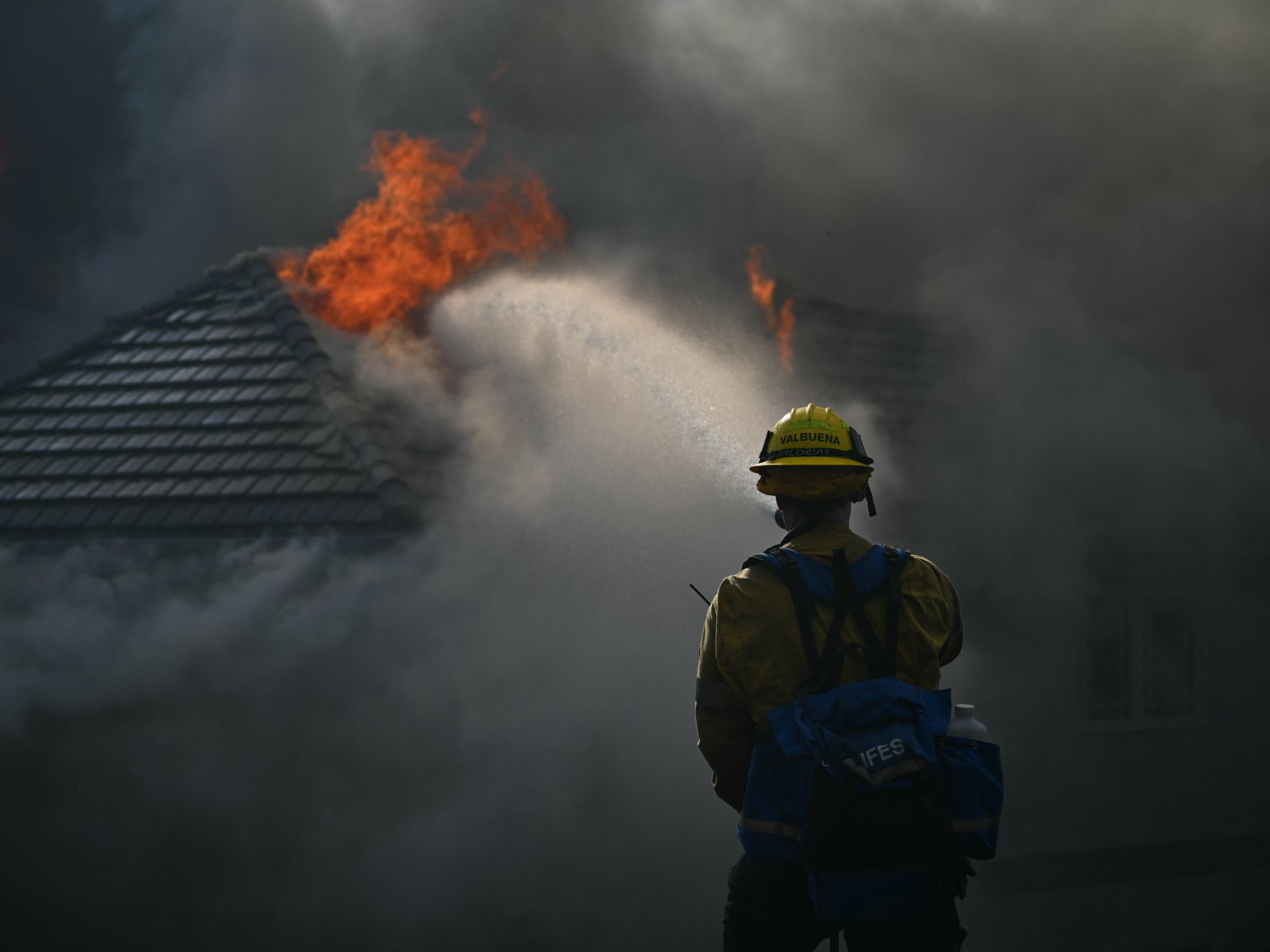
A critical confluence of unseasonably high temperatures and gale-force Santa Ana wind patterns has ignited the Norte Fire across Orange County, California, precipitating emergency evacuations and the destruction of residential infrastructure. First responders and state emergency personnel mobilized across densely populated suburban peripheries as local authorities declared high-level structural containment alerts. The meteorological drivers behind the inferno reflect broader microclimate distortions across the western United States, characterized by protracted arid cycles followed by flash vegetative growth that rapidly turns into flammable fuel loads.
At the state and federal level, the mobilization has tested California's emergency apparatus, drawing upon specialized aerial assets and inter-agency containment protocols. Governor Gavin Newsom's administration issued targeted emergency directives to channel disaster-relief funds directly to affected counties. The strategic stakes extend beyond local municipal protection: critical power distribution corridors, water conveyance systems, and secondary transport networks remain precariously proximate to active fire perimeters, threatening to expose vulnerabilities across the fifth-largest sub-national economy in the world.
Global Trade & Economic Ripples
While the primary devastation is localized, the commercial repercussions of recurring natural disasters in California radiate through international trade corridors and institutional finance. Southern California serves as a primary logistical gateway for North American commerce, anchored by the San Pedro Bay port complex and extensive ground transportation networks. Disruptions to regional transit routes invariably exacerbate distribution friction, raising freight insurance premiums and threatening perishable freight flows.
Crucially, the intensification of wildfire seasons continues to disrupt the global reinsurance sector. International reinsurers based in London, Zurich, and Bermuda are re-evaluating their risk exposure models across climate-sensitive regions. Successive catastrophic blazes in the United States have accelerated an exodus of private property underwriters, compelling state-backed insurers of last resort to absorb billions in potential liabilities. This structural shift has distorted property valuations, driven up capital borrowing costs for commercial developers, and widened the risk premiums demanded by global bondholders for municipal debt issuances.
International Reactions & Diplomatic Stances
Multilateral environmental bodies and international climate policy analysts have monitored the Norte Fire as an indicator of accelerating global climate stress. The United Nations Office for Disaster Risk Reduction (UNDRR) highlighted the event as part of a global surge in extreme weather phenomena, reinforcing calls for enhanced pre-emptive climate adaptation mechanisms rather than reactive disaster relief.
Across European and international climate policy circles, state officials have reiterated the necessity of fulfilling targets outlined under the Paris Agreement. Western partners, navigating their own wildfire crises across the Mediterranean and Australasia, regularly point to the American West as a case study in systemic climate exposure. Financial rating agencies, including Moody's and S&P Global, have emphasized in recent analytical notes that sovereign and sub-sovereign credit profiles will increasingly incorporate physical climate risk metrics, explicitly citing the compounding frequency of wildfires in major commercial jurisdictions.
Strategic Outlook & Future Scenarios
The trajectory of the Norte Fire depends on shifting wind corridors over the coming days, with containment operations remaining vulnerable to sudden wind shear. In the medium to long term, the escalation of wildfire frequency in Southern California will drive significant legislative and regulatory overhaul. Institutional investors are likely to demand enhanced physical risk disclosures from utility operators, directly impacting public infrastructure bond yields.
Furthermore, the compounding costs of ecological disruptions will dominate discussions at forthcoming multilateral environmental summits. As private capital markets recalibrate their portfolios to discount regions vulnerable to unchecked environmental hazards, policymakers will face acute fiscal choices between financing continuous disaster recovery and mandating cost-intensive grid-hardening projects. The ongoing disaster in Orange County serves as a tangible reminder that climate disruption constitutes an escalating risk factor for macroeconomic stability and asset valuation globally.
Join Our Official WhatsApp Channel
Receive live commodity alerts, policy changes, and commercial intelligence directly on WhatsApp.