
Albanian Unrest Escalates as Protests Target Key Ministries in Tirana
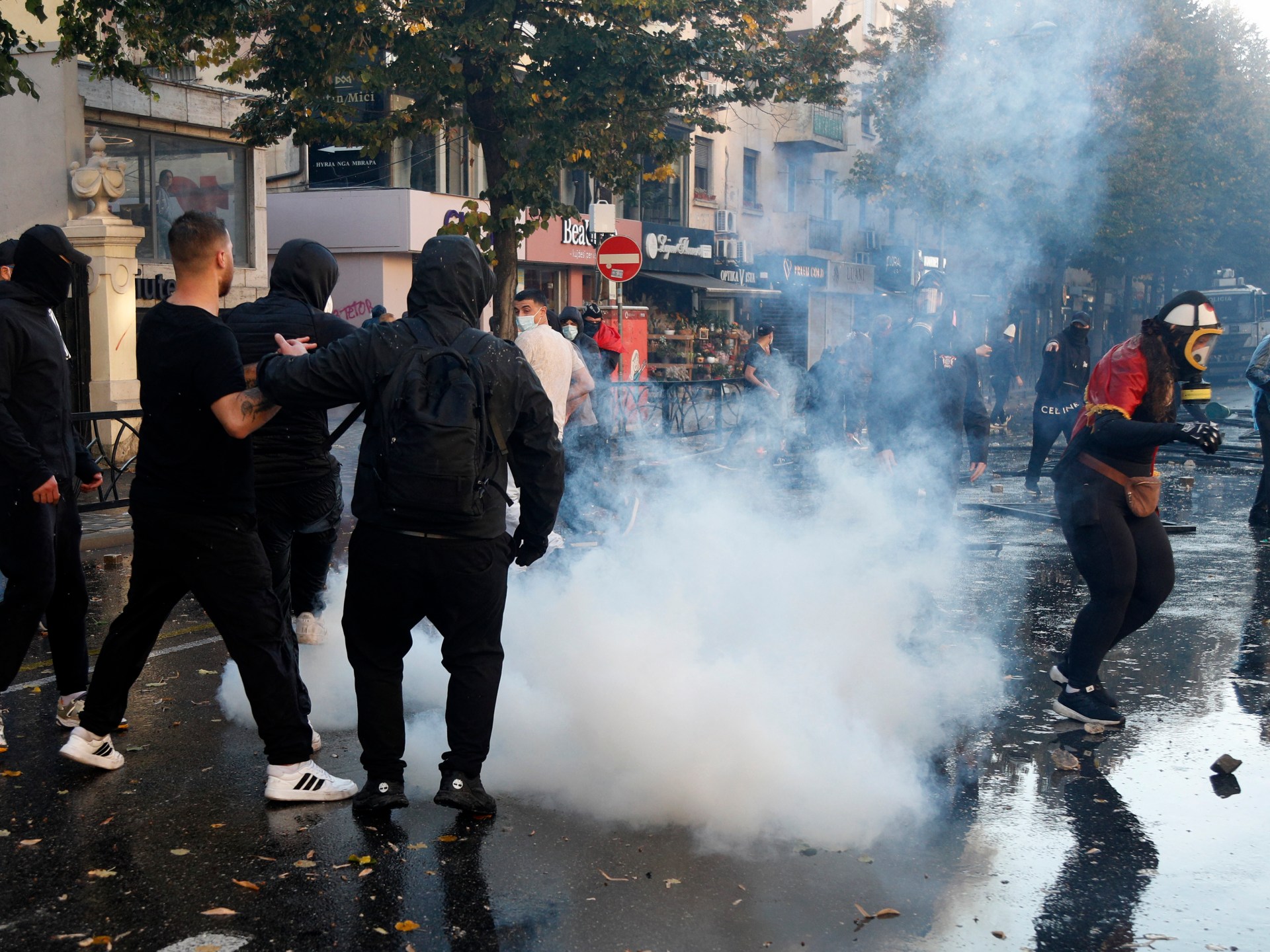
Violent demonstrations erupted in Tirana as police deployed tear gas against protesters attacking government ministries, leading to dozens of arrests and elevating domestic political tensions across Albania.
Geopolitical & Core Developments
Tensions reached a boiling point in Albania's capital, Tirana, as anti-government demonstrations spiraled into violent confrontations between civil security forces and protesters. Albanian law enforcement deployed chemical irritants, including tear gas and water cannons, to repel crowds that had converged on key state installations, culminating in direct attacks on the Ministry of Education and neighboring administrative compounds. According to official police releases, at least 23 individuals were detained on charges ranging from public disorder to the destruction of public property.
The unrest follows months of simmering socio-economic dissatisfaction, anti-corruption grievances, and allegations of systemic electoral misconduct leveled against Prime Minister Edi Rama's administration. Opposition alliances, backed by various civil society groups, mobilized thousands into central Tirana, demanding institutional reforms and the resignation of key cabinet officials. As demonstrators pelted government facades with projectiles and incendiary devices, security cordons fractured, prompting a robust counter-offensive by specialized riot units. The confrontations highlight deeply entrenched political polarization within the Western Balkan nation, raising significant concerns among European counterparts regarding domestic stability.
Global Trade & Economic Ripples
While Albania represents an emerging market economy, localized instability within the Western Balkans carries direct implications for regional commercial networks and infrastructure corridors. The country serves as an increasingly vital transit hub connecting Adriatic maritime lines with interior Balkan trade partners, notably via the Port of Durrës and ongoing Trans-Balkan infrastructure ventures. Continued civil volatility threatens operational predictability for foreign direct investment, particularly in renewable energy sectors, extraction industries, and cross-border logistics.
Moreover, the economic reverberations extend to regional sovereign risk assessments. European investors monitoring sovereign bond performance and concession agreements may adjust risk premiums should prolonged street protests disrupt legislative proceedings or undermine governance continuity. Currency fluctuations across the Albanian Lek, though managed through central bank mechanisms, face heightened speculative pressures if sustained social unrest dampens consumer confidence and depresses projected foreign capital inflows heading into the broader Mediterranean fiscal quarter.
Related Intelligence: French Student Protests Escalate Amid Deepening Domestic and European Economic Tensions
International Reactions & Diplomatic Stances
The escalation has triggered swift caution from international bodies and western diplomatic missions stationed in Tirana. The European Union Delegation to Albania, alongside the United States Embassy, issued formal statements urging all political factions to exercise maximum restraint, condemn violence against state property, and uphold the fundamental right to peaceful assembly. European monitors highlighted that violent disruptions to ministerial infrastructure run counter to democratic norms and risk complicating ongoing judicial and administrative reforms.
Simultaneously, the Organization for Security and Co-operation in Europe (OSCE) voiced apprehension regarding both the aggressive conduct of certain protest factions and the proportionality of state crowd-control tactics. Multilateral partners have reiterated that structural grievances must be channeled through established institutional dialogue rather than street-level confrontation, cautioning that unchecked political polarization undermines democratic institutions during an era of broader European geopolitical fragility.
Strategic Outlook & Future Scenarios
Looking ahead, Albania faces an intricate domestic and diplomatic trajectory. The primary baseline scenario points toward sustained low-to-medium intensity unrest, as fragmented opposition coalitions seek to maintain momentum through intermittent street mobilizations. Should Prime Minister Rama’s administration maintain an uncompromising security posture without initiating structured cross-party roundtables, political friction is likely to deepen, potentially paralyzing legislative progress on key administrative milestones.
On the European stage, the developments pose strategic challenges for Albania's European Union accession timeline. Brussels has consistently conditioned advancement toward full integration on measurable progress in the rule of law, anti-corruption enforcement, and governance stability. If civil unrest escalates into sustained institutional dysfunction, EU member states skeptical of rapid enlargement may leverage the crisis to delay technical negotiations, constraining Albania's geopolitical trajectory within the Western Balkan integration framework.
Join Our Official WhatsApp Channel
Receive live commodity alerts, policy changes, and commercial intelligence directly on WhatsApp.