
Prime Minister Signals Governor Rule in KP Amid Rising Fiscal and Security Friction
Prime Minister Shehbaz Sharif has justified potential federal intervention in Khyber Pakhtunkhwa, citing governance failure and militant resurgence, escalating political risks across northern trade corridors.
The Core Development
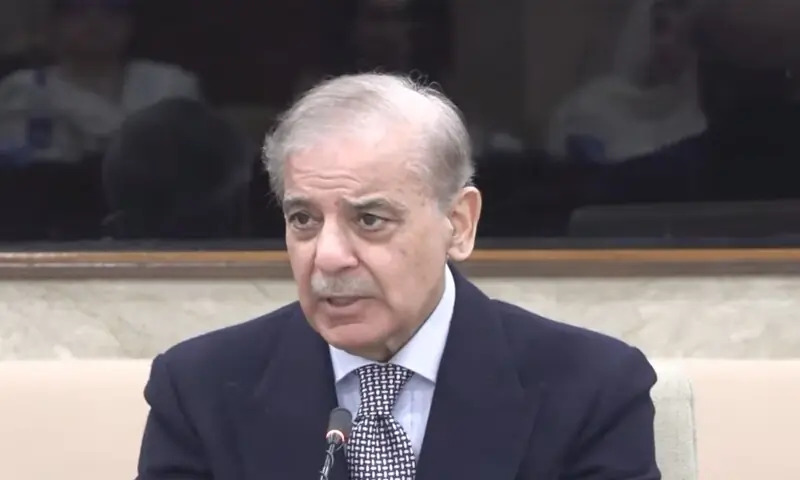
In a high-stakes address to the Pakistan Muslim League-Nawaz parliamentary party in Islamabad, Prime Minister Shehbaz Sharif delivered a scathing assessment of Khyber Pakhtunkhwa's provincial governance under the Pakistan Tehreek-e-Insaf. The premier stated that the federal government was increasingly left with no choice but to consider constitutional measures, including the enforcement of Governor's Rule, to address escalating security deficits and institutional decay in the province.
Sharif stressed that while law enforcement agencies and civilians continue to bear the brunt of renewed militant violence, the provincial administration has systematically diverted state machinery and exchequer resources toward sustained political confrontations and marches against the Centre. Highlighting a thirteen-year governing continuum by the opposition in Peshawar, the prime minister maintained that key human development portfolios—including healthcare, public education, institutional transparency, and municipal infrastructure—have suffered from severe neglect. With political friction reaching an inflection point, the invocation of Article 234 of the Constitution appears increasingly viable within federal circles, marking an abrupt shift from political accommodation to direct constitutional confrontation.
Commercial & Economic Implications
For Pakistan's wholesale networks and domestic logistics, heightened constitutional tension in Khyber Pakhtunkhwa introduces severe supply chain vulnerabilities. The province functions as the vital conduit for cross-border commerce with Afghanistan and Central Asian republics, handling substantial daily volumes of transit goods, cement, perishables, and light engineering equipment. Any political escalation leading to localized unrest or federal intervention threatens transit safety through the Indus Highway and GT Road arterial routes.
Furthermore, commercial enterprises operating across Peshawar, Swat, and the newly merged tribal districts already navigate elevated security premiums and extortion threats. A formal breakdown of provincial authority discourages capital expenditure, strains local municipal collections, and impacts retail markets. Wholesalers and agricultural traders in Punjab and Sindh are recalibrating inventory holdings, concerned that highway closures and administrative paralysis will interrupt produce transit, elevate freight insurance costs, and exacerbate regional food price volatility.
Related Intelligence: Renewed Yemen Clashes Deepen Humanitarian Crisis and Maritime Supply Chain Risks
Stakeholder Perspectives & Market Reactions
Market associations and chamber leadership across northern Pakistan have expressed cautious concern over the brewing constitutional confrontation. Commercial bodies in Peshawar maintain that while stable counter-terrorism oversight is desperately needed to restore investor confidence, the declaration of Governor's Rule risks inciting street agitation that could paralyze provincial bazaars and logistics hubs.
Opposition leaders have rejected the federal narrative, accusing Islamabad of deliberately withholding provincial financial transfers, particularly net hydel profits and counter-terrorism allocations, thereby intentionally crippling provincial capacity. Conversely, legal and constitutional analysts note that while federal authority under emergency provisions is constitutionally codified, executing such measures without bipartisan consensus or judicial endorsement risks prolonged litigation in the Supreme Court, prolonging political and economic uncertainty.
Forward Outlook & Key Watchpoints
Over the coming weeks, market participants and political observers must monitor key institutional developments. The first critical watchpoint centers on whether the federal cabinet formally tables a summary recommending emergency powers to the President, which would require subsequent parliamentary ratification. Any such move will almost certainly trigger immediate legal challenges and localized protest calls.
Second, the distribution of federal divisible pool funds and security assistance transfers through the National Finance Commission framework will demonstrate whether fiscal levers are deployed alongside administrative pressure. For businesses and logistics operators, tracking movement corridors through key transit checkpoints such as Torkham will be critical to assessing freight security and maintaining regional inventory continuity.
Join Our Official WhatsApp Channel
Receive live commodity alerts, policy changes, and commercial intelligence directly on WhatsApp.