
Prime Minister Consults Coalition Allies Following Imposition of KP Governor Rule
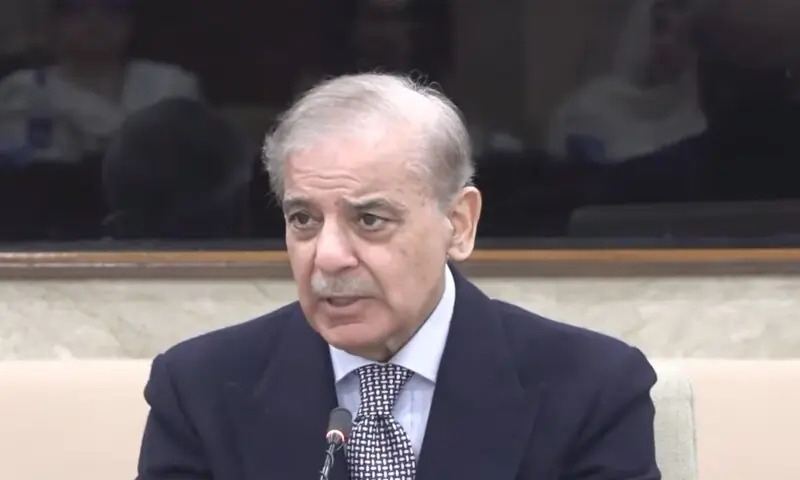
Prime Minister Shehbaz Sharif convened key ruling coalition partners to defend the imposition of Governor's rule and district emergencies across Khyber Pakhtunkhwa.
The Core Development
Prime Minister Shehbaz Sharif convened back-to-back consultations with coalition allies on Tuesday to explain the federal cabinet's unprecedented decision to impose Governor's rule in Khyber Pakhtunkhwa (KP). The administrative maneuver follows Sunday's presidential proclamation enacting emergency protocols across 12 vulnerable districts in the province. According to the federal executive, the intervention was necessitated by what the Centre characterized as the provincial administration's deliberate disengagement from counter-terrorism efforts and institutional non-cooperation with national security apparatuses.
The Prime Minister met with a diverse parliamentary delegation comprising representatives from the Pakistan Muslim League-Quaid (PML-Q), Balochistan Awami Party (BAP), Istehkam-i-Pakistan Party (IPP), and PML-Zia. A subsequent meeting engaged leadership from the Muttahida Qaumi Movement-Pakistan (MQM-P). In both sessions, the premier insisted that the federal administration had exhausted all political and constitutional avenues before sanctioning what he termed an extreme step. Federal ministers presented internal security dossiers detailing the alleged breakdown of provincial governance, justifying the necessity of invoking constitutional provisions under Article 234.
Commercial & Economic Implications
The declaration of Governor's rule and localized emergencies presents substantial friction points for Pakistan's trade corridors and regional commerce. KP serves as the primary terrestrial artery for bilateral trade with Afghanistan and broader access to Central Asian republics. Security check-posts, restricted movement zones, and administrative realignment in the 12 specified districts are already generating logistical backlogs for wholesale distributors and freight operators based in Punjab and KP.
Wholesale commodity trade, particularly in grains, perishable produce, and construction inputs like cement and steel, faces immediate operational friction. Transport cartels have begun factoring in elevated risk premiums and potential transit delays, threatening to push retail freight rates higher. Prolonged political turbulence within KP could suppress consumer demand, disrupt local revenue collection mechanisms, and complicate federal-provincial fiscal coordination, exerting fresh upward pressure on domestic supply chain costs at a time when nationwide headline inflation is striving for stabilization.
Related Intelligence: Prime Minister Signals Governor Rule in KP Amid Rising Fiscal and Security Friction
Stakeholder Perspectives & Market Reactions
Political allies within the ruling alliance extended conditional endorsements, underscoring the critical need to preserve national security while cautioning against alienating regional constituencies. Opposition leaders have decried the measure as an unconstitutional usurpation of provincial autonomy, pledging to challenge the proclamation before the superior judiciary.
From the commercial sector, the Khyber Pakhtunkhwa Chamber of Commerce and Industry alongside national logistics bodies expressed acute anxiety regarding regulatory clarity and the continuity of customs clearances at border terminals like Torkham. The business community remains apprehensive that bureaucratic paralysis under an interim gubernatorial apparatus could freeze public sector development projects and halt commercial contract disbursements. Financial markets in Karachi registered modest caution, reflecting institutional investor sensitivity toward heightened political volatility in northern Pakistan.
Forward Outlook & Key Watchpoints
The immediate trajectory rests upon whether the federal government can navigate potential legal challenges in the Supreme Court of Pakistan, where petitions questioning the merits of Article 234 invocation are widely anticipated. The constitutional clock necessitates parliamentary approval within stipulated timelines, testing the cohesion of the ruling coalition on the floor of both houses.
Over the coming weeks, market participants and wholesale traders must monitor checkpoints across major freight axes, particularly the Grand Trunk Road and Indus Highway transit networks. Investors will watch whether Governor's rule facilitates an aggressive counter-terrorism posture that stabilizes the security landscape or instead triggers civil unrest that hampers regional commercial trade and public expenditure.
Join Our Official WhatsApp Channel
Receive live commodity alerts, policy changes, and commercial intelligence directly on WhatsApp.